

Aircraft Maintenance Under Remote Control
When it comes to safety and maintenance efficiency, one key aspect is the ability to accurately diagnose and address aircraft faults. Understanding new technologies in aircraft system diagnosis methods and airplane fault detection techniques is crucial for ensuring reliable and safe operations.
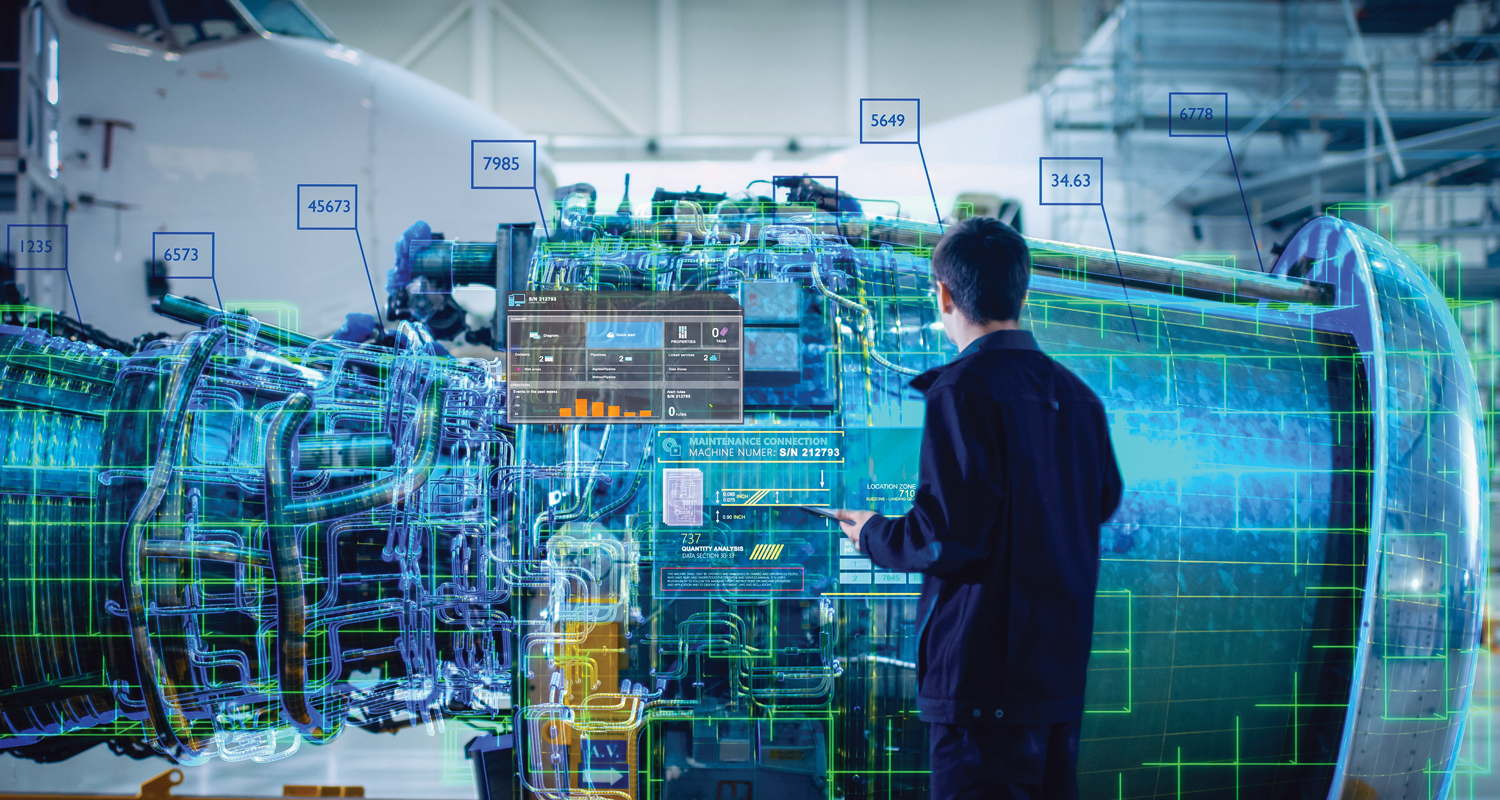
Remote technology encompasses a range of tools and methods that use video, audio, imaging, or communication systems to support maintenance or inspection activities performed from a location other than the immediate inspection area. Technologies currently used in aviation maintenance environments include robotic systems, augmented reality, virtual reality, remote visual inspection equipment, remote diagnostic systems, virtual maintenance technologies, and small unmanned aircraft systems (sUAS). Conducted in accordance with applicable regulations and approved procedures, remote technology can support maintenance and inspection activities by offering access to inspection areas that may be elevated, confined, or difficult to reach, improving inspection efficiency, supporting data collection, and facilitating communication between personnel.
Going Remote
Typically, general aviation (GA) operators don’t have the benefit of commercial airline budgets or massive corporate infrastructure. For private owners, flight schools, and small-scale maintenance shops, the focus shifts to cost-efficiency, accessibility, and local problem-solving owner-assisted maintenance. General aviation maintainers have technology options that give a high priority to compact, cost-effective hardware and software solutions, without sacrificing critical diagnostic power.
Remote diagnostic systems may use sensors, predictive analytics, and data communication systems to monitor aircraft systems and support identification of maintenance conditions, system degradation, or potential failures. These systems may collect operational data, such as temperature, vibration, pressure, or system status, to support maintenance planning and troubleshooting. Virtual maintenance technologies may include augmented reality, virtual reality, and small drones to support maintenance troubleshooting, task guidance, and system visualization.
Beyond the Wrench
Rather than deploying complex, high-cost enterprise network architectures, general aviation operators are successfully implementing highly practical, consumer-grade technology platforms to achieve powerful results:
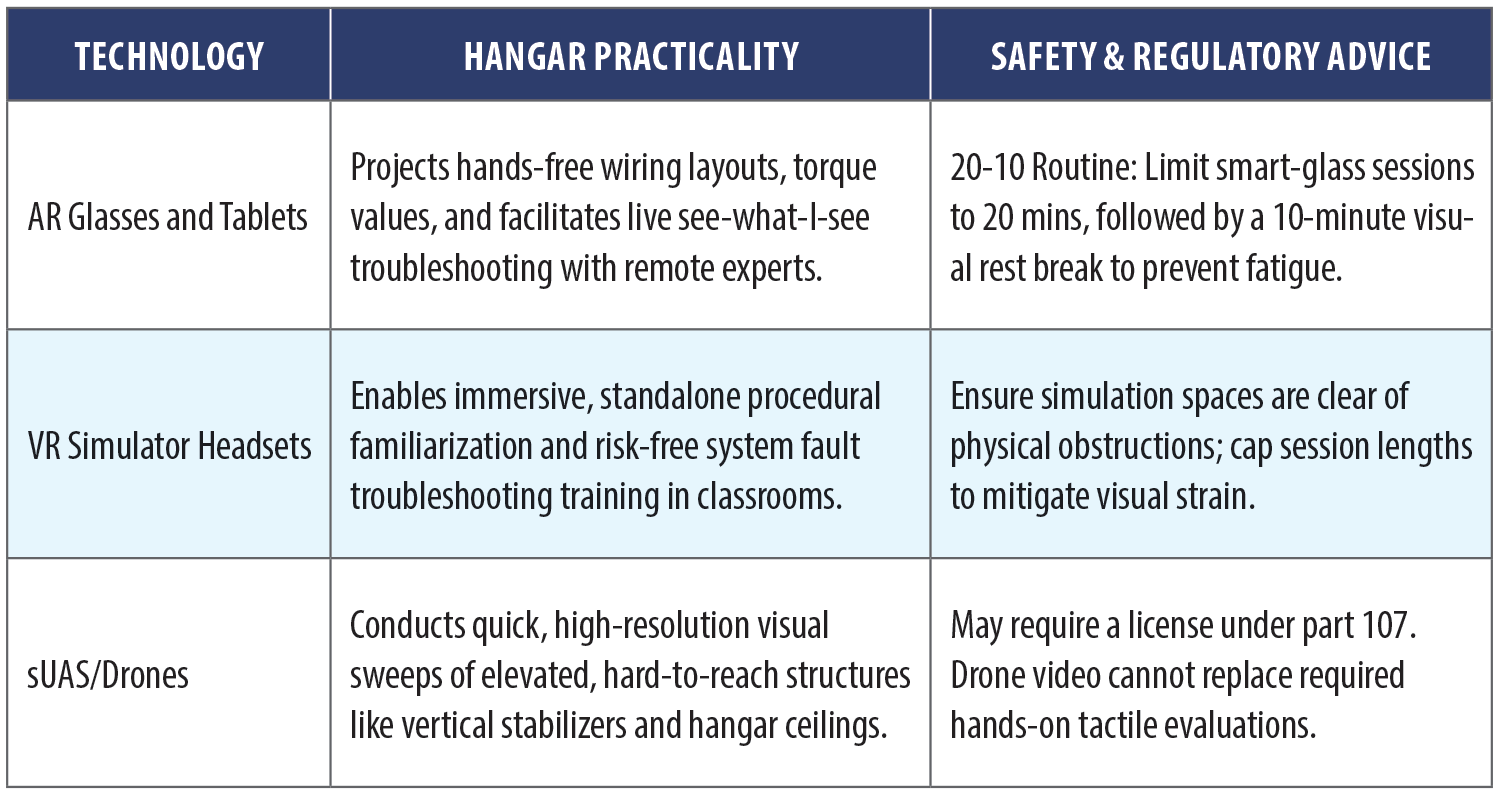
- Augmented Reality (AR): Using tablets or lightweight smart glasses, technicians can overlay 3D wiring layouts and torque specifications directly onto physical hardware, keeping their hands free. AR also enables instant, real-time visual collaboration with off-site senior maintenance technicians to diagnose difficult faults.
- Virtual Reality (VR): VR headsets replace the real world with fully interactive 3D simulations. Flight schools and maintenance teams use VR for risk-free, muscle-memory training and procedural familiarization on complex components without taking aircraft out of service.
- sUAS/Drones: Lightweight commercial drones quickly perform rapid visual sweeps of elevated, hard-to-reach aircraft structures — such as vertical stabilizers, rudders, or upper fuselage and wing surfaces — greatly reducing the safety risks associated with ladders, stands, or scaffolding.
The Regulatory Caveat & Hangar Practices
While remote tools act as incredible capability multipliers, operators must align their usage with traditional safety and regulatory standards. The following hangar rules ensure safety remains paramount:
- The Tactile Boundary: Remote technology is a supportive tool, but cannot replace physical presence when direct tactile assessment, manual manipulation (such as checking cable tension or control surface play), or non-destructive testing is required. If sensory checks are necessary under part 43, a qualified mechanic should perform the task.
- Secure Hangar Connections: Broadcasting live audio and video feeds introduces potential cybersecurity vulnerabilities. Always protect your shop's network by applying basic Cybersecurity and Infrastructure Security Agency (CISA) guidelines, including enabling multi-factor authentication (MFA) and not reusing administrator credentials across tools.
- Part 107 Drone Compliance: Any sUAS operations conducted around the hangar or ramp for aircraft inspection must comply with 14 CFR part 107. Drone pilots must be licensed, aircraft must be registered, and operations must strictly respect airport airspace boundaries and local flight guidelines.
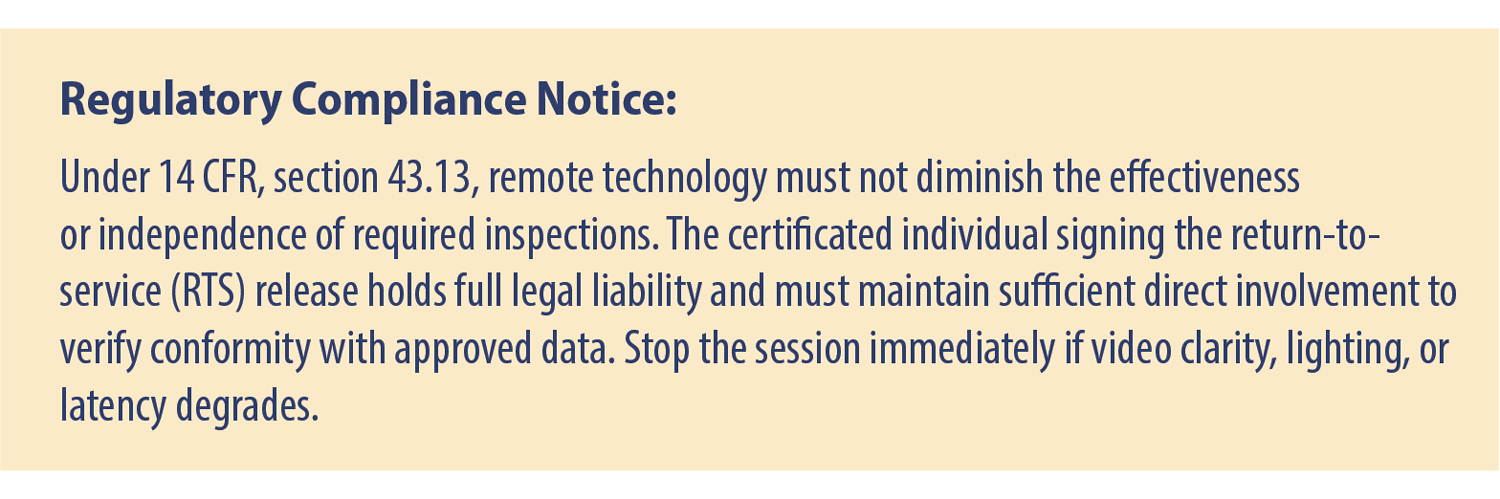
The use of remote technology is intended to support and enhance maintenance and inspection activities. Unless specifically authorized by applicable regulations, approved maintenance programs, or approved maintenance data, remote technology does not replace required inspection methods, maintenance procedures, or personnel qualifications.