


FAA Technicians Bring Life to New Air Traffic Control System
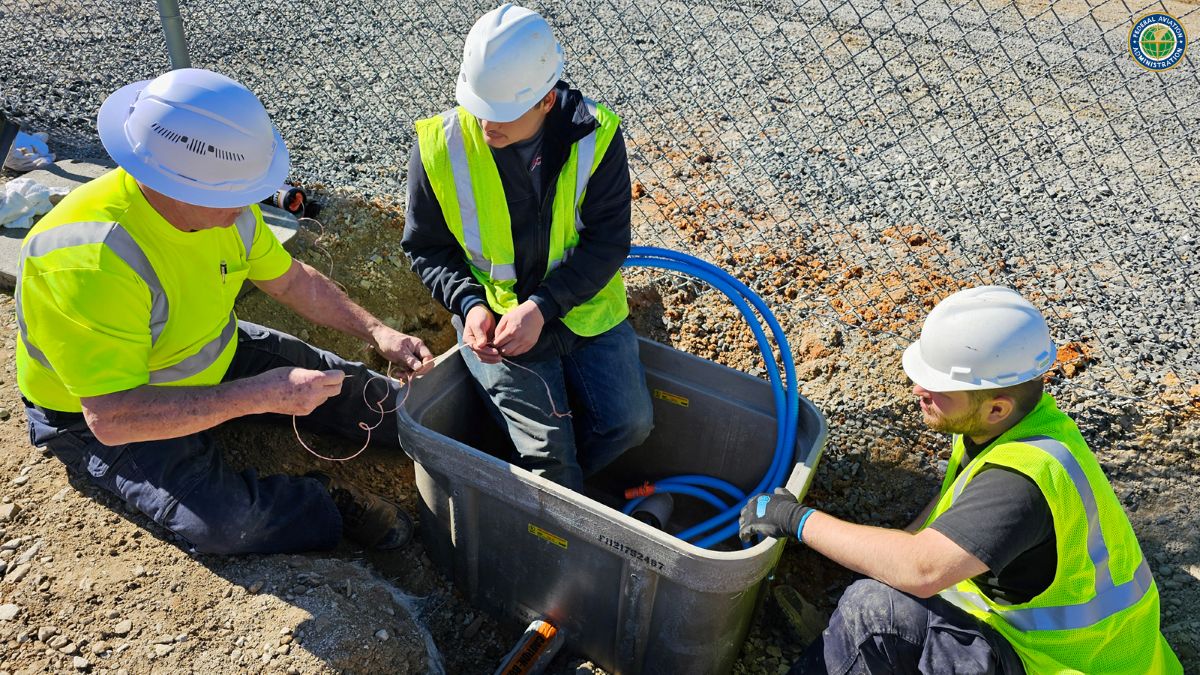
Putnam, Oklahoma, is now home to a new radar that helps air traffic controllers track and safely separate aircraft through the state’s airspace. And on top of San Diego’s air traffic control tower now stands a new surface management radar that helps controllers track aircraft on runways and taxiways, reducing the risk of close calls.
These are among thousands of safety-enhancing upgrades the FAA is deploying across the nation over the next few years as part of the Brand New Air Traffic Control System (BNATCS) – the largest project to impact our skies since the invention of commercial flight.
Who’s helping make it happen? Our very own technicians and engineers.
“We’re putting in new digital radios, new digital voice switches, and of course digital displays to make sure our controllers have the greatest fidelity on what’s happening in the airspace as well as on the ground,” Deputy FAA Administrator Chris Rocheleau said during a recent visit to San Diego International Airport.

These upgrades are improving safety and efficiency for passengers on 45,000 daily flights across more than 29 million square miles of U.S. airspace. Specially trained engineers and technicians from FAA Technical Operations are working at a record pace to meet the end-of-2028 deadline.
A year into the BNATCS overhaul, Tech Ops has:
- Supported the replacement of 55 percent of old telecommunications feeds with new fiber and wireless systems to ensure the reliability of air traffic control communications.
- Installed more than 3,000 digitized radios and 90-plus voice switches to make controller-pilot communications clearer and more reliable and to enable controllers to more easily switch channels.
- Installed Surface Awareness Initiative systems at more than 90 airports to give controllers a clear and comprehensive picture of aircraft on runways and taxiways.
- Transitioned 17 air traffic control towers from paper flight strips to electronic flight strips to make aircraft handoffs easier and reduce controller workload.
- Deployed Automatic Dependent Surveillance-Broadcast (ADS-B) in the Caribbean to strengthen controller flight tracking, increasing flight efficiency and safety.
“We’ve already deployed more voice switches in the last six months than we have in the last six years,” said the FAA’s Mark Beekman, who oversees the installations. “That’s the volume we’re talking about. It’s exciting to be able to do so much and have the money to do it.”

Tech Ops is also installing new FAA-developed controller displays at more than 400 air traffic control facilities. The all-in-one dashboard gives controllers the precise data they need to make split-second decisions.
The FAA is working with 52 vendors to overhaul more than 4,600 sites nationwide. Tech Ops’ FAA Logistics Center in Oklahoma City manages inventory and warehouses equipment for deployment to the field.
“For example, our vendors can produce the new radios at a much higher rate than they can field them right now, so we’re preparing for that,” said Dustin Moore, who helps oversee the Logistics Center. “There’s going to be a good portion of our warehouse for staged radios, probably in the quantity of 1,000 or so.”
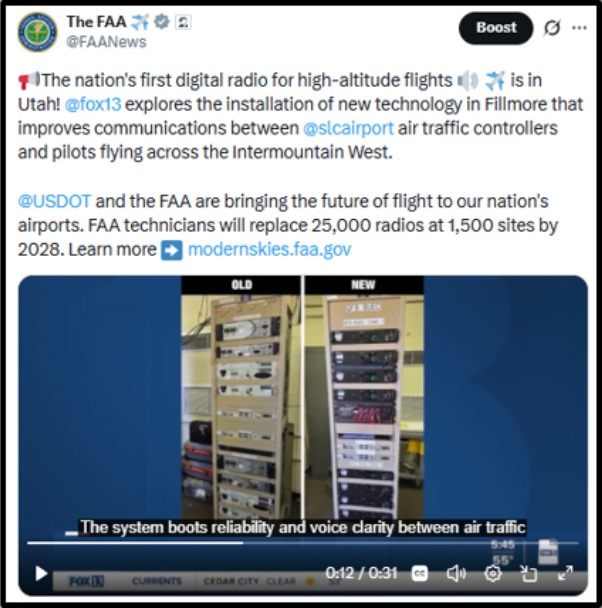
FAA technicians will replace 25,000 radios at 1,500 sites by 2028. Earlier this month, Utah got the first digital radio that enables controllers to clearly communicate with pilots flying at high altitudes.
BNATCS is already showing its value at ground level as well. Molly Murgatroyd, air traffic manager at Indianapolis International Airport, said the Surface Awareness Initiative (SAI) was a huge benefit during what her team called the “Racers and Pacers,” when the Indianapolis 500 and NBA Eastern Conference Finals overlapped last May. “We had the highest runway occupancy I’ve ever seen here, and we were able to move a massive amount of traffic safely with SAI,” she said. “Tech Ops went above and beyond helping us incorporate the new equipment to maximize the impact it had in aiding our operation.”
Learn more about the FAA’s rollout of the BNATCS and how it’s transforming aviation safety and efficiency in your local area at modernskies.faa.gov.