


The FAA's eVTOL Integration Pilot Program is Advancing Aviation's Next Frontier

It was the genetically modified pig heart that made history.
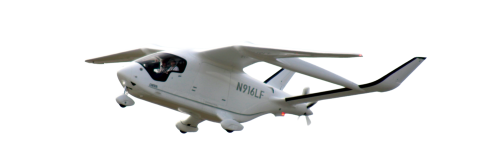
On July 10, BETA Technologies and United Therapeutics Corporation, in partnership with the Pennsylvania Department of Transportation, flight-tested organ medical-transport capabilities, with a package that included the pig heart. Its flight path encompassed multiple aircraft and airports from Virginia to Maryland using BETA’s ALIA electric aircraft.
The flight was the initial operation in the FAA’s Electric Vertical Takeoff and Landing (eVTOL) Integration Pilot Program (eIPP), a three-year project designed to help safely and efficiently integrate advanced air mobility (AAM) aircraft into America’s skies.
“The eIPP gives us a real-world environment to safely test and integrate the next generation of aircraft into our airspace system,” said FAA Administrator Bryan Bedford. “From urban and rural transportation to lifesaving medical and search-and-rescue missions, these aircraft have virtually unlimited potential and we’re grateful for the partnerships that are helping turn that potential into reality.”
The eIPP creates one of the largest real-world testing environments for next-generation aircraft that have the potential to generate new jobs, connect communities, and strengthen American leadership in aviation.
Last March, the U.S. Department of Transportation announced the selection of eight projects spanning across 26 states to join the eIPP. The program brings together state, local, and tribal governments with leading U.S.-based AAM manufacturers and operators to test a range of operational concepts, including urban and rural air taxi services, wildfire response, emergency medical response, search-and-rescue, and cargo logistics. The FAA will use the findings from these test flights to better understand operational constraints, validate concepts, refine procedures, and inform future regulations, policy, training, and integration. The motivating idea behind eIPP is that innovation and safety are not competing priorities; they must advance together.
Details about the project leads, participants, and objectives of the eight projects are as follows:
- Port Authority of New York and New Jersey. Archer, BETA, Electra, Joby, and other industry partners are collaborating on 12 different operational concepts across New England, including eVTOL passenger operations at the Downtown Manhattan Heliport.
- Texas Department of Transportation. Archer, BETA, Joby, Wisk, and other industry partners are supporting regional flights connecting Dallas, Austin, San Antonio, and eventually Houston, with air taxi networks expanding from each city to extend regional reach.
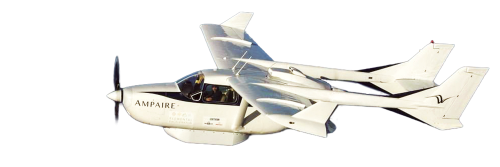
- Utah Department of Transportation. Ampaire, BETA, Joby, and other companies will test a wide range of next-generation aircraft and operational concepts across four states spanning the Pacific Northwest, the Rocky Mountains, and the Plains of Oklahoma.
- Pennsylvania Department of Transportation. The National Association of State Aviation Officials AAM Multistate Collaborative will work across 13 states to revitalize regional flights across the country, including routes similar to those supported through the Essential Air Service program. Partners include BETA, Electra, and other companies.
- Louisiana Department of Transportation and Development. BETA, Elroy Air, and other companies will conduct operations to test cargo and personnel transportation capabilities for flights into the Gulf of America and to energy industry locations in Louisiana, Texas, and Mississippi.
- Florida Department of Transportation. BETA, Electra, Joby, and other companies will manage state-wide operations focused on cargo delivery, passenger transportation, automation, and medical response.
- North Carolina Department of Transportation. BETA, Joby, and other industry partners will hold piloted medical and regional operations across the state while also developing an autonomous flight operation extending into Virginia.
- City of Albuquerque. Working with Reliable Robotics, this project is focused on developing autonomous
cargo operations.

“These projects cover the full spectrum of AAM use cases — from medical and cargo transport to search-and-rescue operations to carrying passengers and a myriad of other public benefits,” said Sunil Chatani, eIPP team lead within the FAA’s Office of Advanced Air Mobility Technologies. “I’m extremely excited about the direction of this technology and the broad benefits this expanding industry can deliver through the eIPP.”
Chatani emphasizes that data gathered from the eIPP projects will inform AAM policy-making in an iterative process. “Throughout the program, FAA organizations are evaluating safety risks alongside mitigation strategies, system redundancies, and other critical factors to determine overall readiness to expand operations,” he noted. “The data and operational experience we gain will help us develop the policy and performance standards needed to safely integrate these advanced technologies into the National Airspace System.”
Significantly, the eIPP is being conducted with general aviation in mind.
“We’re taking into account many variables, including traffic patterns, point-to-point visual flight rules (VFR) routes, controlled class B airspace with standard instrument departure and arrival procedures, and more,” said Chatani. “The data we’re collecting can only improve operations for both air carriers and general aviation.” He adds, “Then, as these technologies become more advanced and regulatory pathways become standard, general aviation will incorporate them into a variety of beneficial use cases.”
“With safety as our top priority, we will maximize every opportunity under the eIPP to gather real-world data and operational experience to guide future policies,” noted Chatani.

“The insights we gain from the program will not only accelerate integration of AAM into the NAS but also lay the foundation for future operations and support the continued evolution of this industry through a regulatory and operational framework needed for widespread AAM integration.”
Jim Rose, the director for AAM Technologies in FAA’s Office of Advanced Aviation Technologies is upbeat about the program’s progress. “In the coming months, eIPP operations will complete the initial 90-day phase with operations from each lead partner,” he said. “It’s truly an exciting time!”
Learn More