


Mastering MOSAIC
What Every Airman Needs to Know About the FAA's Overhaul of Light Sport Regulations
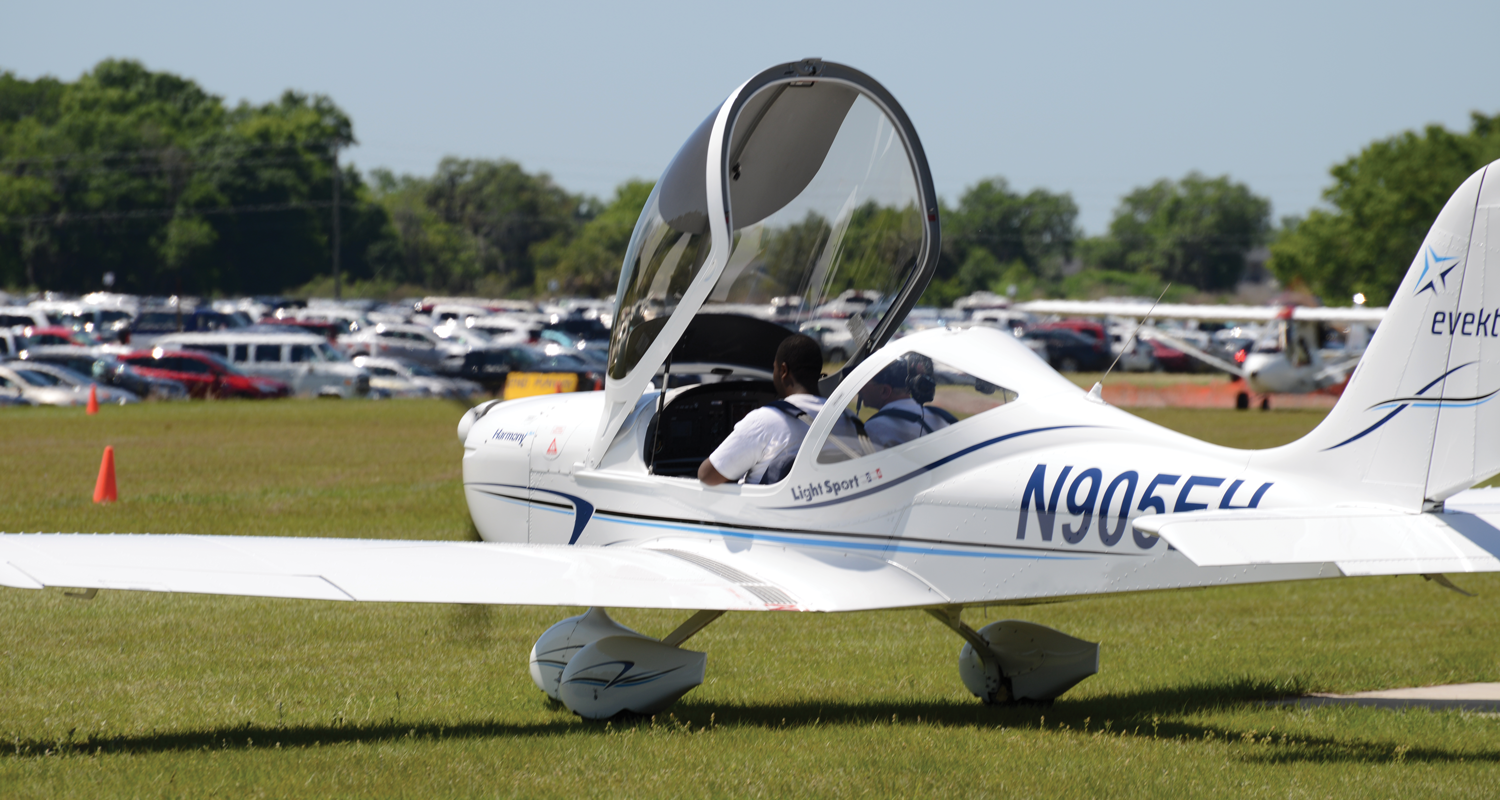
Here’s a quick aviation riddle:
- What has no weight limit and can soar faster and further than before?
- What has engines of any kind — reciprocating, electric, or even hybrid — where once only one type was allowed?
- What has the power to let sport pilots fly at night, operate helicopters, and take on new recreational flying opportunities?
- What has new privileges for light-sport repairmen that lets them work on more aircraft than ever?
It’s the FAA's new Modernization of Special Airworthiness Certification (MOSAIC) final rule. Long anticipated by the industry and the general aviation (GA) community, MOSAIC updates and expands regulations to address the evolving needs of aviation and airmen, spurring future growth and innovation. While the rule has positively impacted the industry — helping make GA safer, more accessible, and more affordable — its wide-ranging changes have raised many questions about what airmen can and can’t do under the new rule. With MOSAIC now in full effect, it’s a good opportunity to examine the rule more closely and what its changes mean for the broader GA community.
Light Sport 2.0
The FAA published the MOSAIC final rule in July 2025 to amend rules for the design, manufacture, airworthiness certification, operation, maintenance, and alteration of light-sport category aircraft. Building on the 2004 Light Sport rule, MOSAIC significantly expands regulations in several key areas:
- Certification of light-sport category aircraft (LSA)
- Sport pilot certification and what aircraft they can operate
- Part 91 operations
- Light-sport repairmen (LSR)
- Maintenance of LSA and experimental amateur-built (EAB) aircraft
To help provide context for the purpose and intent of MOSAIC, let’s review some background.
The Motivation Behind MOSAIC
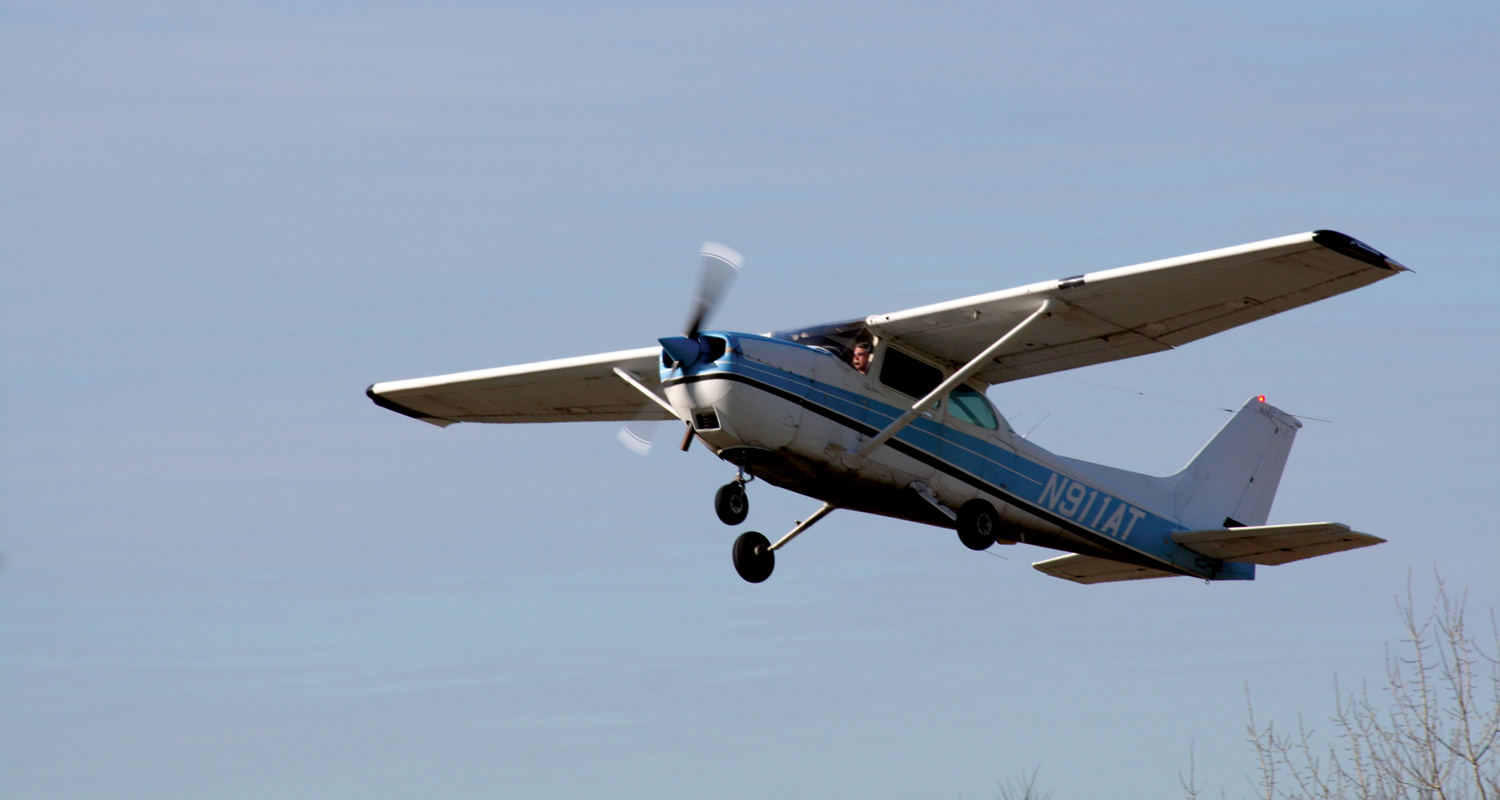
While the sport pilot rule of 2004 was groundbreaking in creating a new, faster path to flight and establishing the light-sport aircraft category, the rule’s weight and performance limitations for LSA indirectly hampered the adoption of certain safety-enhancing technologies that have rapidly evolved over the last two decades. Under the 2004 rule, LSA were capped at 1,320 pounds and 120 knots, and were also limited to daytime VFR flight, fixed gear and props, and a maximum of two seats. Today’s technological advances, such as composite materials, advanced avionics and autopilot systems, and hybrid propulsion technology, have spotlighted the need for change.
This reality provided the impetus for a set of revised rules to give sport pilots a pathway to safer, more rugged aircraft. By using performance-based standards instead of prescriptive limits, the FAA can achieve higher safety standards and, at the same time, provide industry with greater design flexibility that would help drive down the cost of new aircraft. There is also the benefit of steering sport pilots away from higher-risk experimental amateur-built aircraft lacking certification standards toward FAA-certified, factory-built aircraft.
Another key factor in MOSAIC’s development was the FAA’s safety continuum, a guiding principle that establishes regulatory oversight and safety standards that are commensurate with operating privileges and risk. One MOSIAC goal was ensuring the operating privileges and certification requirements for light-sport aircraft are appropriate for their place on the safety continuum. Under this approach, the FAA determined that gross weight does not inherently dictate risk, allowing them to instead shift to a performance-based metric based on stall speed. The FAA also recognized the need to decouple sport pilot privileges from limitations for certification of LSA.
Before MOSAIC, the definition of light-sport aircraft (in 14 CFR part 1) set the same performance limits for LSA certification, sport pilot privileges, and light-sport repairman privileges. By eliminating this definition, MOSAIC allowed the FAA to separately adjust privileges and limitations as appropriate for each of these three areas.
The complexity of this undertaking would understandably take some time to sort out.
“The challenge was determining how much more we could expand what aircraft a sport pilot could operate within the confines of existing training, testing, and certification requirements,” says Aviation Safety Inspector Marcel Bernard with the FAA’s General Aviation and Commercial Division and the MOSAIC rulemaking team. “A lot of regulations and rules had to change to make this happen and accomplish what we wanted, including parts 61, 21, and a new part 22.”
The regulatory changes also prompted various safety analyses to secure buy-in from FAA offices and the public. Although it took nearly eight years to finalize and spanned 717 pages, MOSAIC has the potential to significantly ease the burden on thousands of airmen interested in this sector of aviation as well as spur more widespread growth and innovation. Let’s have a closer look at the details.
Aircraft Certification
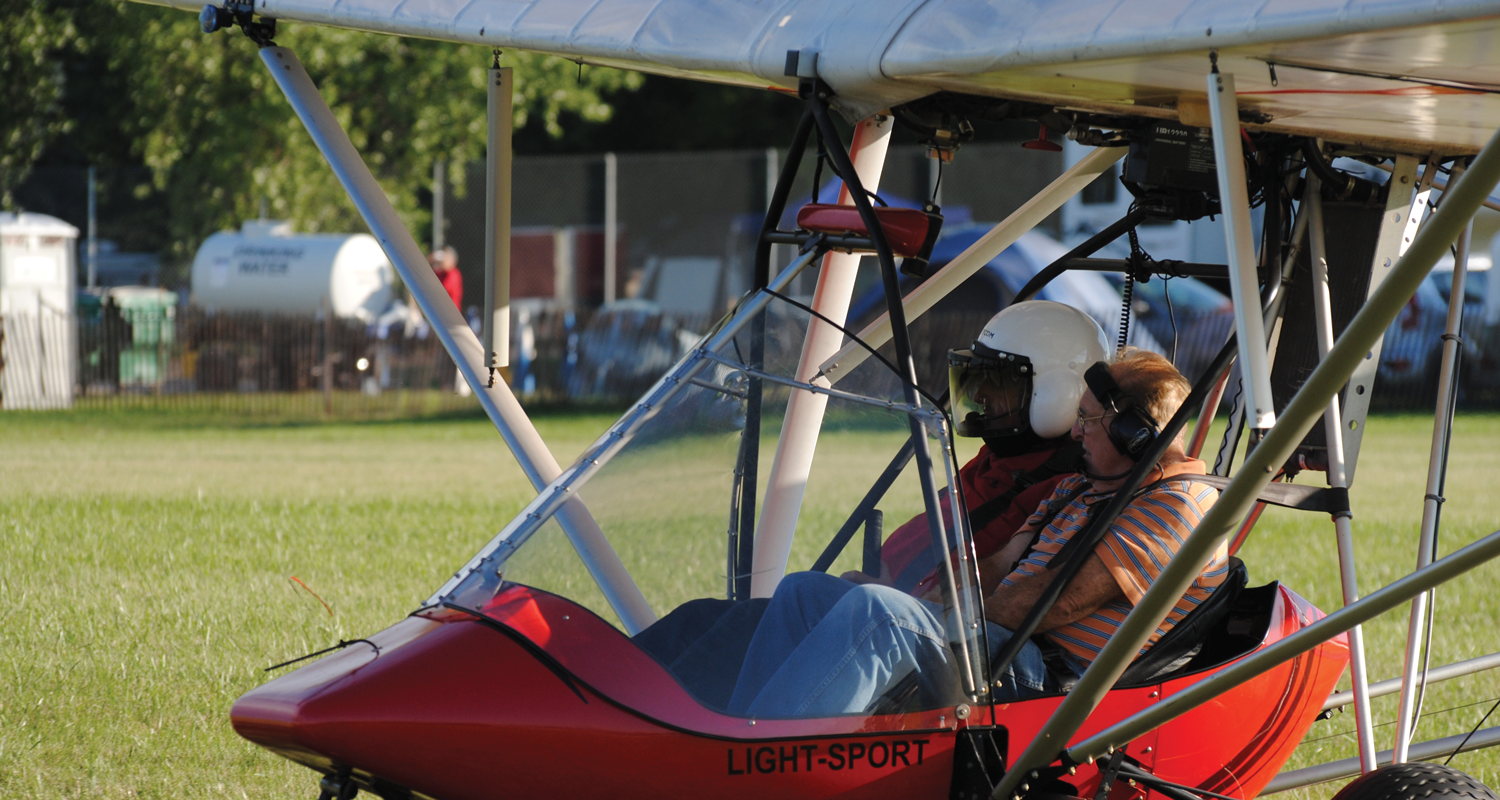
Under MOSAIC, the newly expanded LSA category allows for any type of aircraft, including airplanes, gliders, weight-shift control, powered parachutes, helicopters, gyroplanes, and electric vertical takeoff and landing (eVTOL) rotorcraft and powered-lift aircraft. Although never certificated in the light-sport category, lighter-than-air aircraft like balloons, blimps, and airships can also be certificated as LSA.
MOSAIC significantly expands the performance limits for LSA certification. This includes a change in VSO maximum stall speed (now 61 knots with flaps extended for airplanes), an increase from two to four seats (airplanes only), and an expansion of operating purposes for LSA to include certain low-risk aerial work, like banner towing and aerial photography. The MOSAIC certification standards also eliminates several previous restrictions for LSAs and now allows any weight, any type or number of engines or propellers, and any type of landing gear.
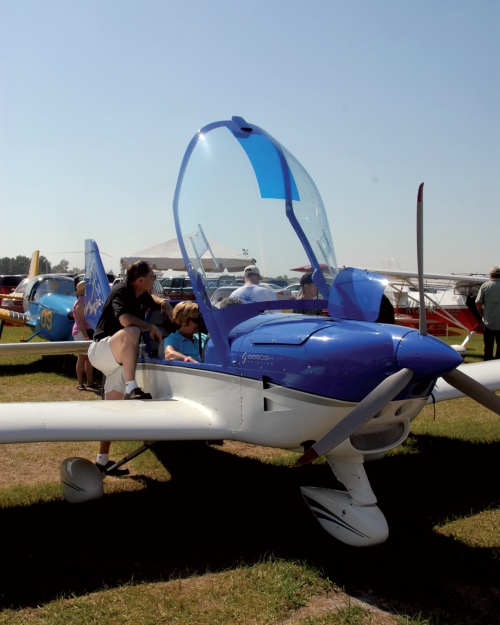
While these changes are considered significant improvements, pilots need to recognize some remaining safety requirements. The new stall speed limits for airplanes that sport pilots can operate must be consistent with their original certification; aftermarket alterations to lower stall speed are not permissible for qualification. Additionally, removing seats from an aircraft to qualify it for sport pilot use is not permitted.
Certification procedures for new LSAs have always required a statement from manufacturers affirming that they have met the applicable consensus standards detailing how the aircraft will meet FAA requirements. Under MOSAIC, however, the industry developed a full new set of LSA consensus standards that specify how manufacturers will meet the design, production, and airworthiness requirements in the new 14 CFR part 22. The FAA accepted these standards through a Federal Register notice on July 16, 2026, a final step before they became official on July 24.
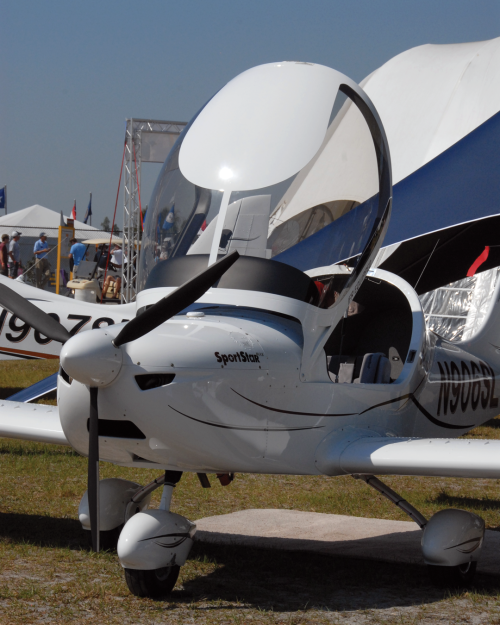
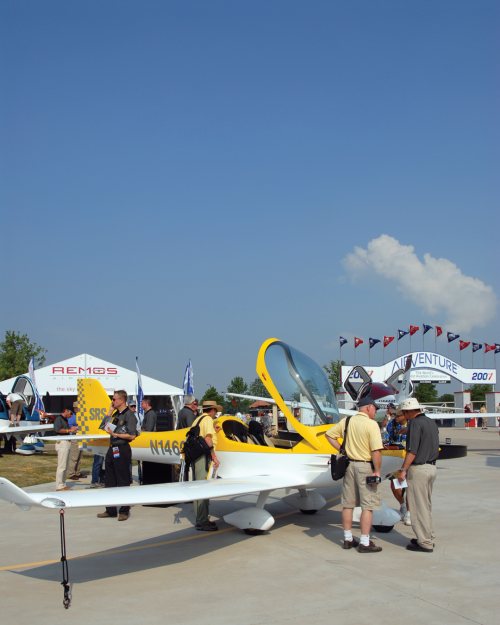
Having MOSAIC’s final effective date coincide with EAA’s AirVenture 2026 provided the general aviation community with the perfect opportunity to see firsthand the impact of the new rule. During the event, several manufacturers announced designs of MOSAIC-compliant aircraft that aim to take advantage of the newly expanded LSA performance capabilities, carry a much lower price tag than a comparable part 23 aircraft, and showcase the variety of emerging aircraft types. Examples include a four-seat, six-motor electric design from Cosmic Aerospace, a twin-engine design from Sling Aircraft, and a two-seat IFR trainer from Textron Pipistrel. EAA was also proud to celebrate the first delivery of an aircraft built under MOSAIC rules at AirVenture, a Van’s RV-12.
Bottom-line benefits from the expanded LSA certification limits include:
- Improved safety with design flexibility for optional safety features
- More useful, higher-performing aircraft that can carry more passengers, cargo, and fuel
- More rugged designs not constrained by weight limit
- Increased flexibility with allowable types of engines, propellers, and landing gear
- Encouraged innovation with support for new propulsion types
- Lower costs for owners, trainers, and maintainers
Sport Pilot Certification
While MOSAIC has a strong focus on the certification of light-sport category aircraft, it also impacts aspects of sport pilot certification and training that warrant attention. The biggest change is the types of aircraft that sport pilots are now allowed to operate. As mentioned, the FAA eliminated the existing LSA definition and adopted the new design and performance limits in 14 CFR section 61.316, establishing which aircraft limits fall within sport pilot privileges. This section removes aircraft weight and airspeed limitations, permits the use of any powerplant type (except turbo-jet), allows aircraft with retractable gear and controllable-pitch propellers, allows the use of four-seat airplanes with a two-person onboard limitation, and requires aircraft to be able to establish a controlled descent during an engine failure.
“It’s a bit of a learning curve to understand how we’ve separated aircraft certification from pilot certification since we no longer point to a shared light-sport aircraft definition,” says Bernard. He points out that some sport pilots might think they can operate a multi-engine aircraft certified as an LSA. “That’s not the case,” he states. “While you could have a multi-engine or powered-lift aircraft certified as a light-sport category aircraft, there are no multi-engine or powered-lift privileges available to sport pilots.” A higher-grade pilot certificate is required to fly a multi-engine airplane. Bernard adds that it’s helpful to remember that it’s a sport pilot certificate, not a light-sport pilot certificate.
That said, thanks to changes in design and performance limits, MOSAIC opens up a much larger pool of normal category (part 23), LSA, and EAB aircraft for sport pilots to operate.
Another area of potential confusion in pilot certification is that category and class privileges for sport pilots are granted through logbook endorsements rather than ratings.
“When a sport pilot takes a practical test, the examiner puts an endorsement in their logbook that they can fly a single-engine land airplane, glider, or gyroplane,” explains Bernard. “That’s a new concept for people to absorb who are used to taking a practical test and getting a rating,
not a privilege.”
Endorsements also play a role for sport pilots making use of some of the newly expanded privileges under MOSAIC, such as flying at night and using aircraft with constant-speed propellers and/or retractable landing gear. This endorsement requirement also applies to sport pilot instructors. For the night-flying privilege, three hours of night training are required, but credit for previous night experience is allowed. Note that sport pilots or instructors who wish to fly (or instruct) at night must possess a valid FAA medical certificate or satisfy BasicMed requirements. If not flying at night, a pilot exercising sport pilot privileges may use a valid driver’s license to meet medical requirements if the pilot’s medical certificate was not denied or revoked, and they medically self-certify.
The FAA has also added a new rotorcraft-helicopter privilege for sport pilots. However, the helicopter must have the simplified flight controls (SFC) designation issued by the helicopter manufacturer. Manufacturers have not yet produced an LSA helicopter with the SFC designation, but it is expected in the near future.
For more information on sport pilot training and certification, particularly with flight instructor limitations and SFC endorsements, see FAA Advisory Circular 61-146 and Information for Operators 26006 (PDF).
Operational Changes
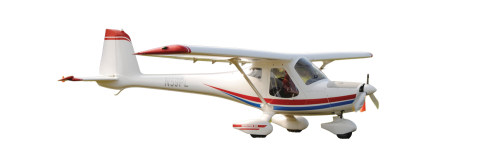
In addition to allowing sport pilots to fly larger and more advanced aircraft, MOSAIC also introduces a few exciting changes to flight operations under part 91. Notably, commercial pilots can now use an LSA to perform some limited aerial work for compensation or hire, such as aerial photography, pipeline patrol, and banner towing (see 14 CFR section 91.327). However, carriage of cargo or passengers for compensation is not permitted. LSA manufacturers must declare compliance with a consensus standard for the type of aerial work being performed and include the requirements in the Pilot’s Operating Handbook.
Other new operational changes under MOSAIC allow the FAA to issue operating limitations for experimental aircraft over densely populated areas that extend to all phases of flight, not just takeoff and landing. MOSAIC also creates a new experimental purpose for operating former military aircraft to support repositioning for repairs, maintenance, storage, or public aircraft operations. Additionally, the FAA revised right-of-way rules to include more aircraft, including those with non-traditional forms of propulsion.
Maintenance and Light-Sport Repairmen
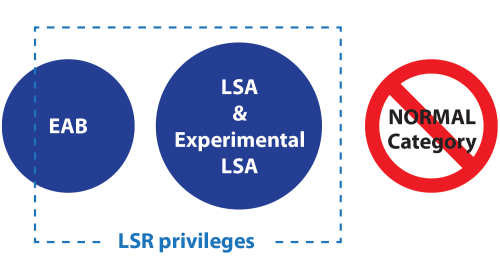
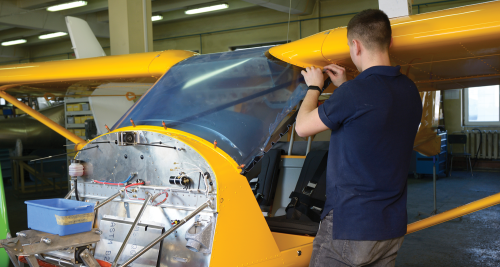
The final key area is MOSAIC’s impact on maintainers. A few changes worth highlighting concern light-sport repairman (LSR) privileges and training. For starters, with proper training, MOSAIC greatly expands the range of aircraft types an LSR can work on, given the new performance-based parameters for light-sport aircraft.
The other big change is that an LSR can now conduct the annual condition inspection on EAB aircraft (14 CFR section 21.191). “This is a huge deal from an aircraft owner and maintainer standpoint,” says airworthiness Aviation Safety Inspector Tanya Glines with the FAA’s Aircraft Maintenance Division and MOSAIC rulemaking team.
This change was not included in the Notice of Proposed Rulemaking (NPRM) but was considered after substantial public feedback. “The FAA reviewed the comments, researched previous rules, and applied the safety continuum concept to develop a solution that has been received as a positive development for the industry,” adds Glines. However, she cautions owners to ensure that the aircraft’s operating limitations allow an LSR to perform the inspection.
Other significant MOSAIC benefits include the elimination of the requirement for manufacturers to authorize minor alterations and repairs, as well as making compliance with manufacturer-issued safety directives recommended rather than mandatory.
On the training side, LSR training courses for the maintenance rating are now performance-based instead of hours-based, drawing on applicable content from the mechanic Airman Certification Standards (ACS). The requirement for the LSR-Inspection rating remains at 16 hours.
While Glines states that the changes from MOSAIC are extremely well received by the GA maintenance community, there are still some areas of confusion. “We get a lot of folks asking how they can recertify their normal category aircraft to LSA so they can do their own maintenance,” says Glines. “Simply put, you can’t.” Additionally, privileges for an LSR with either an inspection or maintenance rating do not extend to normal category aircraft, even if it’s an aircraft a sport pilot can fly.
You can learn more about repairman certificate eligibility, training and certification requirements, and privilege limitations at faa.gov/repairmen. The page includes a helpful FAQ section that highlights MOSAIC-related changes and scenarios.
Why MOSIAC Matters
With MOSAIC now fully in effect, the public is starting to see firsthand some of the many benefits of this relieving rule. “Feedback so far has been phenomenally good,” says Aviation Safety Inspector Jim Newberger with the FAA’s Aircraft Certification Service and MOSAIC rulemaking team lead. Along with Bernard and Glines, the three have played an active role in educating airmen about the many changes through presentations and public interactions at aviation events.
“This is a fabulous achievement of the whole recreational sector,” says Newberger. “Industry partners helped shape the concepts for this expansion while the FAA rulemaking team worked tirelessly to develop the proposal and final rule, addressing over 1,300 public comments. That public input really made a difference and greatly impacted the final product,” he adds. Newberger also acknowledged the ASTM committee on light-sport aircraft for developing and gaining FAA acceptance of over 50 new consensus standards for LSA certification. “All of this collaborative work is helping to open an exciting new chapter in recreational aviation.”
Indeed, MOSAIC represents the most significant update to sport aviation regulations in decades. And it’s not only sport pilots who will benefit from this new rule; its impact extends far beyond. By streamlining processes and reducing red tape, MOSAIC fosters innovation and efficiency across the entire spectrum of aviation. With fewer regulatory constraints, manufacturers can design sturdier, more capable, and more affordable aircraft for all GA pilots. It also serves as a boon to flight schools with higher aircraft utilization, provides operators with additional revenue stream potential, helps unify flying club fleets, and gives private pilots facing medical challenges a viable off-ramp to keep flying under sport-flying privileges. These downstream benefits underscore MOSAIC's potential to transform not just light-sport aviation, but the broader aerospace landscape as well.
Learn More