


The Next Era of Supersonic Flight
How would you like to fly from Los Angeles to New York way faster than you can today? This dream may become a reality in the next decade.
DOT recently announced the first of two proposed FAA rules to enable supersonic flight over the United States.
The proposed rule stems from Executive Order 14304—Leading the World in Supersonic Flight. It would establish a noise-based certification standard — a requirement to prevent sonic booms from reaching the ground — and repeal the 1970s-era ban on supersonic flight over the U.S.
Supersonic flights have the potential to cut travel times by half or more. This would enhance U.S. economic resilience by enabling travelers to reach destinations and cargo carriers to ship goods across the U.S. faster than ever.
Restoring supersonic flight over land isn’t just about speed, it's about unleashing American innovation and spurring economic growth," said U.S. Transportation Secretary Sean P. Duffy. “The Trump Administration is continuing its unprecedented work to deliver exciting new travel options to the American flying public — and we’re ensuring people on the ground won’t be subject to excessive noise."
The second rule would define acceptable noise thresholds for takeoff, landing, and supersonic cruise flight based on testing and research, considering community acceptability, economic reasonableness, and technological feasibility.
The FAA aims to finalize both rules by mid-2027. Together, these actions would give aircraft manufacturers the standards they need to finalize their designs and bring these exciting innovations online.
"Advances in aerospace engineering, materials science, noise reduction, and new operational concepts will eliminate the old sonic boom,” said FAA Administrator Bryan Bedford. “This means we can ultimately repeal the ban from the 1970s on supersonic flight over U.S. territory while ensuring minimal noise impacts to residents in communities along the route and near airports."
A Longstanding Challenge
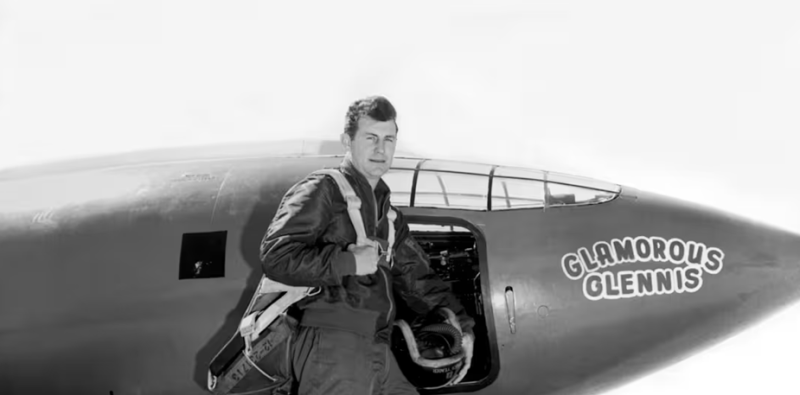
The promise of supersonic passenger flight dates back to 1947 when U.S. Air Force Capt. Charles “Chuck” Yeager broke the sound barrier, reaching about 700 miles per hour (Mach 1.06) in the Bell X-1 experimental rocket plane. This groundbreaking – or “sound-breaking” – achievement created widespread interest in civil supersonic flight but bringing it to fruition proved difficult.
In 1963, the FAA initiated the U.S. Supersonic Transport program to develop a Mach 2-plus aircraft with a 300-passenger capacity and intercontinental range. However, NASA’s supersonic tests over St. Louis and Oklahoma City in the 1960s revealed the noise and safety concerns of sonic booms. The tests resulted in public disapproval of recurring sonic booms that caused buildings to shake and glass to shatter.
Due to high costs and slow development, the U.S. government canceled the program in 1971. Two years later, due to inconclusive data on the impact of sonic booms at surface level, the FAA formally banned civil supersonic flights over U.S. land.
Boom to thump
Key to supersonic travel is protecting people on the ground from noise impacts.
“The executive order unlocks the future of supersonic flight by having FAA set noise standards for flight techniques such as Mach cutoff,” said the FAA’s Sterling Wiggins, a member of the rulemaking team. “While Mach cutoff is one technique, operators will be able to propose any technology or technique that would prevent sonic booms from reaching the ground.”
In Mach cutoff, the boom bends and refracts back into the atmosphere, significantly reducing its impact at ground level. Aircraft design, atmospheric conditions, speed and altitude are key factors.
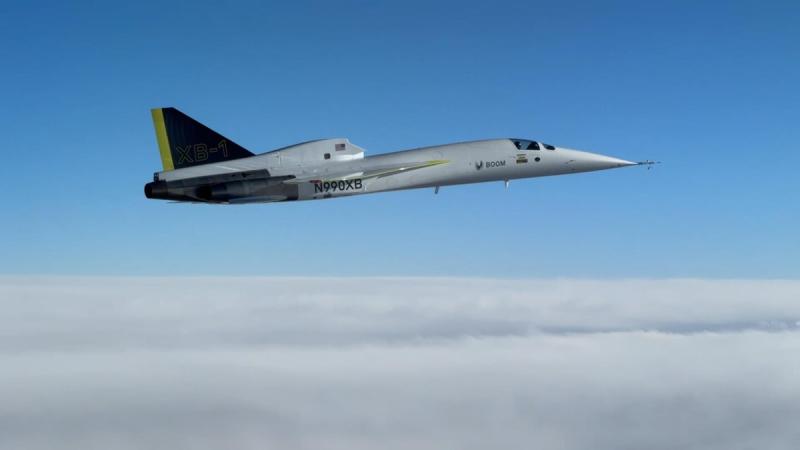
In a January 2025 test flight over the Mojave Desert, aircraft manufacturer Boom Supersonic demonstrated Mach cutoff, “Boomless Cruise,” in its experimental XB-1 jet, the first U.S.-manufactured civil supersonic jet to break the sound barrier.
NASA’s Quesst mission features the one-of-a-kind X-59 quiet supersonic research aircraft that demonstrates technology to fly faster than the speed of sound without generating loud sonic booms. The X-59 broke the sound barrier for the first time on June 5, 2026, setting the stage for test flights that will enable NASA to survey how people respond when the X-59 flies overhead. NASA will then share these reactions to the quieter sonic "thumps" with the FAA and international regulators to help establish new noise thresholds for supersonic flight over land.
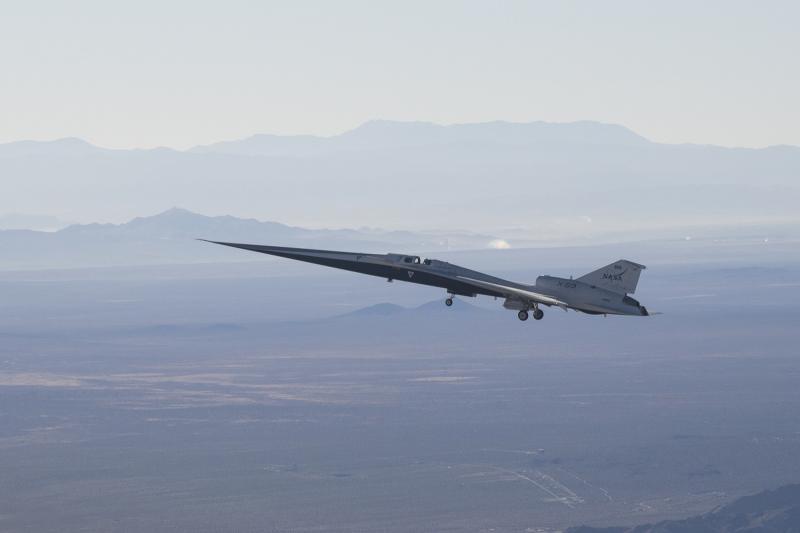
“When the first quiet supersonic flight is heard on the ground, that’s going to be an epic achievement, and that’s coming up this summer,” said Peter Coen, mission integration manager for Quesst. Coen explained that the sonic boom diminishes to the equivalent of a car door closing compared to the “powerful thunderclap” of a loud sonic boom.
The FAA and NASA have a process where NASA’s research helps the FAA write rules while the FAA’s findings during aircraft certification help NASA develop future technologies.
Academia has a hand in the future of supersonic flight too, with several institutions conducting research on sonic boom and takeoff-and-landing noise through the FAA’s ASCENT program. These include Penn State University, Georgia Tech Research Institute, Stanford University and the University of Illinois.
“The future of civil supersonic travel is here,” said the FAA’s Julie Marks, “and we’re excited to be partnering with U.S. and international colleagues to make it a reality."
Learn more at www.faa.gov/supersonic.