

FAA's Safety Plan for FIFA World Cup 2026™

FIFA World Cup 2026™ is a No Drone Zone
As fans from around the globe gather to celebrate the beautiful game, safety and security remain our top priorities. To ensure a safe environment for all players, attendees, and staff, the Federal Aviation Administration (FAA) and law enforcement have officially designated all FIFA World Cup 2026™ stadiums and surrounding event spaces as strict "No Drone Zones." If you are traveling to the matches, please be aware:
Do not bring a drone to the stadium or any official World Cup events.
What is a "No Drone Zone"?
A "No Drone Zone" means that unauthorized drone flights are strictly prohibited in the designated airspace and surrounding grounds. During major sporting events like the FIFA World Cup™, the FAA implements Temporary Flight Restrictions (TFRs) to limit air travel and secure the airspace. Taking off, landing, or flying a drone within these restricted areas is a serious violation of federal and local regulations.
Help spread the word! Download our FIFA World Cup 2026™ No Drone Zone toolkit.
Strict Penalties for Violators
The FAA, in close coordination with the Federal Bureau of Investigation (FBI) and local law enforcement, will be actively monitoring the airspace. They will utilize federally authorized capabilities to detect, track, and assess any unauthorized drone activity.
Operating a drone inside a restricted World Cup No Drone Zone carries severe consequences. If you fly a drone without authorization, you may face:
- Fines: Civil penalties up to $75,000 per violation, criminal fines up to $100,000.
- Confiscation: The FBI is authorized to use specialized mitigation tools to intercept and seize your drone.
- Criminal Prosecution: Violators may face federal criminal charges and immediate arrest.
The FAA recently launched the Drone Expedited and Targeted Enforcement Response (DETER) initiative to accelerate the identification and enforcement of drone violations. DETER will be used at the World Cup to support enhanced enforcement efforts.
Federal law enforcement is legally authorized to use specialized mitigation tools to address unauthorized drone flights and can take action to move aircraft out of restricted airspace while preserving evidence for potential enforcement action.
World Cup match-venue restrictions will apply at the following locations:
| Venue | City, State | Dates (2026) |
| SoFi Stadium | Los Angeles, CA | June 12,15, 18, 21, 25, 28, July 2, 10 |
| Levi’s Stadium | Santa Clara, CA | June 13, 16, 19, 22, 25, July 1 |
| Lumen Field | Seattle, WA | June 15, 19, 24, 26, July 1, 6 |
| AT&T Stadium | Arlington, TX | June 14, 17, 22, 25, 27, 30, July 3, 6, 14 |
| NRG Stadium | Houston, TX | June 14, 17, 20, 23, 26, 29, July 4 |
| Mercedes-Benz Stadium | Atlanta, GA | June 15, 18, 21, 24, 27, July 1, 7, 15 |
| Gillette Stadium | Foxborough, MA | June 13, 16, 19, 23, 26, 29, July 9 |
| Hard Rock Stadium | Miami, FL | June 15, 21, 24, 27, July 3, 11, 18 |
| Arrowhead Stadium | Kansas City, MO | June 16, 20, 25, 27, July 3, 11 |
| MetLife Stadium | East Rutherford, NJ | June 13, 16, 22, 25, 27, 30, July 5, 19 |
| Lincoln Financial Field | Philadelphia, PA | June 14, 19, 22, 25, 27, July 4 |
Additional restrictions will apply to drones at certain World Cup fan-event locations.
Unless specifically authorized, drone operations will be prohibited within a 1-nautical-mile radius and up to 1,000 feet above ground level at the following locations:
| Venue | City, State | Dates (2026) |
| LA Memorial Coliseum | Los Angeles, CA | June 10-15 |
| Dallas Fair Park | Dallas, TX | June 11-30, July 1-7, 9-11, 14, 15, 18, 19 |
| East Downtown District | Houston, TX | June 11-30, July 1-7, 9-11, 14, 15, 18, 19 |
| Centennial Olympic Park | Atlanta, GA | June 11-15, 17-21, 24, 26, 27, July 1, 7, 14, 15 |
| City Hall Plaza | Boston, MA | June 11-26 |
| Bayfront Park | Miami, FL | June 13-30, July 1-5 |
| National WWI Museum and Memorial | Kansas City, MO | June 9, 11-14, 16, 19-21, 24-27, July 1, 3, 4-7, 9-12 |
| Sports Illustrated Stadium | Harrison, NJ | June 13-30, July 11-19 |
| Louis Armstrong Stadium | Flushing, NY | June 11-27 |
| Emily Warren Roebling Plaza | Brooklyn, NY | June 13-19 |
| Rockefeller Center | New York, NY | July 4-19 |
| Lemon Hill Park | Philadelphia, PA | June 11-30, July 1-19 |
The locations listed above are subject to change, and additional sites may be added. Restrictions will be in place in other locations including team hotels, base camps and training facilities.
Additional details are available in the FIFA World Cup 2026 Flight Advisory. Pilots should also check NOTAMs for the most current dates, times, and restrictions.
Protect the Match, Protect the Fans
Even if you are an experienced remote pilot or have a standard airspace authorization, you are not permitted to fly during the active TFR windows surrounding World Cup events. Airspace restrictions apply to everyone, and land-use approvals for takeoff and landing are strictly enforced.
Drone Pilots: Always check airspace restrictions using the B4UFLY apps or official Temporary Flight Restriction (TFR) notices before you fly anywhere near a host city during the tournament.
Help us keep the skies safe and the focus on the pitch. Leave your drone at home, respect the No Drone Zones, and get ready to enjoy the 2026 FIFA World Cup™!
Flying to the 2026 FIFA World Cup™ Matches
Whether you are piloting a private aircraft or flying commercially to attend the matches, FAA's mission is to keep you safe when you fly. Find resources and information for pilots and passengers attending the FIFA World Cup™ matches below.
Air Traffic Procedures for Private Aircraft
As the United States prepares to host the 2026 FIFA World Cup™, skies above our host cities will be exceptionally busy. If you are planning to fly your private aircraft to any of the tournament matches, the Federal Aviation Administration (FAA) has implemented special air traffic procedures and safety plans to ensure a safe and equitable flow of air traffic.
Please review the following procedures and check back frequently for updates prior to your departure.
Special Air Traffic Procedures & Flight Planning
During periods of heavy demand surrounding World Cup matches, pilots should anticipate strict Traffic Management Initiatives (TMI).
- Flight Plans: You must file flight plans at least 6 hours, but not more than 24 hours, prior to your proposed time of departure. This is required to ensure TMIs reflect authentic demand. Filing early may minimize your assigned delay. Duplicate flight plans are subject to removal from the system and may result in increased delays.
- Air Files & IFR Pick-Ups: Air files and IFR pick-ups will not be accepted from airborne flights to or from airports in the host city areas, except for genuine emergencies. Airborne changes of destination to area airports will also not be accepted.
- Ground Delay Programs (GDP): When a GDP is in effect, aircraft must depart within 5 minutes of their assigned Expect Departure Clearance Time (EDCT). If you are unable to do so, you must advise ATC and request a new EDCT assignment.
- VFR Arrivals: VFR arrivals should expect lengthy delays and potential holding during peak traffic periods surrounding match days. VFR advisory service within the airspace of host city TRACONs will be on a workload-permitting basis.
- Training Flights: Training flights, practice approaches, touch-and-go landings, and student solo cross-country flights are highly discouraged in the airspace surrounding host cities during the tournament and may be limited or suspended.
Security Provisions & Temporary Flight Restrictions (TFRs)
Pilots should anticipate Temporary Flight Restrictions (TFRs) in the airspace surrounding all World Cup stadiums on match days. Typical TFRs limit the availability of certain operations, including flight training, glider operations, and unmanned aerial system (UAS) operations.
Access to some local airports may be restricted. TFR information is published by FDC NOTAMs, normally 3 to 5 days prior to the event. Always check NOTAMs frequently to confirm you have the most current information. TFR NOTAMs and graphics are available at the FAA TFR website.
Read the 2026 FIFA World Cup™ Flight Advisory
Know Before You Go
Think about what you need to do to get through screening quickly before you zip up your bags.
- If you are flying commercially to attend the matches, it is crucial to monitor the status of your destination airport. Due to the high volume of traffic, delays and reroutes are possible. Check airport status and delays.
- View TSA's checklist of Travel Tips.
- Pack Safe before you fly.
- Review TSA's 3-1-1 for Liquids rule.
- If you or someone you know will require accommodations while flying, read about Passengers with Disabilities
- The Department of Transportation (DOT) launched an interactive Customer Service Dashboard to provide travelers with up-to-date airline customer service policies on controllable cancellations and delays to ensure customers have easy access to information when problems arise. Know your airline's policies in the event of a delay or cancellation.
Read the FIFA World Cup 2026™ Traveler's Guide
Enroll in TSA Pre Check
If you fly often, consider TSA's Pre Check program for expedited screening at certain airports and airlines.
Check for Prohibited items
Use the "MyTSA" app to find helpful information about TSA policies and procedures.
- Review information about flying with your electronic devices.
- Can you fly with batteries, medical devices or lighters? Review Pack Safe guidance.
- View TSA Prohibited Items.
Prepare for Security
- Have a valid U.S. federal or state-issued photo ID and your boarding pass ready.
- Learn more about TSA's security screening process.
- View your airport's security wait time.
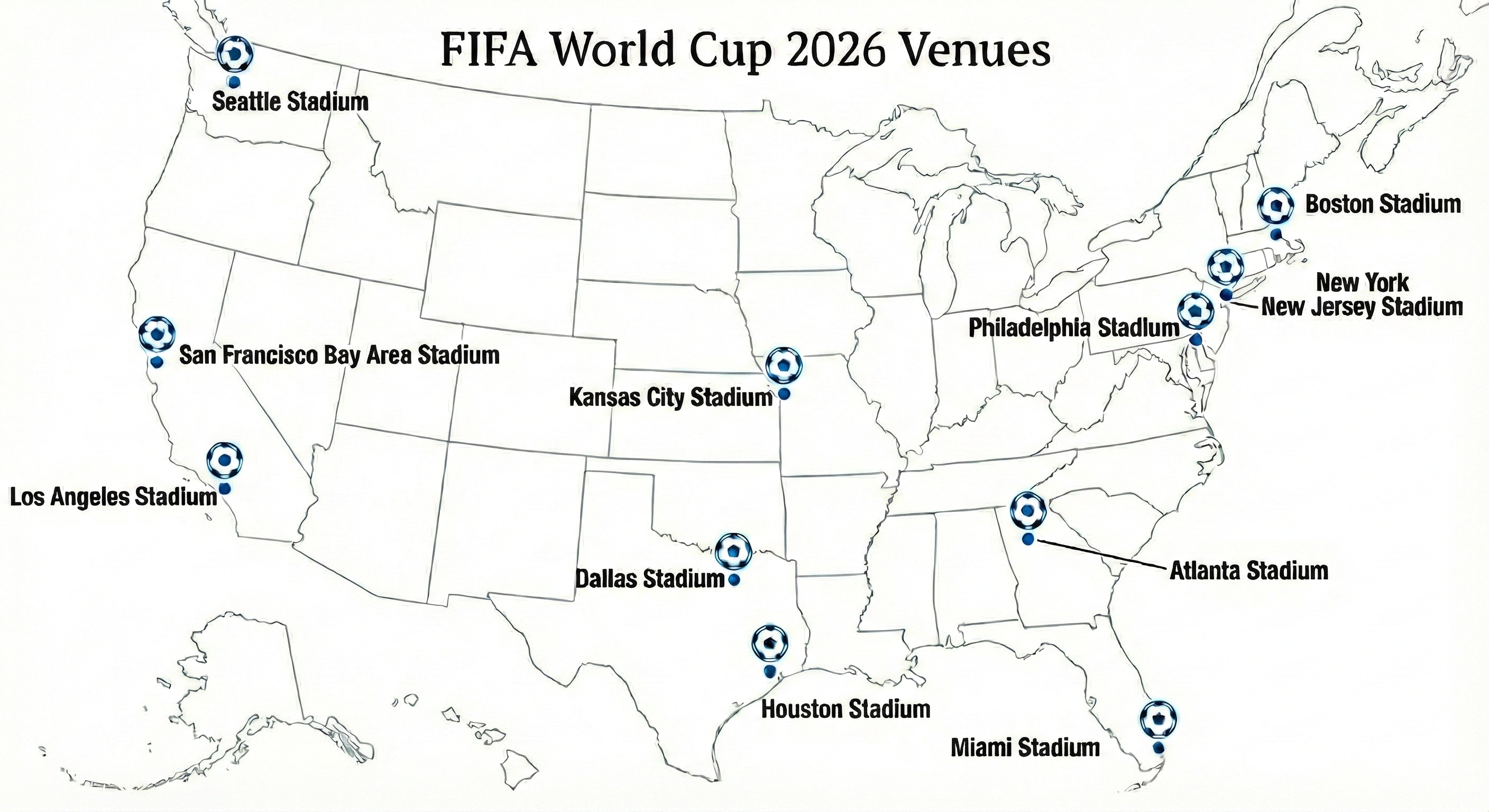
2026 FIFA World Cup™ Host Cities and Stadiums
Special air traffic procedures and TFRs will be applicable to airports servicing the following 2026 FIFA World Cup™ stadiums:
Fly safely, plan ahead, and enjoy the 2026 FIFA World Cup™!