


Newsroom
Airport Design Challenge 7-12th Grade Awards Remarks
Remarks as prepared for delivery.
Hey, good afternoon, everyone. Although, now that I think about it, for some of you, it might be the morning.
Or the evening, depending on where you are in the world.
That’s one great thing about a virtual meeting platform. We can connect throughout the world.
Over the past two years we’ve all gotten a lot of experience using virtual platforms and tools to learn and work. It’s been a little bit of a mixed bag, but I think we’ve found some unique opportunities to do things differently in our offices and classrooms that maybe we wouldn’t have tried without the push from the pandemic. Certainly, your age group has adapted more quickly, having been hands on with technology since you were knee high.
Minecraft is a tool that allows you to imagine your own world; if you can dream it, you can build it. With the Airport Design Challenge, you applied those skills to a real world problem, and I’m delighted so many of you joined us. We had more than 2,800 students from 18 countries.
Your teachers weren’t just standing back and watching, either. We had more than 80 educators in the program this year, and I thank all of you for your support.
And congratulations to this year’s finalists! I saw your YouTube videos. The builds you made were superb!
I flew F-15 fighter jets in the Air Force. And I flew commercial passenger jets for the airlines. So I’ve been to many airports – both big and small.
I can see you thought through every aspect of your airport designs – like the runways and taxiways … the terminals … and the air traffic control tower.
This challenge starts out virtual, but it gets really real … really fast.
You had to think about the types of material used for pavement … and the placement of maintenance hangars and refueling stations.
You paid special attention to ensure passenger safety by designing runway safety areas and drawing surface markings.
When you thought about the airports future growth, some of you lengthened the runways at existing airports … and that could mean you need to build a taller air traffic tower, so that controllers can see the full surface.
I really liked some of your future innovations – like adding solar farms … advanced radar … and drone operation bases.
Just imagine adding a vertiport to the airport you designed. Orville and Wilbur weren’t thinking about electric vertical takeoff and landing aircraft, and they weren’t thinking about air taxis for people. But you are. Where would you put it?
Or just imagine if you built a spaceport nearby to launch space rockets. What would that look like? How would you make sure the launches don’t interfere with planes taking off and landing at the airport?
These are the kinds of things we’re thinking about in the aerospace industry.
And we’re looking for smart young people like YOU to join us. We want a diverse group of people from all backgrounds and walks of life.
Maybe you’ll want to become a pilot. Or an air traffic controller … a drone operator … an aviation maintenance technician … a safety inspector … an aerospace engineer … or an astronaut. The aerospace industry encompasses an enormously broad set of career paths, and the skill sets we need are expanding every year.
Come help us make flying safer … more efficient … more secure … and more environmentally friendly.
Whatever career you choose, I hope you are happy and successful.
I always tell everyone in the aerospace industry that we must always be committed to continuous improvement.
That goes for all areas of your life. Always look for ways to improve, in whatever you do.
So continue to learn in school. Develop your talents and skills.
Team up with others. And keep working on great projects.
As you do these things, you’ll build a career, and maybe help us design solutions that will improve the world.
Again, we are proud of all of you. Stay safe. And best of luck to our finalists!
Letter from Steve Dickson to the Workforce and the American Public
By now, most of you have heard that I will be stepping down as FAA Administrator as of March 31. As I also told the nearly 45,000 FAA employees, I am tremendously proud of the work we’ve accomplished over a very short time.Commercial Space Transportation Conference Keynote Speech
Thank you, Audrey (Powers), for that introduction, and thank you to the Commercial Spaceflight Federation and General Monteith for inviting me here today to talk about two of my favorite topics—safety and space.
If you ever need to remind yourselves of what an amazing time we’re living in, consider this: About a month ago, NASA experienced a weather delay for one of its aircraft. Now weather delays are certainly not unusual, but this was first time they had to ground a flight due to weather ... on another planet.
The Ingenuity helicopter was set to take off on its 19th flight...Everyone was hoping for a “Go,” but a strong Mars dust storm made them reconsider. The great news is that the weather cleared out last week, and NASA put flight 19 into the logbooks. Here’s to flight 20!
Here’s another reminder of how amazing this moment is —On a bright clear Saturday morning in December, six civilians climbed into a Blue Origin capsule in West Texas, strapped in and launched into space on the New Shepard rocket.
One of those onboard was Laura Shepard Churchley, the eldest daughter of the first American in space—Alan Shepard. Ten minutes later, they touched down gently under three massive parachutes and a cushion of air. This was spaceflight made simple…Exhilarating to be sure, but to the casual observer, someone hit the Easy button and on went the show.
We’ve seen the youngest in space, the eldest in space, football players, billionaires and Captain Kirk himself. We’ve also seen three companies provide three different human spaceflight experiences.
Through advances in commercial space transportation, we’ve made it so space is no longer the realm of governments. Through the public-private partnerships forged by the commercial space model, NASA in many cases has become one of several customers of the commercial space industry, allowing the agency to save on costs and focus on furthering space research and exploration beyond Earth orbit.
Last year was a record year for commercial space, an average of more than one launch or reentry per week. Five of those launches and reentries had people onboard, but they were not NASA missions. This year looks to be another record-breaking year.
All of these activities occurred safely, for both participants and members of the public. That’s proof that it’s simple, right?
Well we all know it’s not. Churchley and her fellow space travelers went through about 20 hours of instruction and 20 simulator rides to prep for the 10-minute flight.
They experienced one launch scrub because of weather—just as her father did back in 1961. Churchley later said the training was intense, but that she was “cool as a cucumber on launch day” because of it.
Space is uplifting. It’s majestic. It gets in your blood. The Mars missions and Ingenuity helicopter are certainly in mine.
But the second we treat it as simple and commonplace—and let launch fever take over—it can bite back with extreme vengeance.
We’ve all seen it, and we all know we must avoid it at all costs. It’s not about hoping we get it right, it’s about living and breathing by tools that were built from the trials and tribulations of those who came before us.
In March 1961, Churchley’s father was supposed to have been the first human in space. But the NASA team had a problem—they had seen some anomalous data on a January flight that lofted a chimpanzee named Ham safely into space and back. They believed in the data. And despite massive public pressure to launch Shepard, NASA instead launched an empty capsule on March 24, 1961.
NASA figured out the issue, but the delay allowed Soviet Union cosmonaut Yuri Gagarin to be the first human into space on April 12, 1961.
Three weeks later, on May 5, Shepard went into space on the Mercury Redstone. President John F. Kennedy was so impressed and confident that a few weeks later, he made the commitment that the U.S. would travel to the moon by the end of that decade.
Now we have no idea if Shepard could have in fact accomplished that March launch, but we do know that the U.S. ultimately was the first to the moon.
Hard choices were made back in early 1961, and they were made for the right reasons, despite launch fever.
NASA was in uncharted territory....they were writing the rules as they went. One thing that is clear from historic accounts even from the Mercury days, is that the seeds of a positive safety culture had been planted. Of course, we wouldn’t call it safety culture for a few more decades.
Launch technicians from that era, when interviewed about the first person in space, said the NASA team had instilled a culture of not punishing people for mistakes if they admitted making errors—a fundamental ingredient for a healthy safety culture.
“We got rid of a lot of our problems, what we called ‘phantoms’, by owning up to mistakes,” recalled one of the former technicians in an Air & Space magazine article from 2012.
He told of one incident where a rocket on the launch pad experienced a power glitch. It turned out that a janitor had mistakenly disconnected—then reconnected—a power cable while he was cleaning the trenches where the wires were laid. The janitor reported what he had done.
“We would have ended up replacing all the cables if that janitor hadn’t told us what he had done,” the technician said. What’s more, even though the janitor’s company wanted to fire him for the incident, the team insisted that he be kept on. They had his back.
That’s how a healthy safety culture works—If you’re treated fairly for doing the right thing, you’ll do the right thing next time too...When people are free to disclose, we know what’s happening in the system and we can correct the system.
Otherwise we operate at our peril.
Even with the seeds of a positive Safety Culture in place, not everything went smoothly for NASA.—We all know about the tragedy of Apollo 1 in 1967, when three astronauts were killed by a cabin fire during a ground test.
We all know about the almost tragedy of Apollo 13, and the loss of the Space Shuttle Challenger crew in another case of launch fever. The Challenger accident, along with other disasters of the 1980s, is widely recognized as one of the triggering events for the development of modern Safety Culture principles.
For Challenger, investigators determined that schedule pressure was allowed to overrule a “safety first” attitude.
With a positive safety culture, productivity and safety do not compete one for one. But rather, safety is seen as part of the DNA of a sustainable organization.
And here’s where I take off my astronaut helmet and put on my FAA hard hat.
Our commercial space industry is going gangbusters, as I said earlier. But the progress of this industry hinges on absolute commitment to safety principles, which grow from a positive safety culture.
This is particularly important for commercial space, where Congress has dictated that much of the industry is self-regulated and outside of the FAA authority.
We don’t regulate vehicle and participant safety—at least at the moment—but we have provided the industry with best practices from the aerospace world.
We delivered recommended practices for human spaceflight occupant safety, covering design, manufacturing and operations. It’s more than advice—it’s a blueprint for the various areas that we think should be the focus of regulations—should regulations be required.
Congress has given us a very narrow role for the moment—But I think the benefits of state-of-the-art safety concepts in place for aviation are clear examples of the best practices that work for space.
That’s why we continue to engage with industry to develop a voluntary safety reporting system. Much of this work is done through the Commercial Space Transportation Advisory Committee, what many here call COMSTAC.
COMSTAC has been a great partner with the FAA for advancing this industry. It’s a mutually beneficial relationship.
With COMSTAC input, we created and delivered the Part 450 Streamlined Launch and Reentry Licensing Requirements regulations last year. We’re working together on many efforts, including two Aerospace Rulemaking Committees—which we’re calling SpARCs for short—that will investigate further rules for human spaceflight and financial responsibility regimes for licensed launch and reentry activities.
We’re moving at warp speed, and while we don’t anticipate that it will slow down any time soon, I want to assure you that we aren’t getting launch fever. The FAA is laser focused on safety first, and that won’t change.
But I understand how easy it can be to fall into the launch-fever trap—it’s always there. That’s why it’s critical to have a positive safety culture in place and to follow the rules and guidance already in place.
It’s in your best interest, because anything that appears to be contributing to the contrary is only going to increase pressure for the FAA to take a draconian approach to oversight. We really don’t want to do that.
And if anything appears to be contrary to safety, that will also erode the public trust....
Laura Shepard Churchley was an eighth-grader when she sat in front of a black and white TV and watched her father become the first American in space. In an interview after her own flight, Churchley remembered that she wasn’t nervous watching her father’s launch. She said she knew he’d be fine, that he’d trained for two years and that NASA was going to bring him home safely. They had his back.
That’s the kind of trust we must strive to achieve day in and day out in the aerospace business. There’s no other alternative if we’re to live long and prosper.
Thank you for listening, and have a great conference.
FAA Announces Internship Opportunities for Students
The FAA is offering 50 student internships at numerous air traffic facilities across the country. Interns will be fully immersed in teams working on mission-related projects and engaged in meaningful learning and development activities.
Students can apply on USAJOBS through Friday, Feb. 18. The positions have an annual, full-time salary range of $25,736 - $38,603, with locality pay for the internship based on the duty station of the...
FAA Begins New Phase of Testing to Safely Integrate Drones into the National Airspace
The Federal Aviation Administration (FAA) will begin field-testing new drone-traffic-management capabilities to further integrate these aircraft into the National Airspace System.
The Unmanned Aircraft System Traffic Management (UTM) Field Test, which will start in the spring of 2022, will allow the government and the drone community...
FAA Reaches One Million Airspace Authorization for Drone Pilots
WASHINGTON – This week, the Federal Aviation Administration (FAA) issued its millionth airspace authorization for drone pilots to use busy airspace safely. The Low Altitude Authorization and Notification Capability (LAANC) automates the process for drone pilots to quickly gain authorization and provides Air Traffic...
Dangerous Laser Strikes Reach Highest Numbers
Dangerous laser strikes topped all previous records in 2021. The Federal Aviation Administration (FAA) received 9,723 reports from pilots last year, a 41 percent increase over 2020.
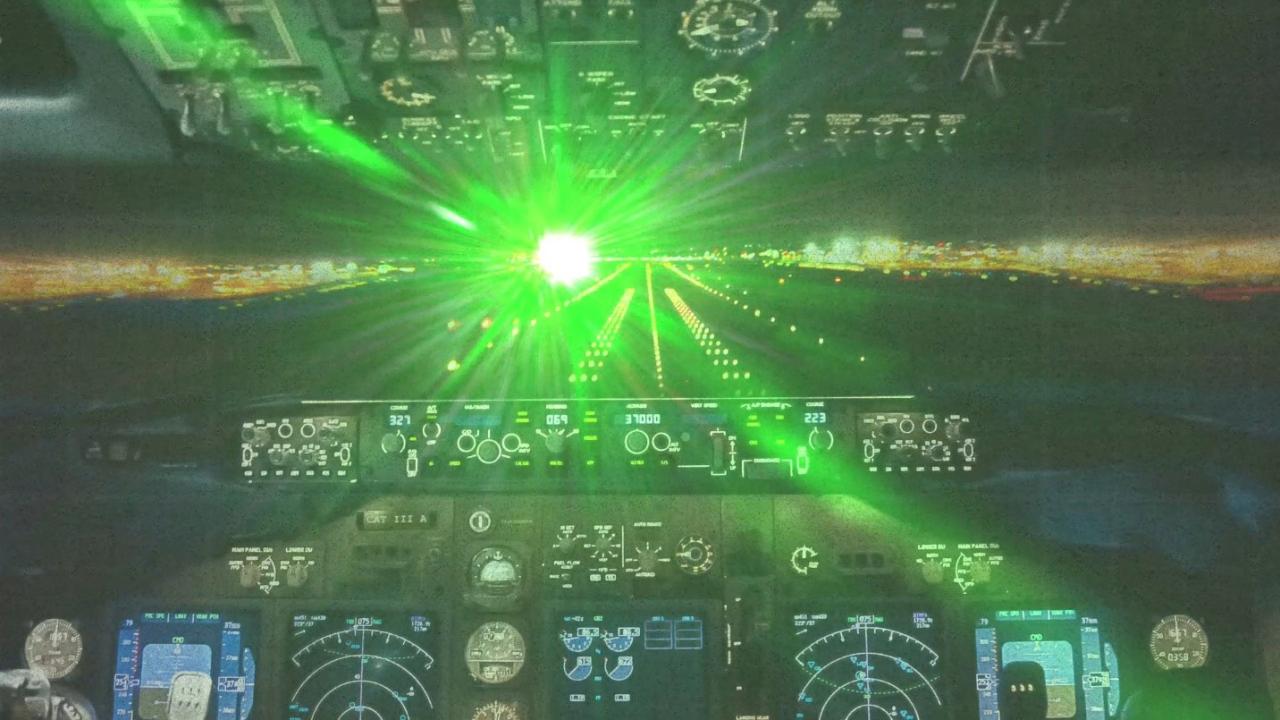
Shining a laser at an aircraft is a serious safety threat. Many types of high-powered lasers can...
Before the United States House of Representatives Committee on Transportation and Infrastructure Subcommittee on Aviation: Finding the Right Frequency: 5G Deployment & Aviation Safety
As Prepared
Good morning Chair Larsen, Chair DeFazio, Ranking Members Graves and Graves, and members of the subcommittee.
Thank you for the opportunity to discuss the FAA’s efforts to keep aviation safe in the presence of 5G C-band wireless technology. We have continually maintained that—through mutual cooperation—5G and aviation can safely coexist.
We have the safest aviation system in the world, and we don’t take that for granted. We have achieved this because we take actions to mitigate known and potential risks to safety. It’s why the FAA has been involved in a sustained effort since well before the 2020 spectrum auction to highlight and now mitigate potential 5G interference with critical flight systems.
I want to thank this committee for your help and support of aviation safety during this period. Our job would be significantly more difficult without the continued support of this committee. We also appreciate the wireless companies voluntarily providing us with the data we need to maintain safety while minimizing flight disruptions during this rollout.
We are always concerned about radio frequency interference when it comes to aviation infrastructure, but in 2018, a new potential threat emerged. The MOBILE NOW Act directed the FCC to evaluate the feasibility of auctioning spectrum adjacent to the band where radio altimeters operate.
The FAA and the aviation industry urged caution. Boeing and the Air Line Pilots Association in filings to the FCC in 2018 called for more analysis. The FAA collaborated with or supported research efforts that revealed 5G operations could significantly degrade or completely interrupt radio altimeter operation during critical phases of flight.
In December 2020, the Acting Deputy DOT Secretary and I sent a letter to the NTIA outlining our concerns about aviation safety, backed up by the recent studies. We asked that the auction be delayed so that we could conduct a safety risk assessment and identify mitigations.
Ultimately, the auction occurred, and two of the wireless companies that acquired the C-band spectrum scheduled the initial deployment in early December 2021. We engaged with our interagency partners throughout the year in an effort to access the information necessary to inform aviation safety mitigations.
Ultimately, as the deployment approached in late 2021, Secretary Buttigieg and I requested two pauses from the wireless companies until mid-January 2022. During the delay, we established a direct relationship with the wireless companies to receive the necessary information—transmitter location, power level and signal shape characteristics—to begin making an aviation safety assessment. The wireless companies also agreed to keep towers turned off around airports that have low-visibility approaches.
The safety model we developed—along with the new data we had access to from the telecommunications companies—allowed the FAA to determine which combination of altimeters and aircraft could be cleared to land in low-visibility conditions for specific runways at airports with 5G towers nearby.
On January 19, 2022, the wireless companies activated 5G C Band service in many of the 46 markets. Our analysis of the wireless company data has allowed us to target anticipated problem areas more precisely, reducing the impact to both industries. While we have avoided significant disruption to commercial aviation, we recognize that some communities and operations have been affected because we have not been able to fully mitigate interference risk for certain radio altimeters.
We know from long experience that early and open data exchange between everyone—stakeholders and regulators— has proven to be critical to identify and mitigate safety risks. Aviation remains the safest form of transportation because of our commitment to a data-driven process, and we will lean on it as we set new standards for altimeter performance in the new environment created by the 5G C-band deployment.
Spectrum is a limited resource, but the demand is infinite and will likely increase in coming years. The FAA’s primary concern is and will always be the safety of
the aviation system. But we firmly believe that, by working together, 5G and aviation can—and will—safely coexist.
Moving forward, we are also ready to work across industry and with our Federal partners on a more thoughtful, inclusive and collaborative approach to future spectrum policy and initiatives.
Thank you for the chance to provide this update.