


About Child Restraint Systems
A child restraint system (CRS) is a forward- or rear-facing hard-backed child safety seat. For motor vehicles, car seats are self-certified by the car seat manufacturer to meet federal safety standards, including strict crash performance standards. The National Highway Traffic Safety Administration (NHTSA) rates car seats based on ease-of-use so you can make an informed decision about the right seat for your child.
A CRS must be certified for use in aircraft. Confirm your child’s seat has “This restraint is certified for use in motor vehicles and aircraft” printed on it or it is approved by a foreign government and bears the required label or marking.
Required label for CRS Manufactured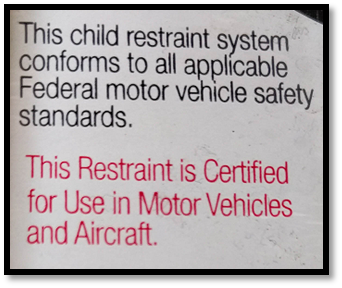 to U.S. Standards
Read the user’s manual to confirm that your CRS can be secured properly in an airplane seat. Otherwise, you may be asked to check the CRS as baggage.
How to Install a CRS in an Airplane
A CRS must be installed in a aircraft seat, according to manufacturer's instructions. This includes placing the CRS in the appropriate forward- or aft-facing direction as indicated on the device label for the size of the child.
The FAA prohibits passengers from using baby carriers, booster seats, or backless CRS during ground movement, take-off, or landing.