


How the FAA Helped Commercial Spaceflight Take Off
Smart Regulation Enabled Innovation While Advancing Safety
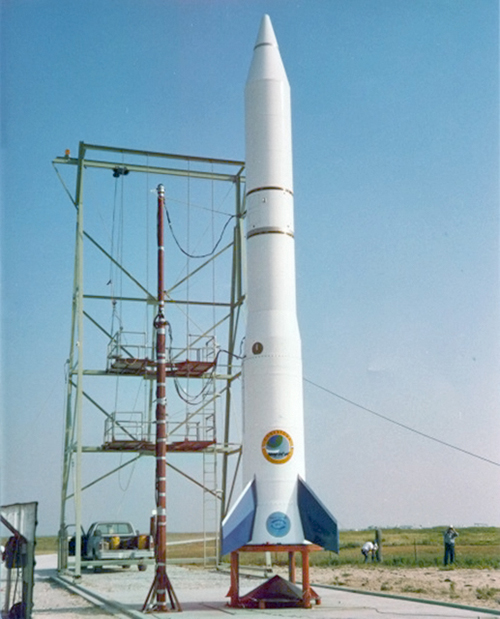
Matagorda Island, an unpopulated barrier island off Texas’ east coast best known for harboring migrating birds, helped make space history in 1982. From Matagorda, our country’s first privately funded launch vehicle lifted off - Space Services’ Conestoga rocket.
While hailed as a success, Conestoga’s flight put into focus a cumbersome regulatory process that threatened the eventual rise of a robust U.S. commercial space industry. Space Services had to navigate through 18 different U.S. government agencies and 22 different federal statutes to conduct their suborbital test launch.
Recognizing the need to streamline the process, Congress in 1984 gave the Department of Transportation responsibility for overseeing and licensing commercial space launches and the operation of launch sites, a role transferred in 1995 to the FAA’s new Office of Commercial Space Transportation (AST). Three years later, Congress directed the FAA to license commercial reentry and reentry sites as well.
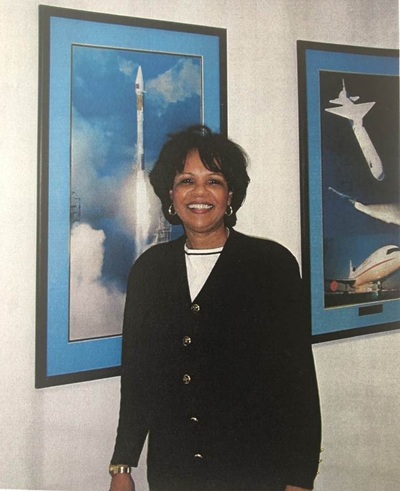
One of AST’s early leaders, Patti Grace Smith, “understood that establishing a solid regulatory framework, but only to the extent necessary, would be critical to industry success while keeping the public safe,” said Dr. Minh A. Nguyen, the office’s current leaders.
Smith’s vision for the FAA’s role in this emerging aerospace activity proved to be on target in 2004. That year, commercial spaceflight drew major attention and the following events happened in rapid succession:
- April 1: AST granted Scaled Composites the world’s first license for a commercial, suborbital, piloted, rocket launch.
- June 17: AST issued East Kern Airport District a launch site operator license for the Mojave Air and Spaceport, California, making it the nation’s first active commercial inland spaceport.
- June 21: Scaled Composites’ SpaceShipOne experimental winged launch vehicle launched over Mojave from the White Knight mother ship. It made history as pilot Mike Melvill became the first civilian to fly a private spaceship past the Kármán Line of outer space—62 miles or 100 kilometers. Smith personally awarded Melville FAA’s first “commercial astronaut wings” after the flight.
- Sept. 29 and Oct. 4: On two other flights above Mojave SpaceShipOne won the coveted $10 million Ansari X Prize, with the prize—modeled on the $25,000 Ortieg Prize won by Charles Lindbergh in 1927—igniting national interest in the promise of commercial human spaceflight.
In short order, a number of entrepreneurial commercial space flight companies entered the market, fielding innovative new launch vehicles and systems. Beginning with its first license for a commercial space operation in 1989, the FAA has issued licenses to 31 different commercial space operators that launched from or reentered the U.S. and four other countries and international waters. These diverse operations include internet satellite launches, lunar and interplanetary missions and spaceflight tourism.
“As we methodically built a regulatory foundation to ensure public safety during launch and reentry operations by the growing commercial space transportation industry, we emphasized and valued input from the constantly evolving industry,” said Randy Repcheck, acting executive director of AST’s Office of Strategic Management, and a member of the AST team for 37 years. “We include industry feedback through aerospace rulemaking committees and a variety of other avenues to identify practical impacts. It contributes to transparency and improves compliance.”
Today, the FAA’s key role in this process is ensuring that risks to people on the ground, on ocean surfaces or in the air is limited through the requirement that license applicants demonstrate compliance with a streamlined performance-based licensing regulation known as Part 450. This regulation reduces duplication, consolidates requirements, and removes constraints, while allowing operators to safely innovate. Through careful inspection of launch vehicles and payloads and extensive flight safety analysis, the FAA has worked to make launch and reentry activities occur safely, while efficiently integrating them into the National Airspace System.
“AST is enabling the increased launch and re-entry cadence of the growing commercial space industry through careful but swift evaluations of license applications and regulatory enhancements like Part 450,” said Katie Cranor, AST’s executive director of the Office of Operational Safety. She added, “Part 450 offers improved flexibilities that historically weren’t possible, and we’re planning for more efficiencies ahead that will position us to address the evolving needs of operators while executing our mission of public safety.”
Through its work, AST has amassed an impressive track record. It has licensed and permitted over 1,170 launches and reentries, with most occurring from the Cape Canaveral Space Force Station and Kennedy Space Center in Florida, Vandenberg Space Force Base, California, and Mahia Peninsula, New Zealand. But what gives AST the greatest pride is that no public injuries or fatalities have occurred during any FAA-licensed or permitted commercial space launch and reentry operation.
“The FAA is dedicated to providing safe, efficient, and timely access to space, helping ensure the U.S. remains the global leader in space transportation, innovation, and safety,” said FAA Administrator Bryan Bedford last year when the 1,000th commercial space operation took place. “This milestone wouldn’t be possible without our dedicated commercial space team, whose work makes every launch and reentry possible. At this pace, we’ll reach the next 1,000 missions in less than five years.”
Throughout the year, we will continue to recognize America's aviation heroes and heritage in celebration of America’s 250th anniversary and highlight great aviation milestones as we look forward to aviation's promising future.