

Drone Debrief: Eyes in the Sky – For Safety
It was August 2024 in Queens, New York, when a terrifying scenario unfolded. A trio of armed invaders forced their way into a home and held several residents against their will. Fortunately, one resident managed to call 911, and a unit responded with a special helper — in the sky.
“They didn’t know we had drones overhead, equipped with infrared cameras that can detect their body heat, and officers on the ground able to see the drone footage on an iPad,” said NYPD Deputy Commissioner of Operations Kaz Daughtry. “The drones gave our ground unit the exact location of the intruders, and we were able to take those individuals into custody. It was amazing.”
This arrest is just one example of how the DOT and FAA are enabling law enforcement agencies across the country to explore a new frontier in public safety drones.
More public safety organizations are deploying drones to speed response times with support from the FAA, which can quickly issue authorizations such as Beyond Visual Line of Sight (BVLOS) waivers. FAA-licensed drone pilots deploy them for response to emergencies, including crimes, fires, auto accidents, and missing-person reports. Some use them to inspect infrastructure after a natural disaster. First-responder drones provide timely, critical information — live video — to responding officers.
The FAA’s team of airspace and aviation safety specialists can instruct emergency responders on how to start a drone program, and they can also provide emergency authorizations to first responders around the clock. In April last year, the FAA introduced a streamlined application process for part 107 and part 91 operational waivers for drones. In just eight months, the agency issued more than 950 waivers, benefiting police, fire, and rescue agencies.
“Drone tech has reached a point where we can now allow police departments and other first responders to fly their drones further and without numerous visual observers,” said the FAA’s Kerry Fleming, manager of the FAA’s System Operations Support Center.
Police departments like those in Chula Vista, California, and Pearland, Texas, have been using drones as first responders for years.
“I’ve literally watched these drone systems save lives,” said Brandon Karr, a former police officer who started Pearland Police Department’s UAS program in which officers fly drones without visual observers. “And we can clear 911 calls 24% to 25% of the time with drones, alone, and beat officers to the scene by 3 to 6 minutes.”
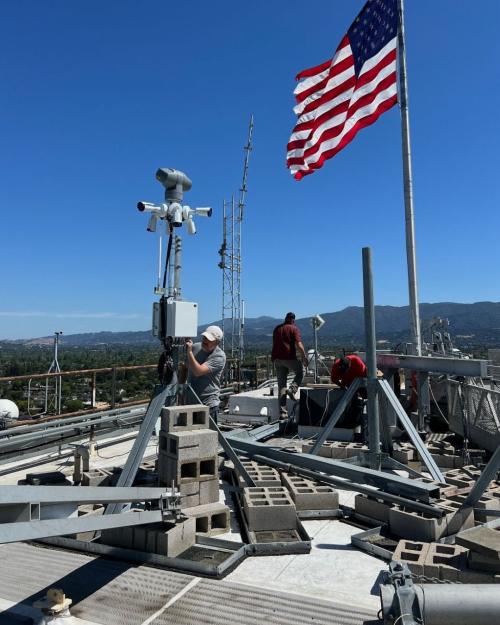
Pearland PD, the NYPD, and some other departments with BVLOS waivers launch camera-equipped drones from protective, rooftop-mounted charging stations.
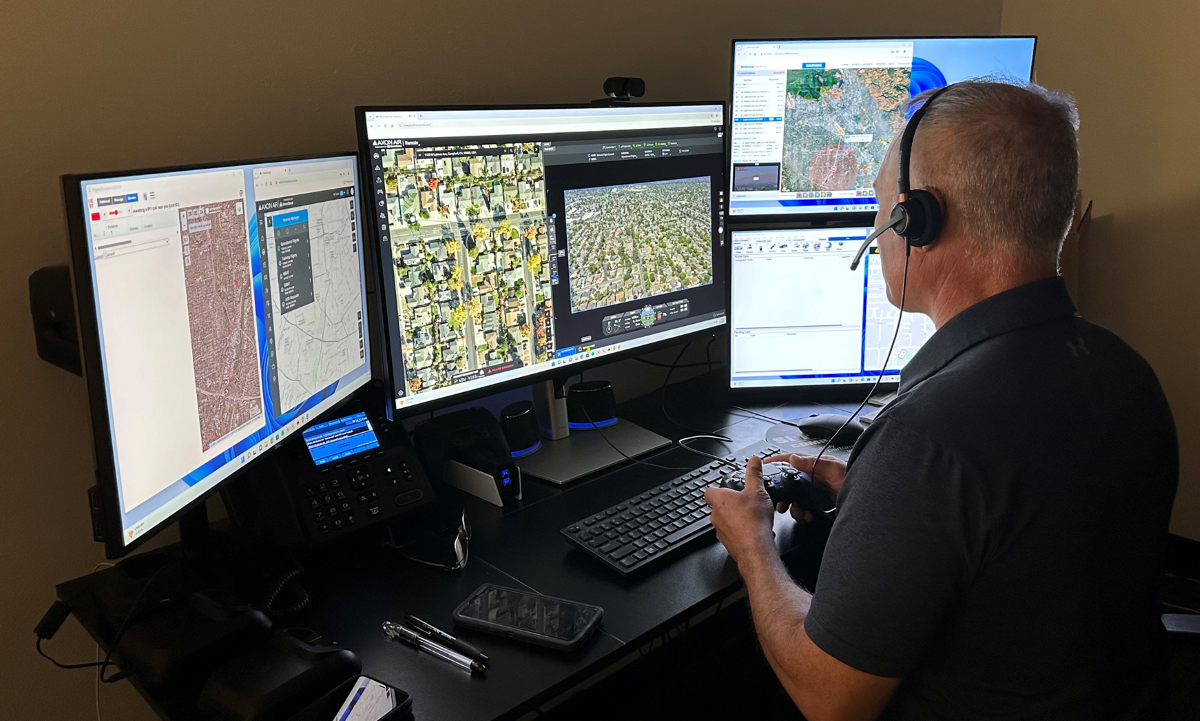
“The box opens up, the drone spins up, takes off, and will take a pre-programmed route to our call,” said David Cameron, a retired officer from the Campbell, California, police department who created and still manages its drone program.
The NYPD has a similar setup with drones positioned across the city. The speedy aircraft can reach any part of Central Park in less than two minutes.
“That was very important to us because the park is over 800 acres of land, and we’ve seen an uptick in crime there,” Daughtry said. “The drones can get to areas where a patrol car can’t go.”
The FAA is working hard to take the drones-as-first-responder concept to communities far and wide, large and small. Nimble drones are adaptable to a variety of environments — from urban to rural — and are taking safety to new heights.
“Technology has caught up to the imagination,” Fleming said. “Allowing them to fly out further distances, in some cases replacing a visual observer with technology, is a huge advantage for first responders across the entire country.”
Check out faa.gov/uas for rules, resources and tools to help you fly drones safely.