

How Air Shows Propelled Aviation

Six years after Kitty Hawk and subsequent demonstration flights of the Wright Flyer, the cities of Frankfurt, Germany, and Reims, France, put on the first public air shows. Known as the Internationale Luftschiffahrt-Ausstellungan and the Grande Semaine d'Aviation de la Champagne, they spurred public interest in aviation by showcasing the field's astonishing pace of innovation.
The country that pioneered aviation was not to be outdone.
In January 1910, the Los Angeles International Air Meet was held at Dominguez Field. Organizers invited pilots of monoplanes, biplanes, balloons, dirigibles and ornithopters (an aircraft that generates lift and thrust by flapping its wings). Cash prizes were awarded to pilots who demonstrated their skills in altitude, speed, and endurance. Among the aviation legends who competed were Glenn Curtiss and France’s Louis Paulhan, who dominated the competition. The Wright Brothers were also in attendance, but with their lawyers, as they sought to prevent the participation of patent-infringing airplanes.

In the spirit of ‘if you build it they will come,’ the Air Meet attracted over 250,000 paying spectators. The Los Angeles Times called it, “one of the greatest public events in the history of the west.”
Air shows remain intensely popular more than a century later, and the FAA plays a critical role in ensuring spectator and participant safety. Anywhere from one to dozens of FAA aviation safety inspectors can be involved in the planning and operations of an air show, depending on the size of the event, says Michael Crudden, manager of the FAA’s Washington, DC, Flight Standards District Office.
“We are here to ensure that air shows are performed in a way that is both enjoyable and safe for the public,” he says. “We’re creating a box in the sky. And that box gets bigger and bigger depending on the performance level of the aircraft. If they are higher performing, the box gets larger and that keeps the public a little further away in case there is a situation that needs to be handled.
“That way the flight crew can address it and the public is provided an adequate margin of safety.”
Next up after the Los Angeles International Air Meet was the Harvard-Boston Aero Meet in September 1910, held at the Harvard Aviation Field in Quincy, Massachusetts, which inspired Harriet Quimby to become America’s first woman to earn her pilot’s license. Then came the Belmont International Aviation Tournament, which took place at a large racetrack on Long Island, in Belmont Park, New York, in October 1910.
In the 1920s, air shows evolved with the advent of the barnstormers, a name referring to aerobatic pilots who would land their aircraft in fields and use local barns as the venue for their impromptu airshows. The aerobatic barnstorming performances, or “Flying Circuses” by legendary stunt pilots took air shows to a new level. In a homage to the barnstorming era, many modern air shows feature stunt pilots and wing walkers flying in restored open-cockpit biplanes, although FAA safety regulations require much safer maneuvers than in days gone by.
Another feature of early air shows were long-distance air races, lasting several days and covering thousands of miles. Carrying on that tradition were the Reno Air Races, which began in 1964, which are now based in Roswell, New Mexico, and known as the National Championship Air Races.
Today, one of the largest American air shows and aviation gatherings with around 10,000 participating aircraft is Experimental Aircraft Association (EAA) AirVenture Oshkosh. The extravaganza, which covers almost every aspect of recreational, commercial and military aviation, began 73 years ago when aviator and aircraft designer Paul Poberezny suggested to his friends that they organize a fly-in at a local Milwaukee airport. That first event attracted 150 people and 21 airplanes. Today’s Oshkosh airshow attracts hundreds of thousands of spectators in late July, and is so big that during the event, the Wittman Regional Airport’s control tower frequency, 118.5, is the world’s busiest.
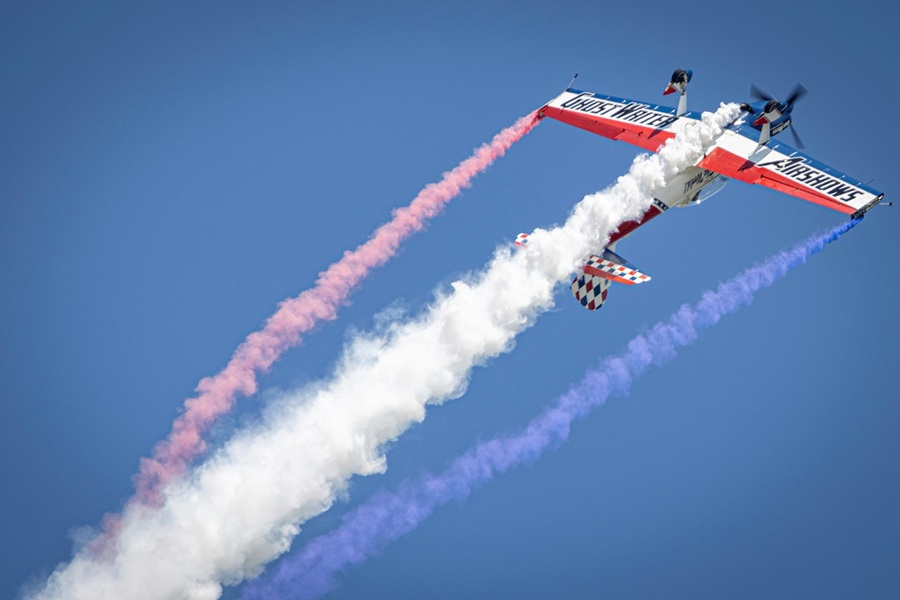
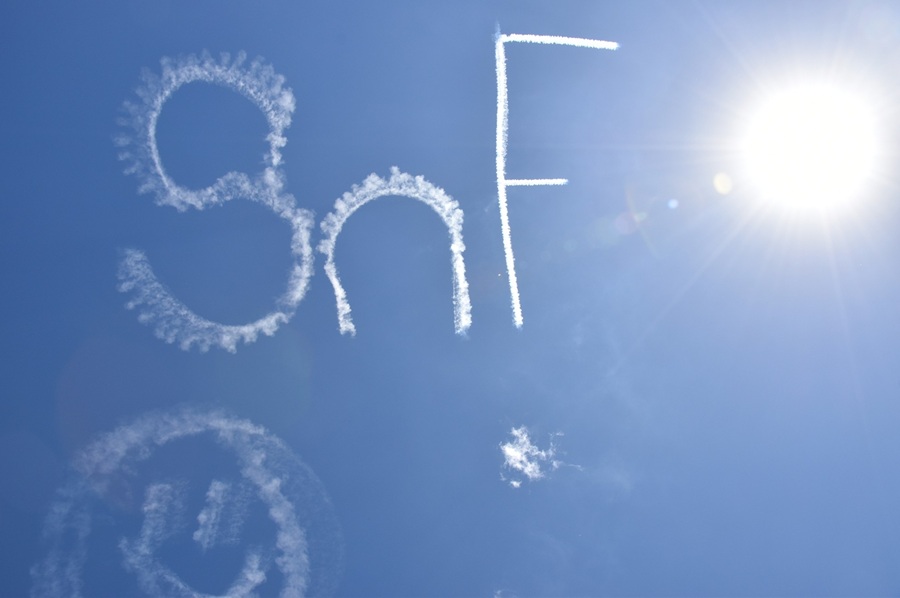
Another popular air show, drawing over 200,000 visitors each year is the SUN ‘n FUN Aerospace Expo, held annually at the Lakeland Linder Airport in Lakeland, Florida. Begun in 1974 as a fly-in for sport aviation enthusiasts, SUN ‘n FUN features Vintage, Homebuilt, Aerobatic, Warbird, Jet, and Light Sport aircraft and is affectionately known as “Aviation’s Season Opener” or “Spring Break for Pilots.”
Throughout the nation air show attractions run the gamut from modern military aircraft to old warbirds and bi-planes, radio-controlled aircraft, helicopters and drones with activities such as wing-walking and sky diving adding to the excitement.
Learn more about how modern air shows have evolved with safety in mind.
Throughout the year, we will continue to recognize America's aviation heroes and heritage in celebration of America’s 250th anniversary and highlight great aviation milestones as we look forward to aviation's promising future.