

A Job Interview that Made History
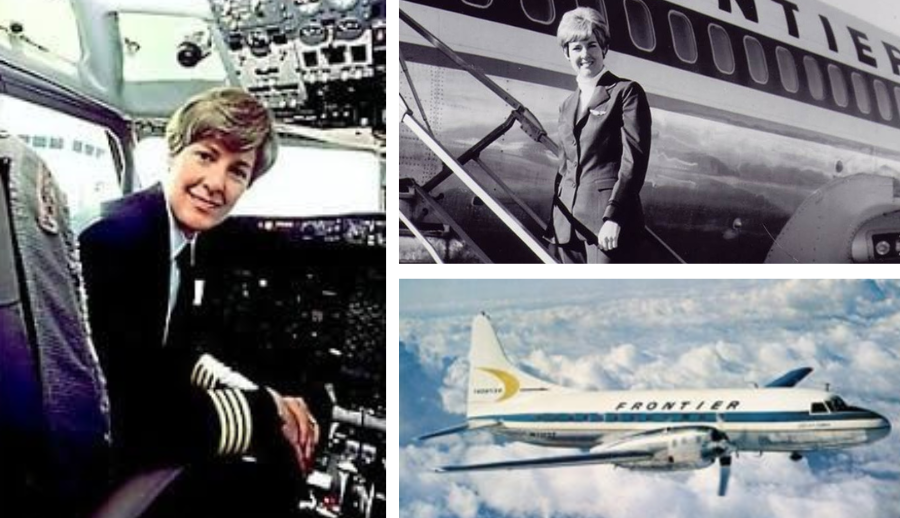
The biggest job interview in Emily Howell Warner’s life was in 1973. Frontier Airlines’ Vice President of Operations Ed O’Neil, along with Captain Jack Robbins, had her fate in their hands.
Warner, who came to the interview with commercial, instrument, multi-engine and instructor ratings and who had just wowed O’Neil and Robbins with her skilled handling of a Convair 580 during a simulator check ride recalled that, “I just looked at Mr. O’Neil and said, ‘I know I can do it.’ I said it to him twice. He said, ‘Okay, but think about it.’”

Warner initially got the cold shoulder from fellow crew members.
“Just sit there and don’t touch anything,” the captain told her on her second flight.
Her response?
“She just folded her hands in her lap and said, ‘Ok,’” says Donna Miller an airline pilot Warner mentored. “After landing she went up to the captain and said, ‘It was very nice flying with you.”
Warner’s grace under pressure was noticed. Fellow Frontier pilot Billy Walker, recalled, “Disdain changed to admiration, for the most part, overnight.”
Three years later—50 years ago on June 6, 1976—Warner became America’s first woman airline captain. This was one of her many firsts, the earliest of which was becoming the FAA’s first female designated pilot examiner at age 28 in 1967.
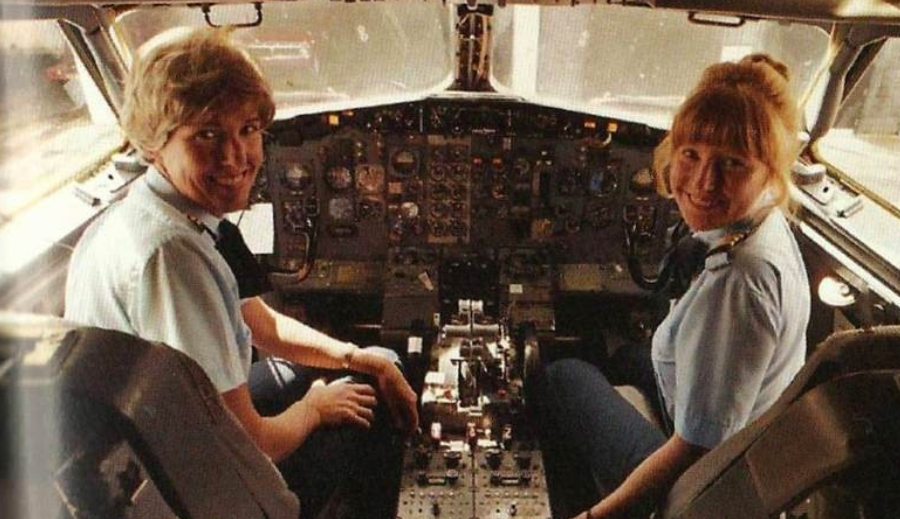
Warner also flew for Continental, where she commanded the airline’s first all-women crew in 1986, and UPS. She ended her 42-year career in aviation with more than 21,000 flight hours and with more than 3,000 check rides and evaluations performed. In 2015, she received the FAA’s prestigious Wright Brothers Master Pilot Award.
Born in Denver, Warner’s love of aviation was sparked at age 17. Considering a stewardess career, she took her first flight on Frontier to the mountain town of Gunnison. En route she boldly asked a stewardess if she could see the cockpit. “In those days, security was not as tough,” Warner said. “As soon as I went through that cockpit door, I just knew that was what I wanted to do. I rode in the jump seat all the way back, and it was really great. It was a beautiful Colorado blue-sky morning and everything just hit me all at once. On my next day off from my job, I took the bus out to the airport and looked up the Clinton Aviation Company, talked to an instructor and signed up for flying lessons.”
She became a certified flight instructor at age 21 and ended up managing Clinton Aviation’s flight school. She first applied for an airline pilot’s position in 1969 but kept running into a glass ceiling and carried with her the worry she’d be considered too old to be an airline pilot. But her persistence paid off. As she often said to her friend and fellow pilot Penny Richardson in quoting Eleanor Roosevelt: “A woman is like a tea bag – you can't tell how strong she is until you put her in hot water.”
Following her pilot career, Warner decided she had more to give to aviation. In 1990 she joined the FAA as an aviation safety inspector and retired as the Denver FSDO’s aircrew program manager assigned to the United Airlines Boeing 737 fleet. “It was looking at aviation from a different perspective,” Warner said. “It was a really great experience.”
Warner passed away in 2020, one day short of our nation’s 244th birthday. The title of her biography and her gravesite headstone suitably contain the words, “Weaving the Winds.” A special celebration of her remarkable life and her milestone promotion to captain a half century ago today will be held at Colorado’s Emily Warner Field Aviation Museum at Granby/Grand County Airport.
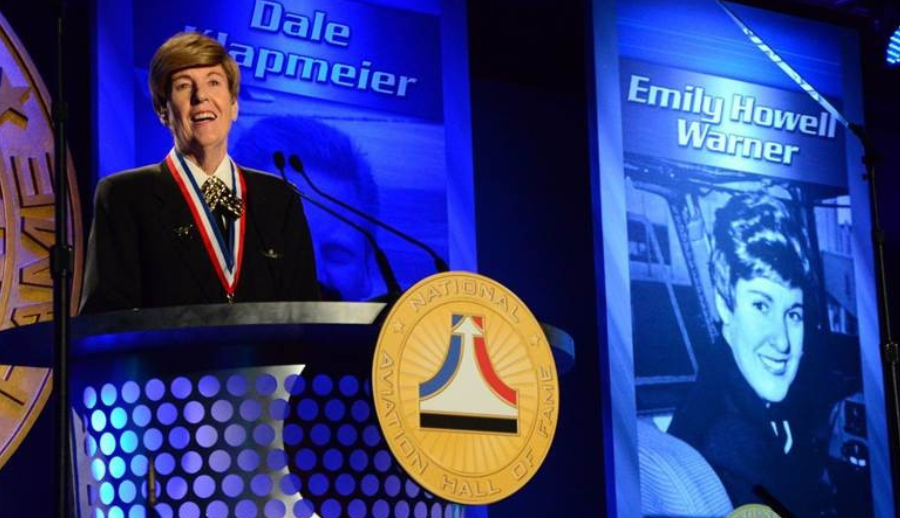
Learn more about Warner’s aviation career and see her flight uniform on display in the Smithsonian’s National Air and Space Museum.
View this documentary about Warner’s achievements through the eyes of her friends and fellow pilots.

Throughout the year, we will continue to recognize America's aviation heroes and heritage in celebration of America’s 250th anniversary and highlight great aviation milestones as we look forward to aviation's promising future.