


Know the Rules Before Operating Drones Over People
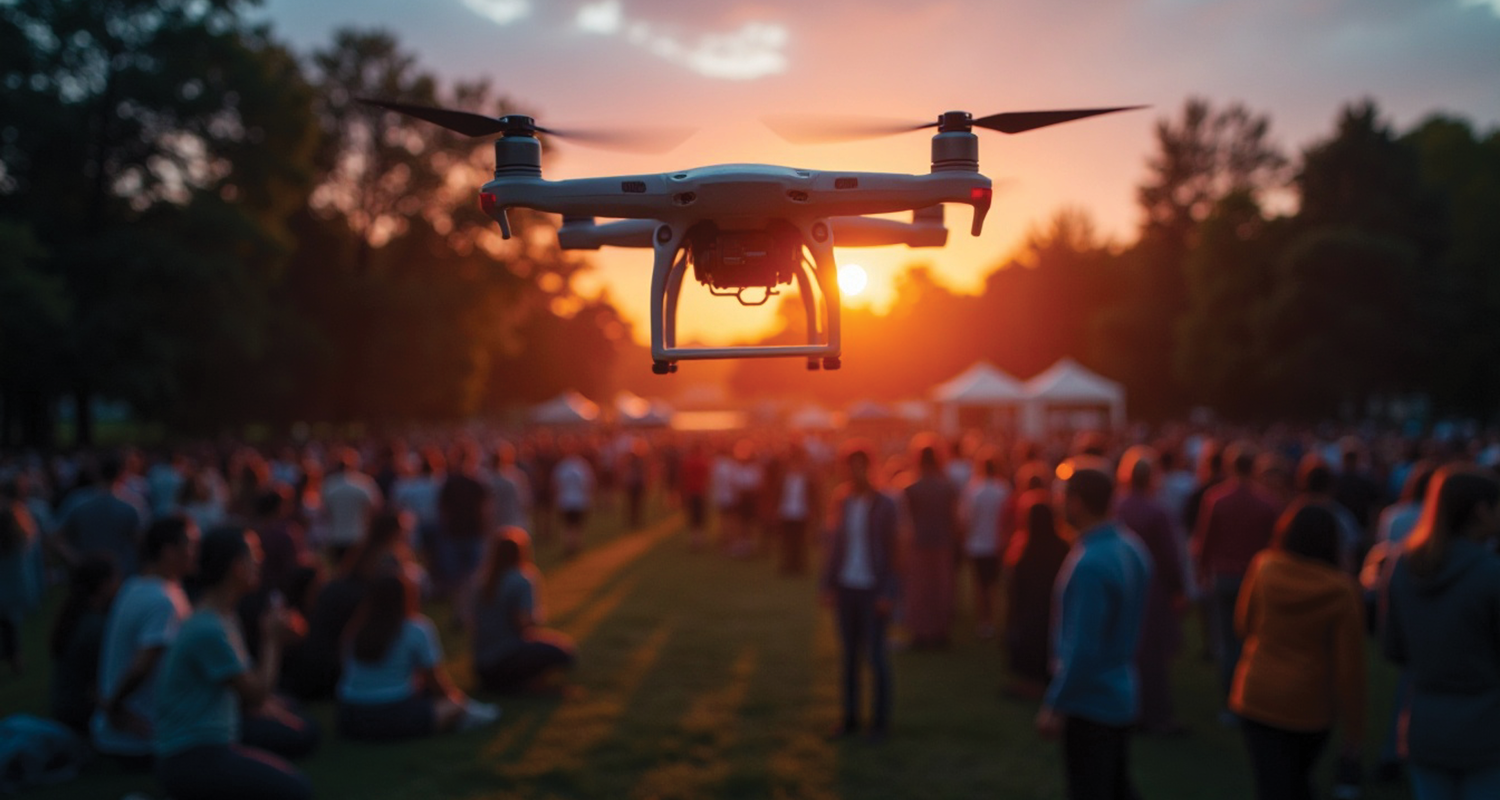
Every year, a community organization in Palm Tree, New York, hosts several large outdoor events that regularly attract more than 10,000 attendees. But at a recent holiday celebration, there were several uninvited guests: numerous drones flying over the crowd.
“The drone activity appeared unsafe and raised significant safety concerns,” said Burach Lowy, event coordinator for the Congregation Yetev Lev. “We also witnessed a drone crash during the event, which could have resulted in serious injuries had it struck someone below.”
Lowy contacted the FAA for guidance about available reporting and enforcement options.
Operations Over People
This organization has valid reporting options that could lead to serious legal and financial enforcement actions against the drone operators. Remote pilots may not operate over people, for any duration, unless they have a category-compliant drone or a waiver. Both part 107 rules and recreational flight statutes governed by 49 U.S.C. section 44809 do not permit operations over people, as well as over moving vehicles. Operating a drone illegally over people or dense crowds can trigger swift consequences from the FAA, alongside potential state and local law enforcement interventions.
Complying with Part 107
The expansion of part 107, effective April 21, 2021, enabled limited operations over people without requiring an individual waiver when using a compliant drone. These operations require the use of a compliant drone that meets predefined weight, design, and safety standards set by the FAA. Without an official category-compliant drone, any operation over people requires an approved waiver.
Recreational Flyers
To comply with the limited exception (14 CFR) for recreational flyers, anyone flying under section 44809 is mandated by federal law to strictly adhere to the FAA-approved safety guidelines of an FAA-recognized community-based organization, or CBO. Currently, there are no FAA-approved safety guidelines from any recognized CBO that permit recreational drone flights directly over open-air crowds or gatherings. Depending on the drone's weight, anyone operating over people or moving vehicles is governed by either 14 CFR part 107 or part 91.
Recreational flyers who fly outside of CBO guidelines instantly lose the statutory exemption and are treated as operating under part 107 rules. If not in compliance with all part 107 rules, including holding a remote pilot certificate, non-compliant pilots face targeted administrative compliance and enforcement actions and possibly criminal charges under 18 U.S.C. section 39b for the unsafe operation of a UAS, as enforced by the Department of Justice. If approached by law enforcement, drone operators must immediately show:
- Their remote pilot certificate (if the flight is governed by part 107)
- Photo identification
- Drone registration documentation
- Any airspace authorizations or waivers that enable the specific flight
Drone pilots should always use good judgment and maintain safe lateral and vertical distances from people or moving vehicles. When not using a category-compliant drone, this means keeping the aircraft positioned exclusively over unoccupied ground, vacant parking structures, or clear open spaces, rather than directly above a crowd. Operators must also maintain visual line of sight with the aircraft without relying solely on first-person view monitors, while strictly keeping altitude below 400 feet above ground level.
Better yet, leave the aircraft safely packed away at home, and enjoy the gathering safely from the ground!
Learn More