

From the Oval Office to the Skies: U.S. Presidents in the Aviation Age
The age of aviation has run through nearly half of our nation’s history. Since the Wright brothers took flight, 22 U.S. presidents, starting with Theodore Roosevelt, Jr., have witnessed and helped propel aviation forward.
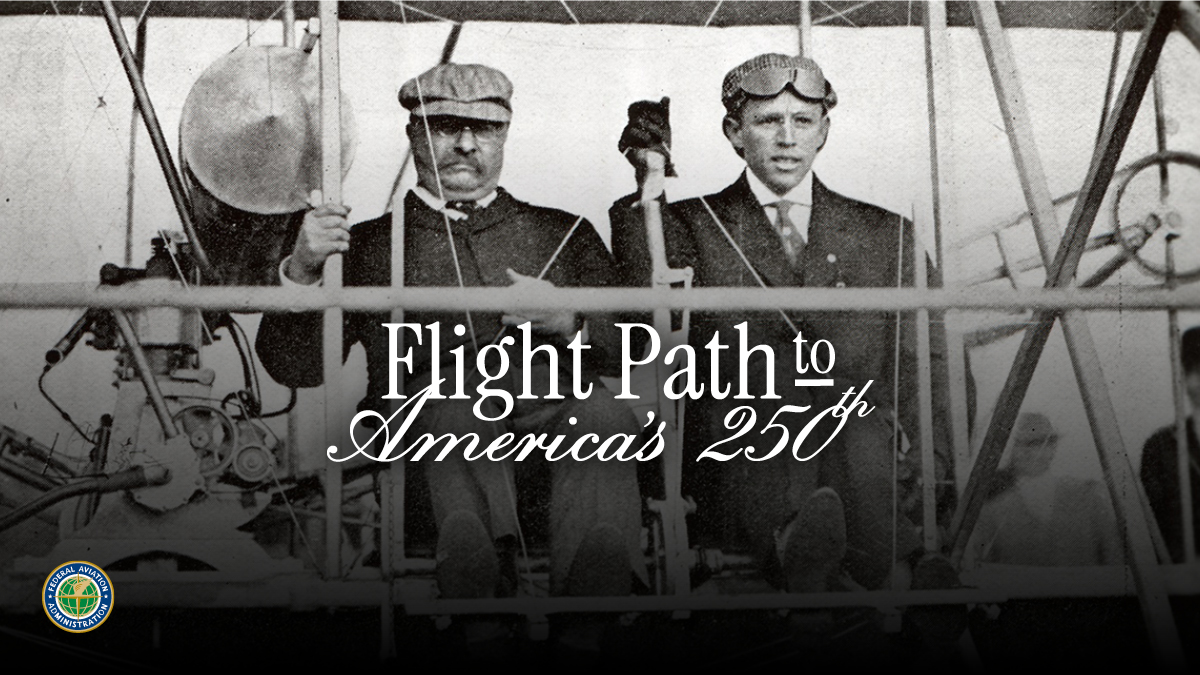
Roosevelt took to the air one year after his presidency ended. In 1910, aviator Arch Hoxsey, a member of the Wright Brothers Expedition Team, flew Roosevelt above Kinloch Field near St. Louis in front of a cheering crowd of 10,000 county fair attendees. From a low altitude, Roosevelt waved enthusiastically to the crowd and upon landing told Hoxsey, “That was the bulliest experience I ever had. I envy your professional conquest of space.”
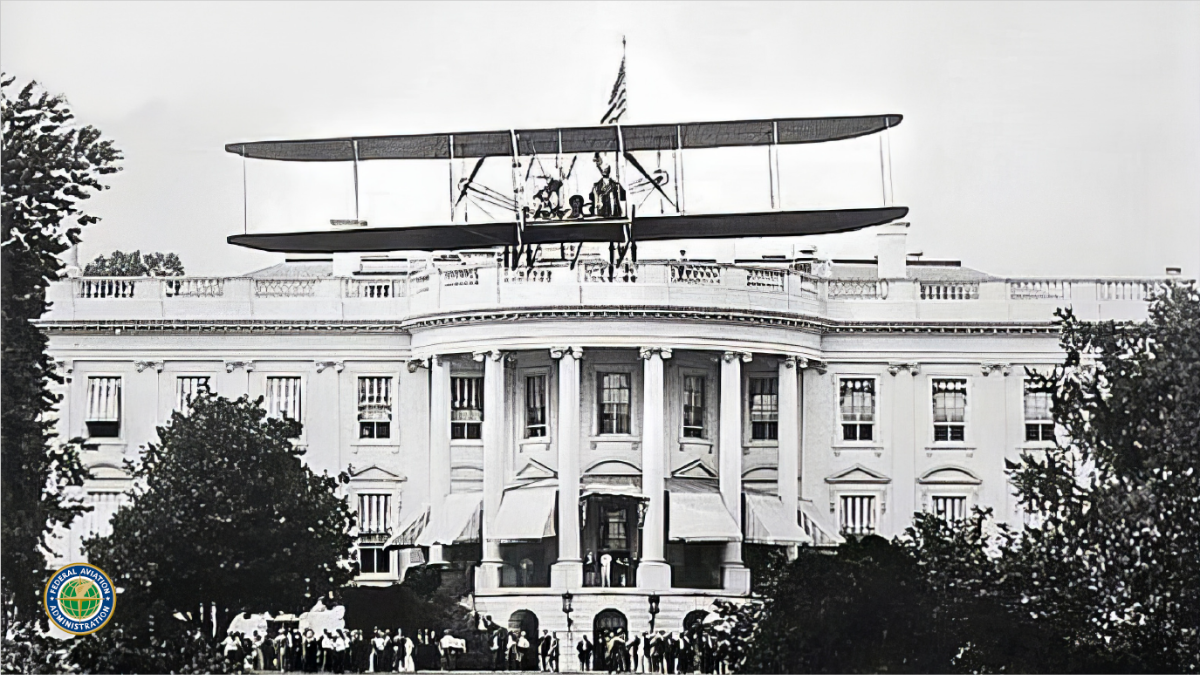
A year later, President William Howard Taft watched as Harry Nelson Atwood landed his single-engine Wright Model B airplane on the White House South Lawn.
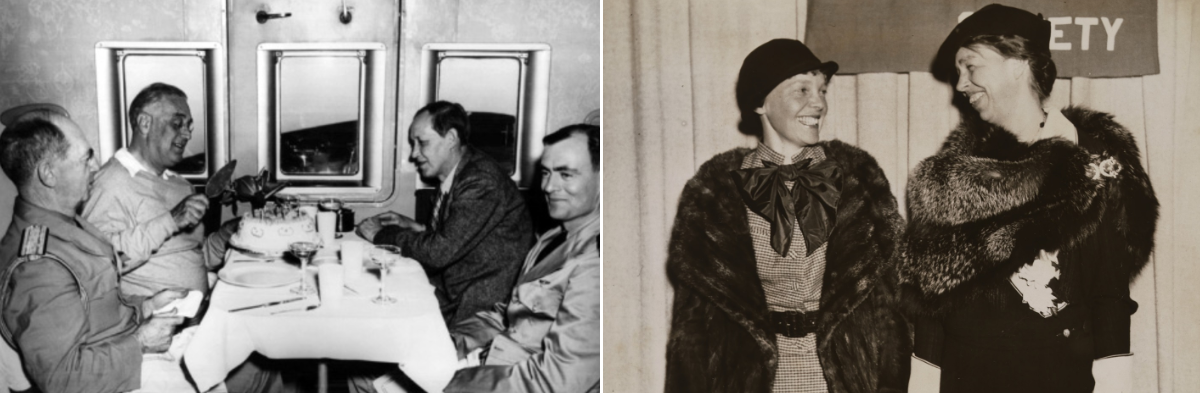
Franklin Roosevelt was the first president to fly while in office. In 1943, FDR traveled 5,500 miles across the Atlantic Ocean aboard a Pan Am-crewed Boeing 314 flying boat (“Dixie Clipper”) to his World War II Casablanca Conference in Morocco with British Prime Minister Winston Churchill. (Churchill was an aviation enthusiast who took flight lessons in 1912-13 before his worried spouse Clementine convinced him to stick to his parliamentary duties.)
Ten years earlier, first lady Eleanor Roosevelt accepted the invitation of her friend aviatrix Amelia Earhart to take a quick jaunt from Washington DC’s Hoover Field to Baltimore on board an Eastern Air Transport twin-engine Curtiss Condor plane.
Throughout his administration, Roosevelt made significant contributions to developing our national air transportation system. His Work Projects Administration built, improved, or renovated 1,050 airports. The 1938 Civil Aeronautics Act established an independent Civil Aeronautics Authority (CAA), with a three-member Air Safety Board to prevent and investigate accidents. The legislation also gave the CAA authority to regulate airline fares and routes. In 1940, Roosevelt split the CAA into a Civil Aeronautics Administration, with responsibility for air traffic control, airman and aircraft certification, safety enforcement and airway development, and a Civil Aeronautics Board that focused on safety rulemaking, accident investigation, and economic regulation of the airlines. Four years later, Roosevelt organized the Chicago Convention which led to the creation of the International Civil Aviation Organization.
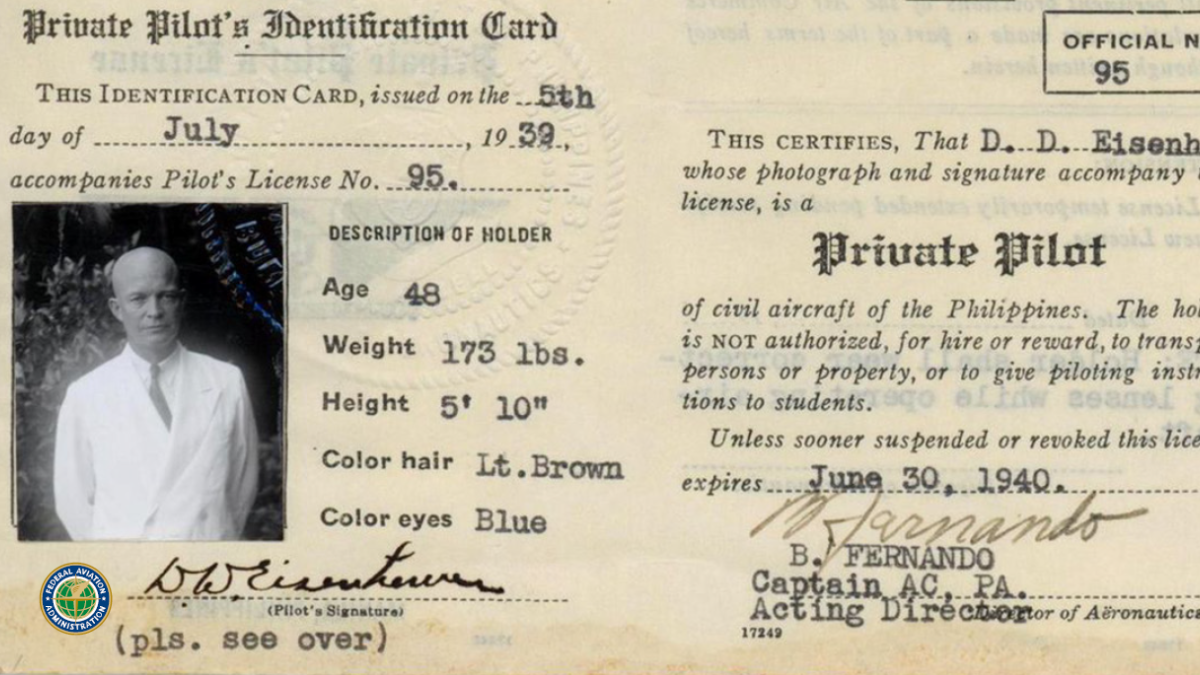
Dwight Eisenhower was the first president to earn a pilot’s license. In 1936, the 46-year-old Army Lt. Colonel, then serving on Gen. Douglas MacArthur’s staff in the Philippines, joined younger Army officers training in a Boeing Model 75 Stearman PT-13.
“Little more than thirty years had passed since Kitty Hawk and our planes were rather primitive,” Eisenhower recalled. “One had to react alertly to changes in sound or wind or temperature. The engines were good but the pilot who asked too much of one, in a steep climb, for example, learned that the roaring monster could retreat into silent surrender.”
After having logged 350 hours of flight time, Eisenhower received Pilot’s License No. 95 from the Commonwealth of the Philippines Department of Public Works and Communications Bureau of Aeronautics on July 5, 1939. The other presidential pilots are George H.W. Bush, a U.S. Navy aviator in World War II, and George W. Bush, an Air National Guard pilot.

During his presidency, Eisenhower presided over establishing the Federal Aviation Agency in 1958 (FAA became an Administration when President Lyndon Johnson established the Department of Transportation in 1967) and appointed his World War II comrade, Lt. Gen. Elwood “Pete” Quesada (USAF-Ret.), as the FAA’s first administrator. It was during Eisenhower’s presidency that his Lockheed Super Constellation dubbed “Columbine II” was first designated by pilot William Draper as “Air Force One” after air traffic controllers briefly confused the presidential airplane, then known as Air Force 610, with Eastern 610, an Eastern Airlines plane on a commercial flight in the same area.
As America approaches its 250th birthday and with President Trump working to enable the safe introduction of new entrants into our National Airspace System, our leadership in aviation safety and innovation continues to be a hallmark of American achievement.
Throughout the year, we will continue to recognize America's aviation heroes and heritage in celebration of America’s 250th anniversary and highlight great aviation milestones as we look forward to aviation's promising future.