


Runway of Responsibility: The Critical Safety Role of Airport Inspectors
“It’s like the saying goes, if you’ve seen one airport, you’ve seen one airport,” quips Paul Williams, lead airport certification safety inspector (ACSI) out of the Great Lakes Region.
These are the words safety inspectors live by when they visit commercial service airports across all nine regional airports offices. Safety inspectors certify the safety of the airport’s infrastructure, operations and procedures, ensuring compliance with regulations and standards.
“This is a great time to be a part of aviation,” said Kandace Parsons, lead safety inspector in the Alaskan Region. “As technology advances, we get to assist in developing the framework for the safe integration of Advanced Air Mobility, Autonomous Ground Vehicle Systems, Commercial Space Transportation, and UAS into airport operations.”
Airport certification safety inspectors are the Swiss Army knives of inspectors. They are problem-solvers and passionate about aviation safety, and their role is foundational to the FAA’s mission.
"Every inspection and every airport is different, but consistency is key,” said Warren Relaford, lead safety inspector in the Southwest Region. "Inspectors always prioritize risk-based oversight so that each airport, no matter the size, layout, surrounding environment or type aircraft it services, can operate as safely and efficiently as possible."
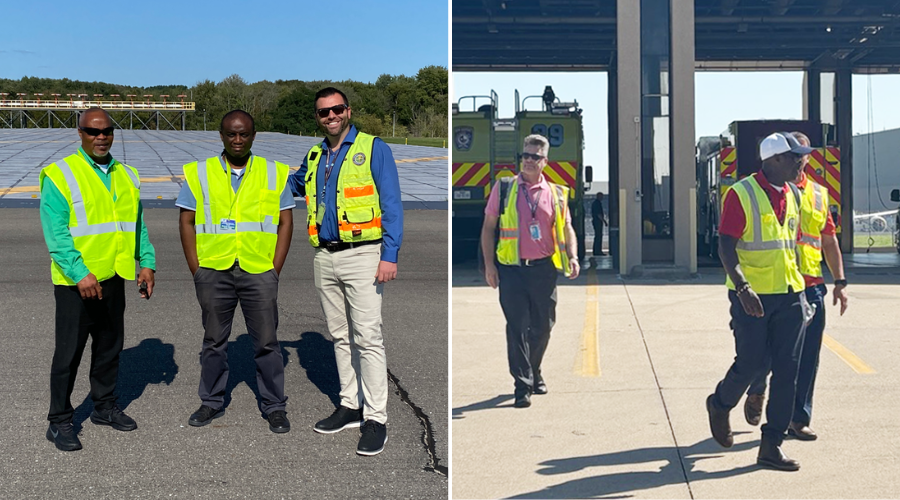
Safety Partners on the Ground
Airport operators and safety inspectors are safety partners; they work collaboratively to find solutions, implement corrective actions, meet regulatory requirements and incorporate best practices.
“Our primary mission is to promote a robust safety culture [at the airport],” said Stephen Barker, lead safety inspector out of the New England Region, and “our goal is to foster a proactive environment, focused on continuous improvement.”
Inspections are essential, thorough, and highly complex. They happen annually and can take two to five days per airport.
Safety inspectors conduct in-briefings and exit briefings with airport management and stakeholders to ensure they maintain complete and accurate records, including the Airport Master Record, self-inspection logs, and Notices to Airmen.
A physical inspection encompasses everything connected to passenger and aircraft safety, which includes daytime and nighttime inspections of the airfield including pavements, signs, markings, lighting, runway and other safety areas, aircraft rescue and firefighting equipment and emergency response, fueling operations, wildlife hazard management, construction safety, and validating field conditions.
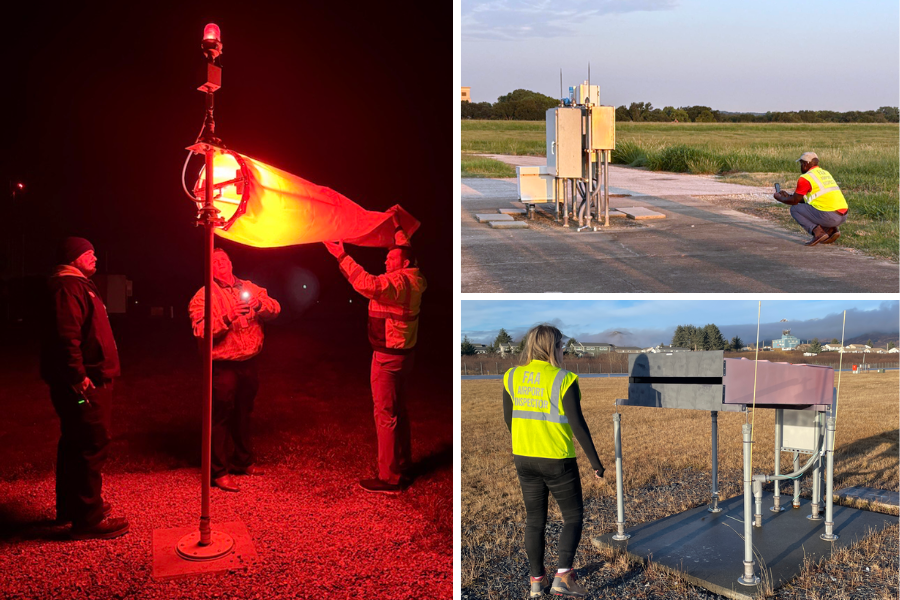
Airports maintain robust, year-round readiness protocols to handle seasonal weather extremes, from frigid to tropical temperatures and calm weather to powerful winds. This variability requires rigorous inspection oversight by safety inspectors.
The inspection role is demanding, but it’s equally rewarding. Airports are a lifeline to many communities.
“Many of the airports in Alaska are in communities that are not serviced by the road system and rely heavily upon air travel for supplies and resources,” said Parsons. “We ensure that airports operate safely and remain a reliable mode of transportation in remote areas.”
“Becoming an ACSI allowed me to bring my operational perspective into the oversight role. I’m helping airports not just meet requirements but understand the ‘why’ behind them,” said Williams. “Ultimately, we protect the traveling public and support airports by maintaining the safest possible operating environment.”