

Say 'Helo' to the USHST
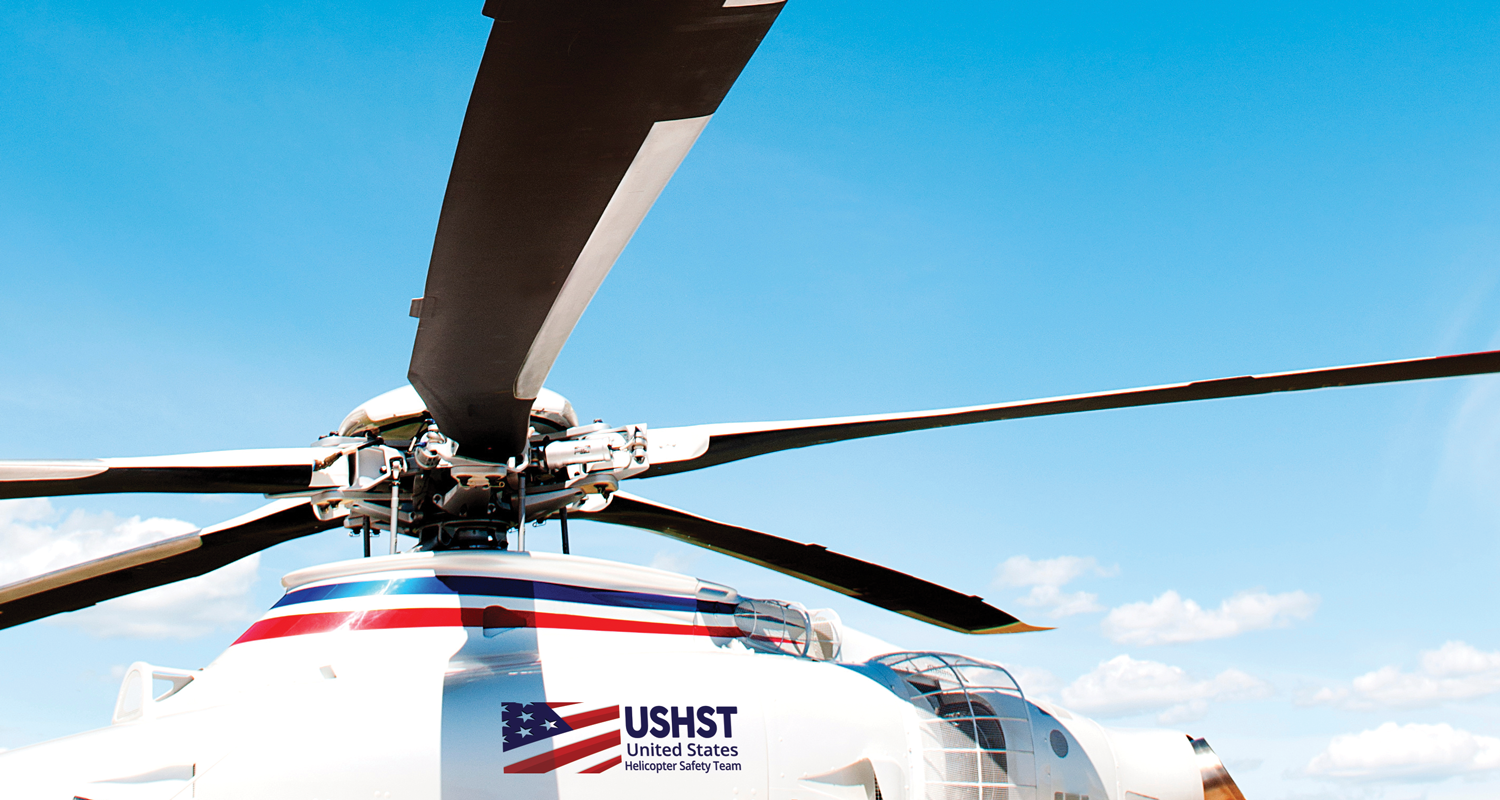
Aviation and acronyms go together like thunder and lightning, and helicopters are no exception to the rule. One important line-up of letters is the USHST, or the U.S. Helicopter Safety Team. Established in 2013 as a regional partner to the International Helicopter Safety Team (IHST), now known as the Vertical Aviation Safety Team (VAST), the USHST is a government-industry partnership focused on reducing helicopter accidents and fatalities in the United States.
The team’s vision is ambitious: a civil registered helicopter community without fatal accidents, and they are undertaking a whirlwind of efforts to help achieve that goal. So, let’s take a look at the USHST and its role in the helicopter community.

The USHST's Role in Helicopter Safety
The role of the USHST is collaboration within the civil helicopter community (industry and government) to prevent fatal accidents through data-driven analysis and the development of voluntary, consensus-based safety recommendations. It identifies safety issues, develops helicopter safety enhancements (H-SEs), and promotes safety culture and performance through outreach and other programs. The USHST also provides a confidential mental health support program for pilots and crew members available at ushstpeer.org.
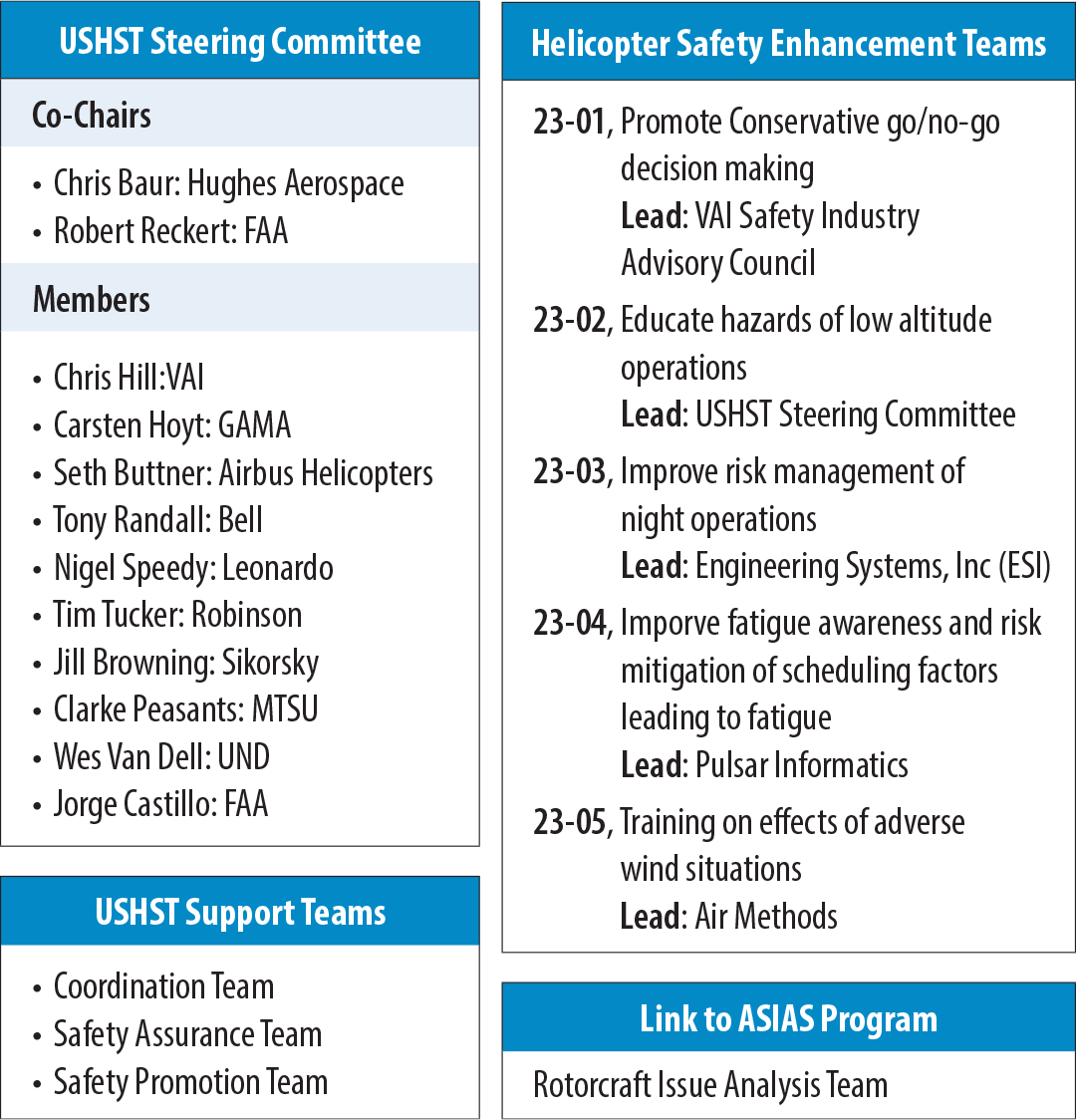
Modeled after initiatives like the Commercial Aviation Safety Team (CAST), the USHST has a collaborative, public-private structure featuring a steering committee for strategy, support teams for operations, and safety enhancement (H-SE) teams that develop data-driven solutions to reduce fatal accidents. The USHST also works closely with industry (e.g., trade associations, owners and operators, manufacturers, and schools) and the FAA to develop a consensus-based approach, mirroring structures such as the General Aviation Joint Safety Committee (GAJSC). Check out the Jan/Feb 2026 FAA Safety Briefing issue for more information on the GAJSC.
The USHST utilizes a system-level safety cycle and data from sources such as the FAA’s Aviation Safety Information Analysis and Sharing (ASIAS) Rotorcraft Issue Analysis Team (R-IAT) to identify systemic safety issues. It then creates and disseminates voluntary, risk mitigation recommendations (H-SEs) to improve safety culture and performance. Metrics are tracked by setting specific, data-driven goals, such as reducing the fatal accident rate by a certain percentage over a five-year period.
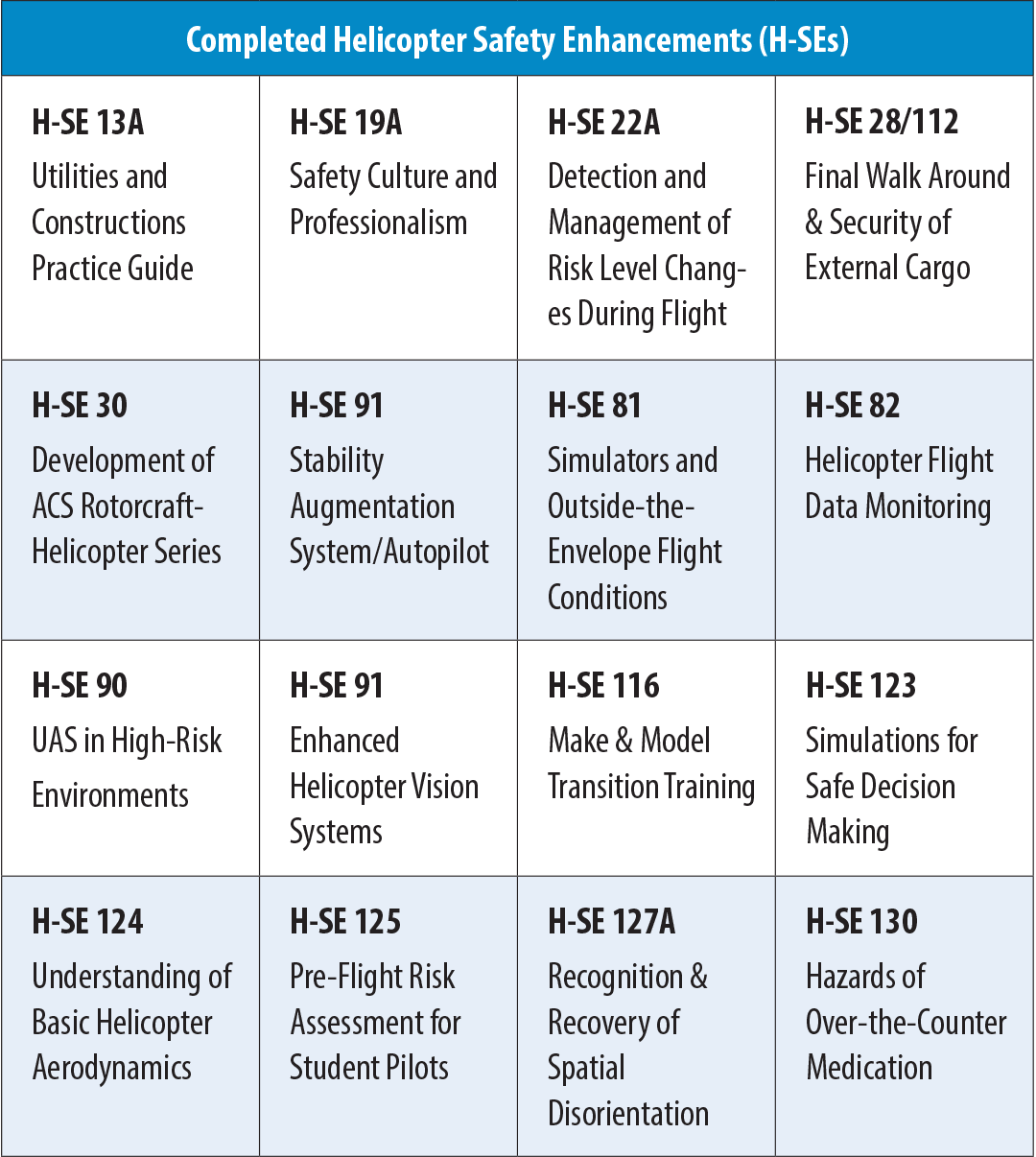
The USHST has finalized all its original H-SEs, resulting in valuable resources and training programs to address the leading causes of fatal accidents. Some notable initiatives include:
- Flight Data Monitoring (H-SE 82): This enhancement promoted the use of data recording devices and voluntary safety programs to identify hazardous behaviors before they result in accidents. The initiative aimed to engage small operators effectively in safety monitoring.
- “56 Seconds to Live” Campaign (H-SE 127A and others): This major initiative focused on recognizing and avoiding spatial disorientation and unintended flight in instrument meteorological conditions (UIMC). It produced a video series and a free training course, widely considered a significant success in providing pilots with critical decision-making tools.
- Safety Culture and Risk Management (Outreach SEs): The USHST has successfully developed H-SEs focused on “soft” skills, such as improving safety culture and professionalism (H-SE 19A) and managing risk in flight (H-SE 22A). These efforts have been detailed in various podcasts and presentations to disseminate the information widely.
The USHST is continuing this vital safety work with five new H-SEs under development:
- Promote Conservative Go/No-Go Decision Making (H-SE 23–01): Help prevent fatal helicopter accidents that can be directly or indirectly linked to preflight judgment errors, decision-making errors, and inadequate mission planning.
- Educate Hazards of Low Altitude Operations (H-SE 23–02): Pursue better avoidance of obstacles (e.g., wires, towers) in the low-level environment through consideration of identification techniques and both traditional and emerging protection devices.
- Improve Risk Management of Night Operations (H-SE 23–03): Use the focus areas of training, technology integration, operational procedures, physiological considerations, environmental awareness, and equipment to promote better risk mitigation strategies specific to night flying.
- Improve Fatigue Awareness and Risk Mitigation of Scheduling Factors Leading to Fatigue (H-Se 23–04): Evaluate the sources of fatigue risk in helicopter operations, develop a framework for fatigue risk management, and provide practical resources to support fatigue risk management program implementation.
- Training On Effects of Adverse Wind Situations (H-SE 23–05): Better illustrate the hazards posed by adverse winds on rotorcraft performance, especially when operating at low air speeds.
Visit ushst.org/h-se-details for information on all the H-SEs.
These enhancements produce numerous safety-focused outputs, all intended to help realize the vision of zero fatal civil helicopter accidents. These products generally fall into the categories of guidelines, training materials, best practices, videos, and recommendations for new technology.
Guidance and Best Practices
- Recommended Practices for Preflight, Final Walk Around, and Post-flight Inspections (H-SE 28): These guidelines emphasize a thorough check of the aircraft to ensure it is in a condition for safe flight.
- Utility Patrol and Construction (UPAC) Recommended Practice Guide (H-SE 13A): A specific guide tailored to the unique hazards of utility operations, to include human performance considerations.
Training Material and Courses
- Simulations for Safe Decision Making: Increased use of relevant simulations to rehearse at-risk scenarios (H-SE 123).
- Make/Model Transition Training: Ensure familiarity and understanding of new “model specific” equipment (H-SE 116).
- Fatigue Awareness: Materials designed to improve awareness and mitigation of risks associated with fatigue in scheduling (H-SE 23–04).
Technology and Equipment Recommendations
- Stability Augmentation Systems (SAS) / Autopilot: Recommendations for developing and installing these systems in light helicopters to reduce LOC-I accidents (H-SE 70).
- Enhanced Vision Systems: Promoting the use of enhanced helicopter vision systems (H-SE 91).
Formal Publications
- Airman Certification Standards (ACS): The USHST contributed significantly to the development and publication of the new ACS rotorcraft-helicopter series, which replaced older Practical Test Standards (PTS) (H-SE 30).
- Formal Reports and White Papers: Detailed reports and guidance documents are published on the USHST website for public access.
- These products are continually developed and distributed to the aviation community through various channels, including the USHST website, industry events such as VERTICON, and collaborations with partners like the FAA.
Mental Health = Safer Skies
The USHST also aligned itself with broader changes in the aviation industry. Pilots of all types of aircraft have an incredible responsibility every time they take to the air and face a unique combination of pressures — high-stakes decision-making, irregular hours, extended periods away from home, and the constant demand for peak performance under stress.
The USHST recognized that prioritizing only technical training and physical health is insufficient; pilot mental health matters for the pilot’s quality of life and for the safety of the National Airspace System. To reduce barriers to help-seeking behavior, it established the Peer Pilot Program (PPP). The PPP is a volunteer-driven initiative that offers free peer support, creating an environment where aviation professionals can find guidance and support from those who understand the exceptional stresses of their profession. It addresses the human factor head-on by offering understanding, connection, and timely guidance before small issues become crises. The USHST Peer Pilot Program is available to help at ushstpeer.org.
Pilots interested in becoming a peer pilot volunteer can contact the USHST at info@USHST.org (be sure to include “PPP Volunteer” in the subject).
The HUGHES App — Free to USHST Members
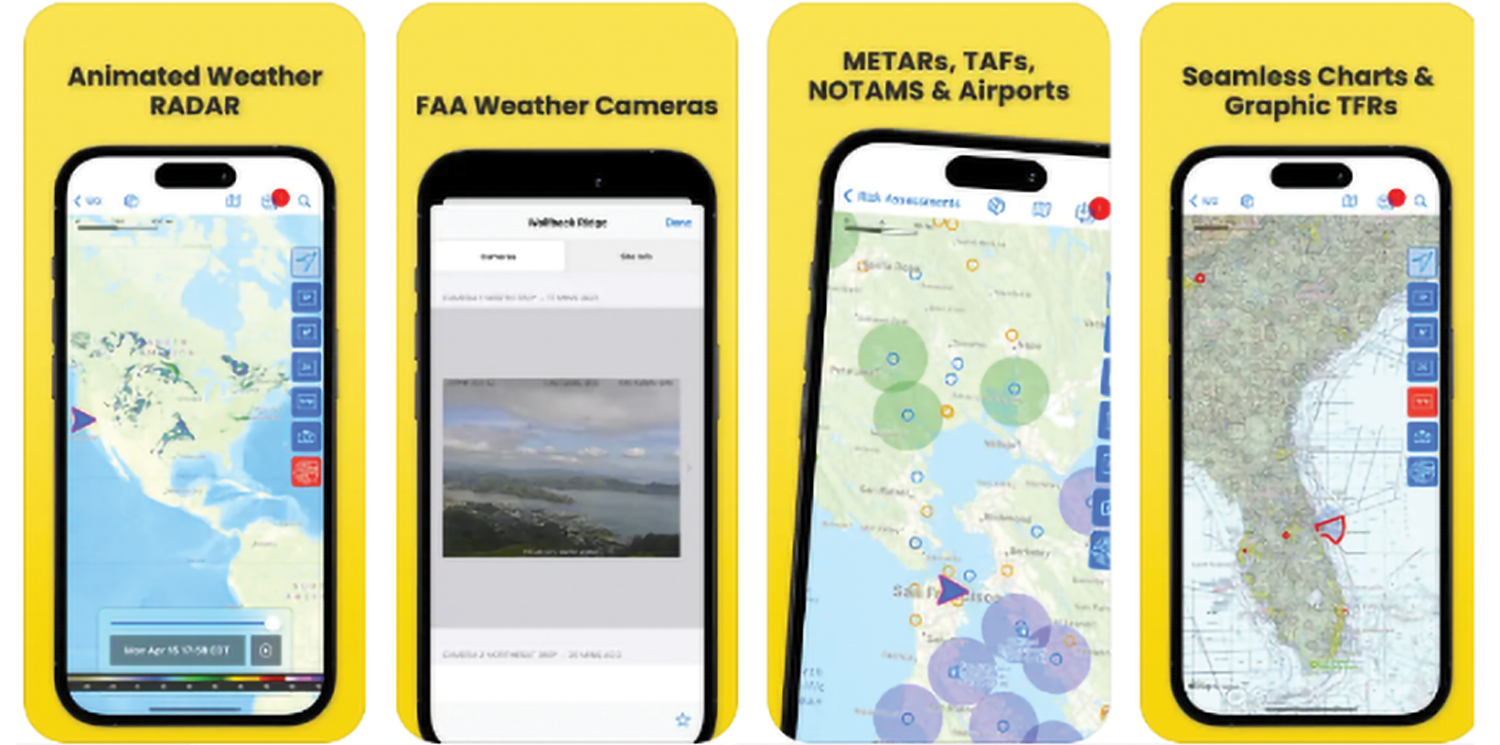
Hughes Aerospace provides the updated Hughes App at no cost to USHST members. Available for iOS users on both iPhone and iPad, it provides valuable information to support safety and decision making, including charts, navigation, weather and weather cameras, and the PPP. The app also features a new VFR prediction tool.
But Wait, There’s More
The USHST is full throttle when it comes to conducting outreach and education, offering a comprehensive suite of communication products across multiple platforms. This accessible, expert-driven safety content includes:
- Health & Safety Education: in-depth documents/white papers on specific safety topics
- Videos/Reels (Rotorcraft Collective): productions of varying lengths focused on accident prevention
- Podcasts (Push to Talk): featuring discussions on H-SEs and safety culture
- Training & Events: free courses, safety challenges at expos, and webinars
- Checklists & Posters: practical tools for flight crews
- USHST Newsletter: sign up to receive this quarterly email
The USHST is also part of “The Rotorcraft Collective,” a series of short safety videos produced by the FAA. These videos provide information on topics such as preflight inspections and passenger briefings, wire strike avoidance, preventing loss of control inflight, and fatigue, and have garnered nearly 600K views. You can view the video series on YouTube at bit.ly/RotorCollective. You can also view the series on the Aeroverse streaming service and its website at bit.ly/aero-rc.
A key component of this outreach effort is promoting safety culture. The USHST encourages a proactive approach to safety by advocating that pilots make safety a personal responsibility, use risk management checklists, and set personal minimums. It also engages with industry groups to increase safety awareness and learn about impediments to safety improvements. For more information on USHST’s culture and safety information, visit ushst.org.
The Results Are In
The USHST makes rotorcraft safer by identifying key causes of accidents and developing solutions that improve safety through technology, training, and risk management. Evidence of this is the fact that fatal accidents have been down significantly (over 35%) since 2013, when the USHST was formed. In 2024, the industry achieved its lowest fatal accident rate (0.45 per 100K hours) and overall accident rate (3.05 per 100K hours) in 25 years, alongside the second-lowest total accidents (88).
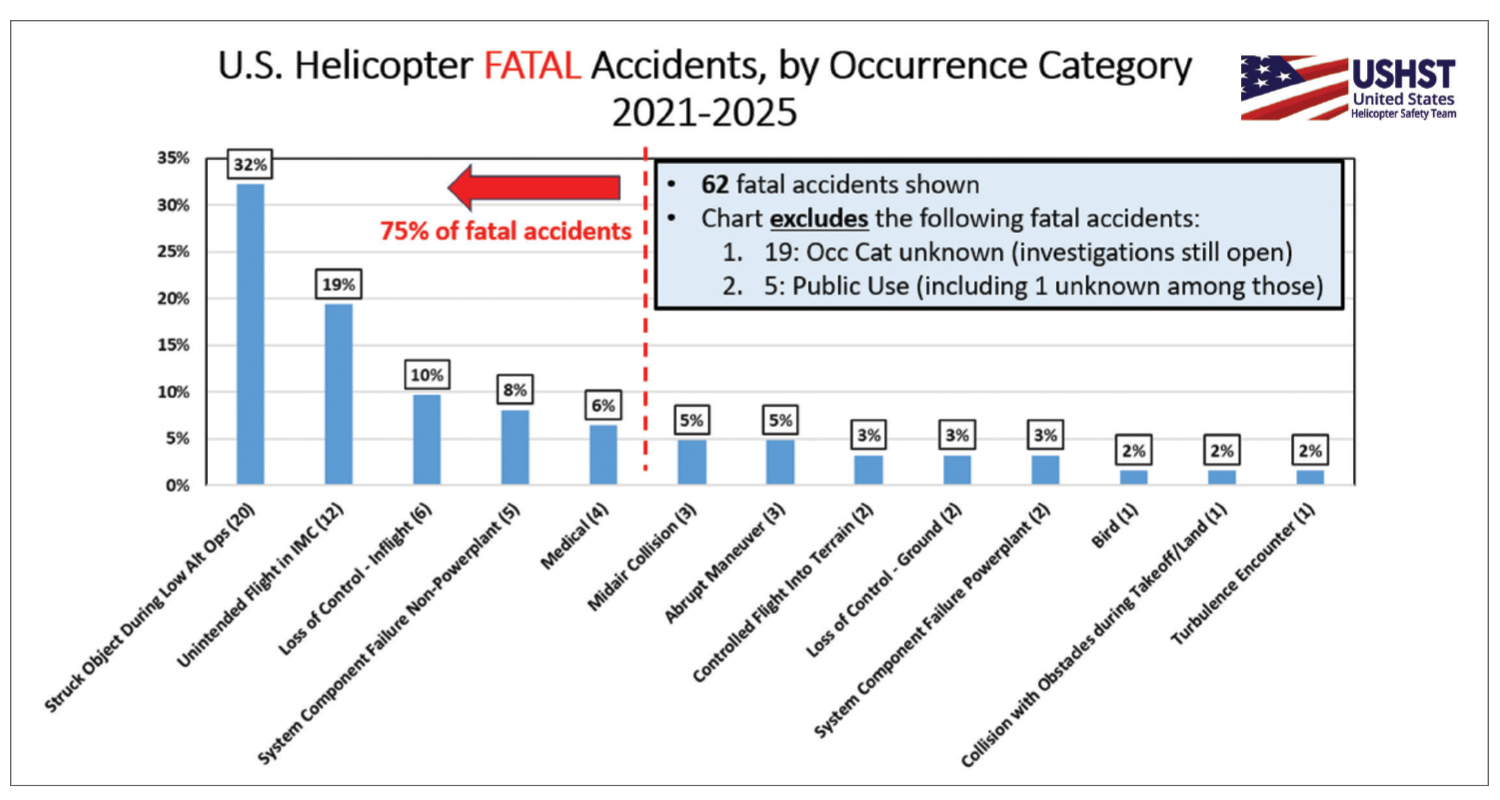
These efforts to develop, deliver, and promote valuable safety resources focused on improving the U.S. helicopter community’s safety culture and performance should have you saying — the USHST, that’s the acronym for me!
Read more FAA Safety Briefing articles, and read more about how the FAA is improving aviation safety in our Cleared for Takeoff blog.