


The Architects of Innovation
How the FAA's Emerging Technologies Division is Shaping the Future of the NAS
As the National Airspace System (NAS) continues to evolve, the integration of drones and advanced air mobility (AAM) has moved from theoretical discussion to operational reality.
Central to this transformation is the FAA Flight Standards Service's Emerging Technologies Division. It provides a single, unified point of oversight within Flight Standards for these rapidly advancing technologies. The division’s complex yet vital mission is to ensure innovation flourishes without compromising a century of American safety standards. From package-delivery drones to the next generation of electric vertical flight, the Emerging Technologies Division serves as one of the agency's primary architects for normalizing advanced operations and new entrants.
It’s worth learning about this group and how they’re turning emerging concepts into standardized procedures and what these changes mean for pilots, controllers, and operators.
The 'Unified Hub' Strategy
Centralizing drone and AAM operational oversight within the Emerging Technologies Division simplifies the landscape for both operators and the general aviation community. The service ensures consistent, repeatable decision-making across the board that accelerates policy development, while the division remains grounded in risk management. “We do not always 'get to yes,' but we do produce carefully considered decisions that provide options for forward movement, aligned with the safety-risk continuum in mind,” shared Joe Morra, the manager of the division.
To make that forward movement as efficient as possible, the division functions as a "one-stop shop" for operators and manufacturers. Rather than trying to navigate complex regulatory requirements alone, industry partners enter a structured path early on.
“We have what we term a 'product development lifecycle' for emerging technologies,” said Morra. “Interested parties can start with the Integrated Proposal Document (IPD) process, where we answer questions and begin a working relationship.”
Through this unified lifecycle, novel technologies progress seamlessly through aircraft evaluation, policy development, live operations, and oversight under the division’s Safety Assurance Branch.
From Waiver to Normalization
Keeping pace with rapidly advancing technology requires clear pathways to normalize operations within the NAS. The Emerging Technologies Division plays a central role in guiding new concepts from the "experimental" stage into routine integration. The key to this evolution is data collection — leveraging lessons learned from the high volume of waivers and exemptions the division processes.
“Once we have identified safe and scalable pathways for normalizing a particular technology or type of operation through waivers and exemptions, we can use the data to solidify policy,” said Morra.
Ideally, this shift would occur through rulemaking; however, rulemaking is not the only mechanism for establishing policy.
“We have been able to normalize drone light shows, first responder operations, and agricultural operations through standard waiver and exemption templates,” shared Morra. “When something is new, we gather data, conduct operator site visits, and continue to modify the provisions in the waivers until we have sufficient knowledge and data to show we can create a standard waiver for low-risk operations that are similar in nature.”
A prime example of data driving regulatory change is 14 CFR section 107.29. Between 2016 and 2021, the FAA processed thousands of individual part 107 night-operation waivers. Analyzing data across those approvals allowed the agency to establish proven safety standards. Rather than continuing to require repetitive individual waivers, the FAA codified those requirements directly into section 107.29, permanently streamlining the process for operators.
The Innovation Onramp
Regardless of what the new technology is, the Emerging Technologies Division follows an established process for how Flight Standards intakes, evaluates, and manages new entrants. Lessons learned from working with drones have built a strong foundation for other new technologies, and the process embodies the FAA’s longstanding safety management system (SMS) principles.
However, the steps below do not account for the critical work of engaging industry, building relationships, and considering new ideas before they’re brought to the FAA. Often, meaningful work to understand new technologies and the industry players developing aviation innovations is already happening before formal requests are received. This is a key component of the division’s success.
The Emerging Technologies Division's process for new entrants:
- Intake/Initialize/Hypothesize — intake new concepts and technologies, analyze, identify hazards, develop safety risk management (SRM) plan
- Test — research, evaluation/validation, operational suitability demonstrations (OSD)
- Record — document SRM, draft policy, retain artifacts
- Incubate/Implement — implement safety assurance, transition to the field when appropriate
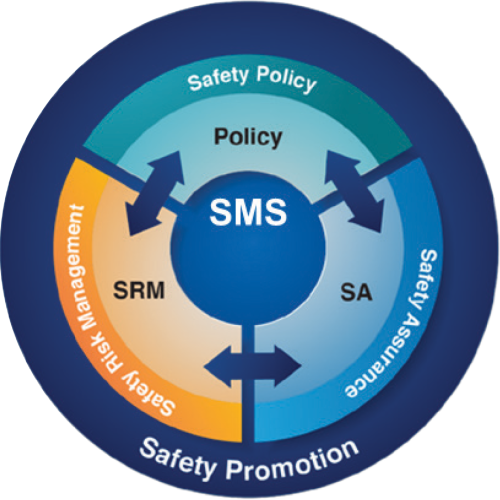
The building blocks of SMS — SRM (identify hazards, test/validate); policy (create policy, implement); safety assurance (monitor) — have informed our drone work and serve as the basis for our process to safely enable new and emerging entrants. By maintaining an unprecedented level of safety, this process is keeping the United States the leader in global aviation technological development.
Looking Ahead
With AAM functions growing, the division is focused on normalizing electric vertical takeoff and landing (eVTOL) aircraft operations. A key driver is the FAA’s eVTOL Integration Pilot Program (eIPP), which partners with eight state and local agencies across 26 states. The division is leveraging real-world insights from these initial eIPP operations to shape effective safety standards and policy.
“In the drone sphere, we learned early on that the key to effective drone integration was incremental implementation,” said Morra.
This "crawl-walk-run" approach allowed small-scale operations to generate vital safety data without disrupting broader airspace. Flight Standards is applying this same proven blueprint to eVTOL integration.
For traditional pilots and aviation professionals wondering how these changes affect their daily environment, the division's message is clear: the NAS can increase in complexity while simultaneously becoming safer.
Automation plays a pivotal role in this shift. By pairing human oversight with automated systems, the industry can reduce workload while enhancing overall airspace safety. Integrating SMS principles ensures that these automated systems are evaluated using proactive, data-driven decisions.
Ultimately, modern collision avoidance requires shifting from relying solely on visual "see-and-avoid" out the cockpit window to establishing shared electronic situational awareness across all aircraft — traditional and new entrants alike.
Centralizing this work ensures new entrants are normalized safely. It is not merely about adding aircraft to the sky, but creating the standards that allow traditional flight operations and emerging technologies to seamlessly coexist.
Learn More