

Fast-Paced Flights, High-Stake Decisions
FAA Oversight in the Demanding World of Medical Helicopter Operations

Whenever a helicopter air ambulance (HAA) is dispatched to the scene of a motor vehicle accident or to a critical trauma patient, the flight must be airborne within minutes. But unlike commercial airline flights, there’s no co-pilot, no familiar airfield, and no established routes. In some cases, the pilot may be headed to an isolated canyon or roadside they’ve never seen before, perhaps one that no aircraft has ever landed on, and sometimes in the middle of the night.
“That’s one of the biggest challenges,” said Kurt Skultin, an aviation safety inspector and former emergency medical services pilot. “These are almost entirely single-pilot operations. The workload and responsibility fall heavily on that one individual who’s making critical flight planning decisions within minutes of the call.”
Before working for the FAA’s General Aviation and Commercial Division, Skultin was part of the certificate management team that oversees the nation’s largest 14 CFR part 135 HAA operator. At the time, he also served as the FAA representative for their Aviation Safety Action Program (ASAP).
The goal of ASAP is to enhance aviation safety by preventing accidents and incidents. Its focus is to encourage voluntary reporting of safety issues and events that come to the attention of employees of certain part 121 air carrier and part 145 repair station certificate holders. However, any operator, like an air ambulance service, may establish an ASAP with the FAA. There are currently more than 1,300 participants, including many operating under parts 91 and 135.
“When a pilot submits an ASAP report, I could better understand their decision-making process,” explains Skultin.
The "Golden Hour"
Medical helicopter operations are challenging for both pilots and FAA safety inspectors alike. HAA pilots provide rapid medical transport for critically ill or injured patients when ground transportation is unavailable or too slow. The helicopters carry medical professionals and advanced medical equipment, allowing for in-flight care to be provided. The aim is to quickly and safely transport patients to a medical facility within the “golden hour,” the first 60 minutes after a trauma, when rapid transport can significantly improve a patient’s chance of survival. Unlike part 121 air carrier operations, HAA missions are unscheduled and can be unpredictable.
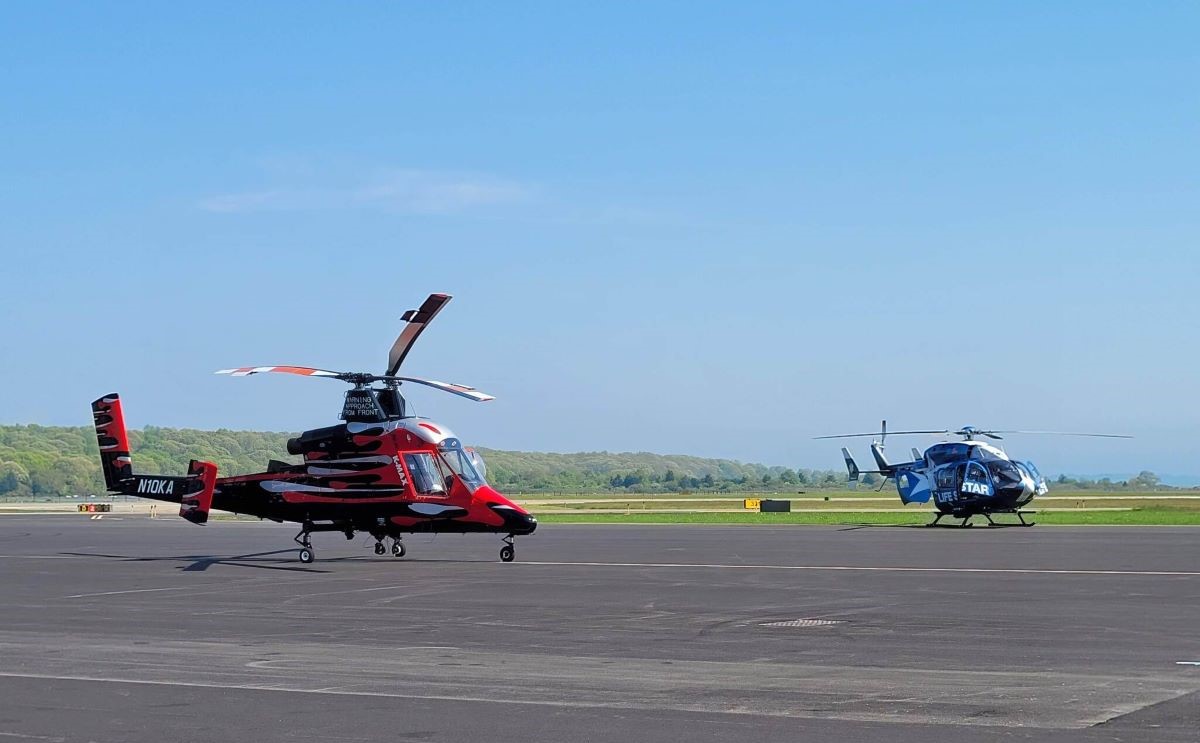 “In air ambulance, you get a call at 2 a.m., and you may be heading into unfamiliar terrain. You may not have ever landed there before,” notes Skultin.
Despite the urgency, HAA pilots are required to conduct a pre-flight risk analysis before takeoff. Under 14 CFR section 135.617, pilots must review hazards, terrain, weather, Notices to Airmen (NOTAMs), fuel, weight and balance, and more.
“This risk analysis has been a great step forward for safety,” Skultin explains. “It formalizes a process that many experienced pilots used instinctively but brings it into a structured framework.”
Still, the analysis, along with other safety planning, must be completed rapidly — often in less than 10 minutes. Pilots typically receive support and confer with an operational control center, but the bulk of the decision-making remains on the pilot’s shoulders.
Building Trust, Reducing Risk
Providing oversight for such a dynamic environment is a significant undertaking. Not all air ambulance bases are alike, and no two missions are the same. Traditional surveillance tools, such as scheduled ramp checks or in-flight observations, don’t easily apply.
“HAA oversight isn’t like standard 121 or 135 operations,” Skultin explains. “The pilots are flying into unfamiliar, off-airport environments. It’s diverse, and sometimes unpredictable.”
The Denver Flight Standards District Office (FSDO) has been proactive in fostering transparency and collaboration with HAA operators. That trust is vital in an operation where mitigating risk is key. While technological tools like terrain awareness systems and night vision goggles are great safety tools, culture and communication are equally important.
“We’ve seen progress where there’s open dialogue,” he notes. “When pilots know the FAA isn’t just there to check the box, but to understand the operation, they’re more likely to share concerns and engage in safety reporting.”
“It’s not just about checking manuals or processes,” he continues. “It’s understanding what the pilot is experiencing when they get that request in the middle of the night to respond to a call.”
And while every mission is different, the goal remains the same: ensuring that the people who respond in moments of crisis can do so safely, confidently, and effectively.
Learn More
Read more FAA Safety Briefing articles, and read more about how the FAA is improving aviation safety in our Cleared for Takeoff blog.