


Sikorsky S-76B
14 CFR Part 135 Operator, N72EX
Calabasas, California
January 26, 2020
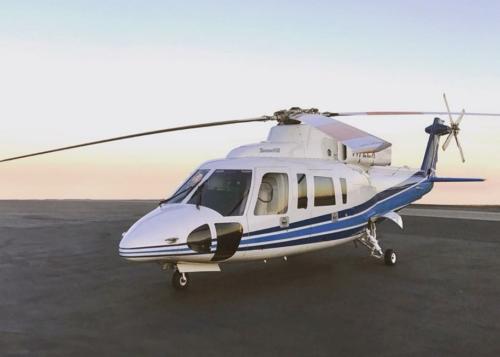
On January 26, 2020, at about 0946 Pacific standard time, a Sikorsky S-76B helicopter, N72EX, entered a rapidly descending left turn and impacted terrain in Calabasas, California. The flight had departed John Wayne Airport-Orange County (SNA), Santa Ana, California and was destined for Camarillo Airport (CMA), Camarillo, California. The pilot and eight passengers were fatally injured, and the helicopter was destroyed.
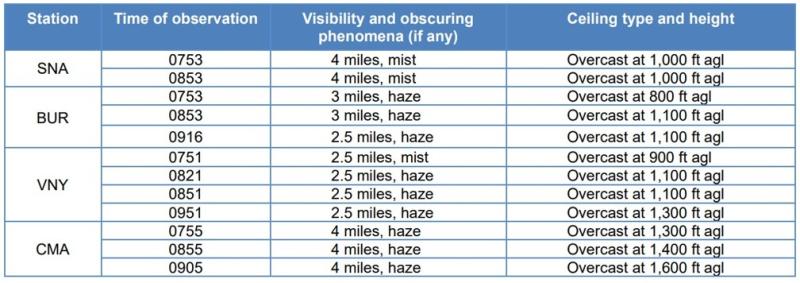
The on-demand flight was operated under visual flight rules (VFR) and the provisions of Title 14 Code of Federal Regulations (CFR) Part 135. Weather conditions reported to the pilot by air traffic controllers during the flight included an overcast ceiling at 1,100 feet above ground level (agl), and a visibility of 2.5 miles with haze.
The National Transportation Safety Board (NTSB) determined the probable cause of this accident was the pilot’s decision to continue flight under VFR into instrument meteorological conditions (IMC), which resulted in the pilot’s spatial disorientation and loss of control. The NTSB also stated that contributing to the accident was the pilot’s likely self-induced pressure and the pilot’s plan continuation bias, which adversely affected his decision-making, and the company’s inadequate review and oversight of its safety management processes.
NTSB accident report: NTSB/AAR-21/01
History of Flight
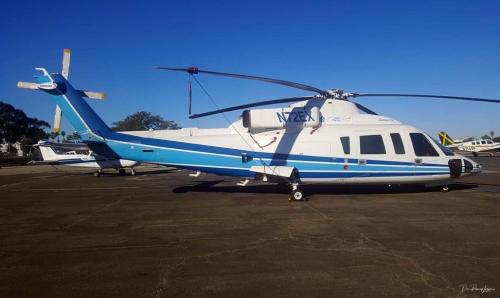
On January 26, 2020, N72EX, a Sikorsky S-76B helicopter departed John Wayne Airport-Orange County (SNA) with one pilot and eight passengers destined for Camarillo Airport (CMA). The pilot held a commercial pilot certificate with rotorcraft-helicopter and instrument ratings as well as a second-class airman medical certificate. The purpose was to transport the passengers to CMA and return them to SNA later that day.
When the aircraft departed SNA with the eight passengers at 0907 local time, the reported visibility was four miles with mist and an overcast ceiling at 1,000 feet agl. While the helicopter was traveling northwest its altitude varied between 1,000 feet mean sea level (MSL) (950 feet agl) and 600 feet MSL (500 feet agl) while maintaining a groundspeed of about 140-150 knots.
The pilot was required to request and receive a Special VFR (SVFR) clearance to transition through both the Burbank Airport (BUR) airspace and the Van Nuys Airport (VNY) airspace because the reported ceiling and visibility was lower than Visual Flight Rules (VFR) allowed.
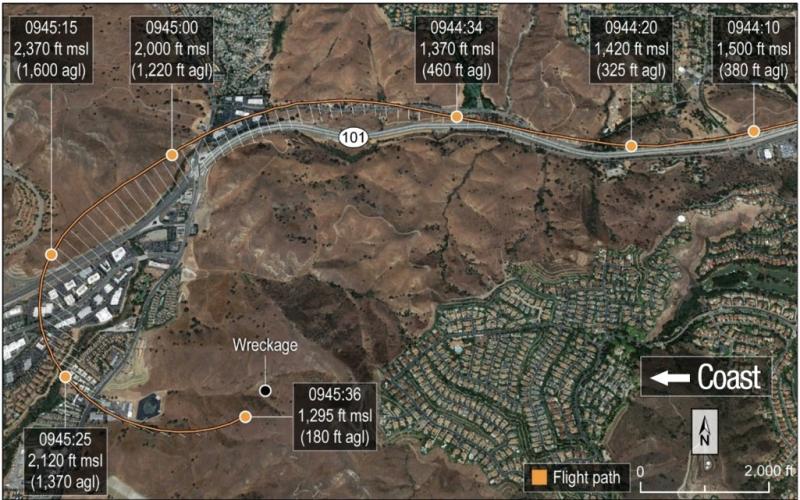
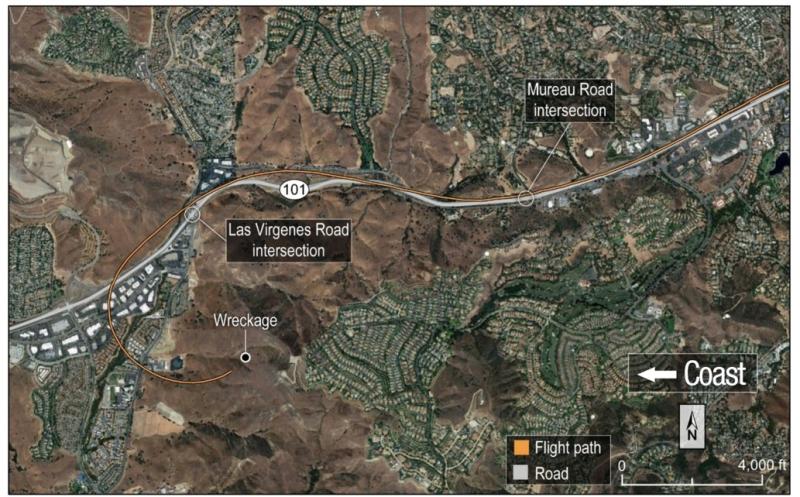
Once the pilot completed the transition through VNY airspace, he continued flying west over US Route 101 (US 101) and rising terrain. He was communicating with Southern California terminal radar approach control (SCT) at the time. About five minutes after exiting VNY airspace, the pilot communicated on the SCT frequency that the flight was going to start a climb above the cloud layers. Data shows that a climb rate of about 1,500 feet per minute (fpm) occurred, accompanied by a gentle left turn.
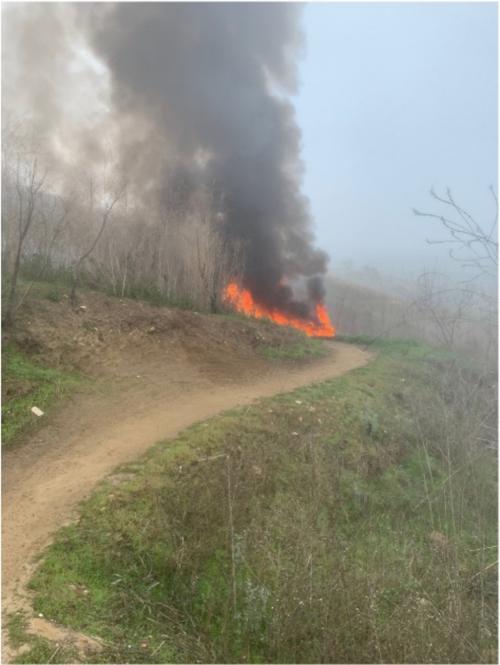
The SCT controller attempted to confirm the pilot’s intentions. During the two-way communication between the controller and the pilot, the aircraft began to descend rapidly while remaining in the left turn. The helicopter impacted terrain and erupted into flames. A ground witness, who was bicycling on trails near the accident site, estimated that he saw the helicopter for about 1 to 2 seconds before it struck the terrain. He approached the site and found no survivors. A photo was taken by the witness about three minutes after the accident.
Operator
At the time of the accident, the operator was a Title 14 CFR Part 135 Air Carrier which operated out of Long Beach, California. They were authorized for VFR day and night, on-demand passenger and cargo operations, and provided these services in the area for over 20 years. The company employed 25 employees, including six pilots and two mechanics. The company operated three Sikorsky S-76-series helicopters and three Airbus AS-350-series helicopters.
Aircraft
The accident aircraft was a Sikorsky S-76B helicopter manufactured in 1991. The helicopter, as equipped, was certified for single-pilot VFR and instrument flight rules (IFR) operations.
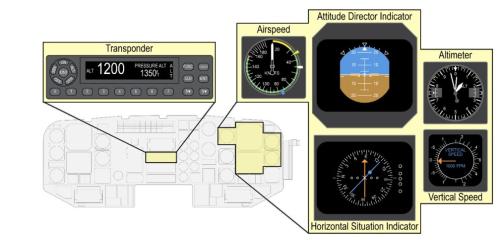
The accident helicopter was equipped with a digital automatic flight control system (DAFCS), which was a four-axis (pitch, roll, yaw, and collective) flight control system. This system would commonly be referred to as an autopilot. The DAFCS functions ranged from providing stability during manual flight to providing fully automatic flight path control and integrating with the electronic flight instrument system (EFIS). The EFIS provided attitude indication and horizontal situation indication. The helicopter’s instruments also included two airspeed indicators, two altimeters, a standby attitude indicator, and two Mode S transponders with GPS and ADS-B “out” capabilities.
Maintenance records showed that, at the time of the accident, the airframe had accumulated 4,717 total flight hours. There were no known maintenance discrepancies prior to the flight.
Pilot
The pilot held a commercial pilot certificate with rotorcraft-helicopter and instrument ratings as well as a second-class airman medical certificate with the limitation “must have available glasses for near vision.” He had about 8,577 total hours including 1,250 hours in the Sikorsky S-76-series aircraft and about 75 hours of instrument flight time, 68.2 of which were acquired while flying under simulated instrument meteorological conditions (IMC).
The pilot was hired by the operator in 2011. He initially flew the company’s Airbus AS-350-series helicopters then completed training for Sikorsky S-76-series helicopters in 2014. He became a company instructor in the S-76-series in January 2016 and became the chief pilot in May 2016. He was authorized to be a company check pilot two months later. His most recent company training and check ride was on June 21, 2019, (seven months prior to the accident) in the accident helicopter and included autopilot use and maneuvers by reference to instruments.
The days prior to the accident, the investigation showed that the pilot’s work and personal life did not reflect a lack of adequate rest or an excessive work/flight schedule. The day of the accident, the pilot awoke about 0600, and cell phone activity began at 0755. Activity during the accident flight consisted only of incoming texts.
The investigation revealed that the high-profile client, who was a passenger on the accident flight, was “very particular” about which pilot flew his flights and always requested the accident pilot. The accident pilot had been flying this client for years and, in the last year, the accident pilot had flown him ten times between SNA and CMA, including the day before the accident.
Pilot’s Training
The company’s basic indoctrination section of their training manual included in part, instrument procedures, weather requirements, aeronautical decision-making and judgment, unintentional instrument meteorological conditions (UIMC), and spatial disorientation. The S-76 specific ground training included in part, a section on adverse weather practices with items for reduced visibility, fog, and smog. The S-76 specific flight training contained in part, an instrument maneuvers module which covered straight-and level flight, climbs, descents, turns, unusual attitudes, and UIMC.
The operator utilized a third-party vendor to conduct additional training outside of the requirements of its 14 CFR Part 135 training manual. When interviewed during the accident investigation, the instructor from this vendor said the flight training emphasized the importance of not entering IMC and included performing the established UIMC recovery actions that the FAA would evaluate during the check ride. He said that, for the Sikorsky S-76-series pilots, the procedures for recovering from an unusual attitude following UIMC (simulated using a view-limiting device) involved adjusting the pitch and roll to achieve straight-and-level flight, adjusting the power to about 70% to 75% torque and pitch attitude to establish a positive climb rate at an airspeed of about 75 to 80 kts, maintaining the current heading, and turning only to avoid known terrain or obstacles. He then taught the pilots to transition to using the autopilot once they had the helicopter established in a stabilized climb and contact ATC to advise them of their condition.
The instructor taught the pilots how to perform a recovery from UIMC using manual manipulation of the flight controls to full recovery first followed by utilization of the autopilot for recovery. He went on to demonstrate the limitations of the autopilot at low airspeeds. The investigators interviewed one company S-76 pilot who said that to avoid entry into reduced visibility or clouds, he would slow the helicopter from its normal cruising airspeed of 140 kts to about 60-100 kts, depending on the conditions and terrain.
Flight Planning
The accident flight was requested by a broker a few weeks in advance. It was originally booked for a 0945 departure, but a request to change it to 0900 was made the night before the flight. There was no record that the pilot obtained a formal preflight weather briefing for the accident flight. A flight risk analysis was completed by the pilot at 0657 (about two hours before the flight’s departure time). On this form the pilot selected a cloud ceiling of “less than 2,000 feet agl.” The risk analysis indicated that it was a low-risk flight. The risk analysis form, flight plan, passenger manifest, and weight and balance calculations for the flight were filed electronically and available to the director of operations (DO), vice president, and flight locating personnel.
During the time the pilot was on the ground at SNA, weather observations for VNY included visibility of 2.5 miles, which was less than what had been forecasted in the Terminal Area Forecast (TAF) available at the time the pilot completed the flight risk analysis form. Per the flight risk analysis form, visibility less than three miles would require the pilot to call the DO to discuss the weather. An en route SVFR clearance would require the pilot to list an alternative plan for the flight. Neither of these actions occurred prior to the flight departing SNA even though the conditions warranting the actions existed.
The DO stated that he checked the weather on the morning of the accident and believed that the flight could be completed safely with, at worst, a departure delay of 30 minutes to an hour. He said that he did not communicate his thoughts to the accident pilot because he believed the pilot was “more than capable of making his own decisions.” The investigation revealed that, according to the DO, he expected pilots to complete a flight risk analysis form before a flight and any time there was a significant change in weather. He went on to say that this expectation was not contained in any company guidance.
Pressures and Plan Continuation Bias
The accident report stated that there was no evidence to suggest that the Air Operator, the air charter broker, or the client placed any pressure on the accident pilot to accept the charter flight request or complete the flight in adverse weather. It went on to state that the pilot may have experienced self-induced pressure to complete the flight. The air charter broker only used this air operator for this client as this was the only one who met the client’s needs. The client demonstrated a preference for the accident pilot, as he was the only pilot trusted to fly the client’s children.
The accident report stated that one of the influences on the pilot’s decision to continue flight into adverse weather could have been plan continuation bias. The American Psychological Association Dictionary of Psychology defines plan continuation bias as: “The tendency of people to continue with an original course of action that is no longer viable…Plan continuation bias appears to be particularly strong toward the end of the activity and has been theorized to result from the interaction of such factors as cognitive load, task demands, and social influences.” Based on the report’s description of the pilot’s actions during the flight, he may have been experiencing up to all three of these factors:
Cognitive load and task demands – While the weather gradually became worse than he had planned for, he had to maintain control of the aircraft, communicate with multiple air traffic controllers to receive the clearances necessary due to the poor weather, monitor the aircraft systems, etc. As the pilot was entering the clouds, he was on the radio with ATC. The accident report stated in part “the pilot’s initiation of communication with the controller introduced a task load that continued for the remainder of the flight.” The investigation showed that, from the moment of entering the clouds up until impact with the terrain, the pilot was interacting with ATC through radio calls and attempting to comply with their requests to help them identify the aircraft’s location.
Social influences – The accident report showed that the accident pilot was the pilot preferred by the client, only flying with this company and this pilot. The accident report also showed that the relationship between the client and the pilot had become friendly, and the pilot likely did not want to disappoint the client by not completing the flight.
At the time the helicopter entered IMC, they were only 25 miles from CMA which had reported VMC conditions since before the accident flight departed. Plan continuation bias has a greater influence on pilots the closer they are to their destination and is known to negatively affect aeronautical decision-making.
The FAA produced this Plan Continuation Bias video to educate pilots on the dangers of this situation.
Weather
Understanding Aviation Weather –
Visual meteorological conditions (VMC) are the meteorological conditions where the ceiling (a cloud layer defined as broken or overcast) is 1,000 feet or greater above the surface and the visibility is three statute miles or greater. When these conditions exist, flights are allowed under VFR.
When the meteorological conditions are less than either of the above criteria (ceiling or visibility), then it is said instrument meteorological conditions (IMC) are present. These conditions require flights to operate under Instrument Flight Rules (IFR). Both the VFR and IFR can be found in Title 14 CFR Part 91 Subpart B (91.151-91.199).
Title 14 CFR Part 91.157 allows flights to be operated in IMC (less than VMC) but not be required to comply with the instrument flight rules as described above. This authorization is referred to as a Special VFR (SVFR) authorization. This cited regulation provides the specific meteorological conditions and parameters for the flight to be conducted. It must be specifically requested by a pilot, and authorization must be given by an air traffic controller.
For pilots to be authorized to conduct flights under IFR, they must receive training and pass a check ride to demonstrate their ability to operate in the IFR environment. The accident pilot possessed a commercial pilot certificate with rotorcraft-helicopter and instrument ratings.
Aircraft must also meet certain criteria before they can be authorized to be flown under IFR to include minimum equipment installed on the aircraft as well as minimum performance capabilities. The accident helicopter was certified for operations under IFR.
While the aircraft was equipped for IFR and the pilot had been rated for IFR, the company did not hold operational authorization to conduct passenger carrying flights under IFR and so all flights had to be conducted under VFR, or SVFR if criteria were appropriate and approved.
Accident Weather
Surface weather observations reported at SNA (departure airport), BUR, VNY, and CMA (intended destination) airports during the times surrounding the accident flight included the following visibility and ceiling information.
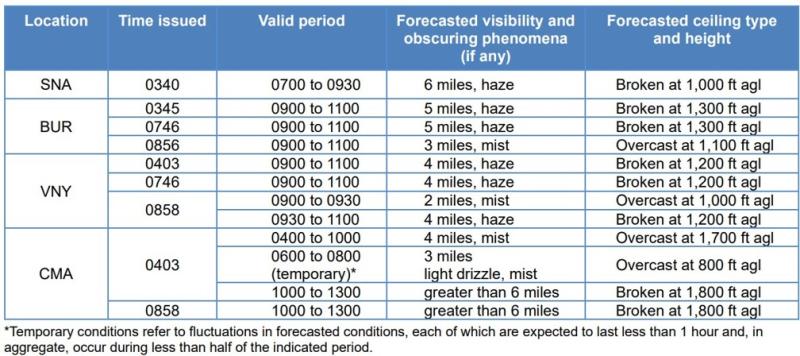
Terminal Area Forecasts (TAFs) for all four airports issued before the flight’s departure and valid for the times surrounding the accident flight included the following forecasted visibility and ceiling information.
The investigation revealed a statement from a private pilot who resided near and frequently drove along US 101 near the accident site. He said that the topography in the area tended to channel fog in from the coast that would stack up against the hills in that area. He said such fog would accumulate along US 101 west of Mureau Road and would be particularly dense in the area near Las Virgenes Road.
The NTSB accident report stated: “At 0645 the morning of the accident flight, the National Weather Service (NWS) issued airmen’s meteorological information (AIRMET) Sierra advisories that forecasted “IFR conditions” in mist and fog and mountain obscuration due to clouds and mist for areas that included the accident location and time.”
Visibility
According to the NTSB visibility study, visibility beneath the clouds in the vicinity of the accident site was between 1 and 1.5 miles. Weather data, images from various cameras, and the witness report provided evidence that cloud bases were between 1,300 and 1,400 ft msl and possibly lower in some areas near the accident site. Due to the likely variations in the cloud bases at the lower level of the marine layer, it could not be determined at which points along the helicopter’s flight path below about 2,000 ft msl the ceiling and restrictions to visibility from the cloud bases may have been optically thin or broken, such that the pilot could have maintained intermittent visual contact with the ground. However, the cloud layer would have been more optically thick from about 2,000 ft msl to the top of the marine layer. If the helicopter altitude was above the cloud base, a possibility explored in the study, the visibility from the cockpit was shorter than these estimates.
Speed
The helicopter performance study conducted during the investigation determined that, while the flight was over US 101, the helicopter’s ground speed remained about 140 kts. The helicopter’s flight path did not diverge from overflying US 101 until after the pilot had penetrated clouds and climbed into what was likely solid IMC. The visibility study, described above, determined that the shortest visibility in the area of the accident was estimated 5,000 feet. The helicopter ground speed just before impact was about 160 kts or 270 feet/second. This corresponds to about 18.5 seconds of flight time leaving the pilot limited time to recognize the hazard (terrain), decide on a mitigation, and apply control inputs to avoid the terrain. Although the pilot’s adverse-weather-avoidance training emphasized avoiding entry into IMC by slowing the helicopter and maneuvering or landing, there was no evidence that he attempted to do so. Thus, the NTSB concluded that the pilot’s poor decision to fly at an excessive airspeed for the weather conditions was inconsistent with his adverse-weather-avoidance training. This reduced the time available for him to choose an alternative course of action to avoid entering IMC. Advisory Circular (AC) 90-48E Pilot’s Role in Collision Avoidance is focused primarily on one aircraft avoiding a collision with another aircraft, bird, drone, etc. during flight. One item discussed in the AC deals with a pilot’s reaction times. It states that research has shown that the average person has a reaction time of 12.5 seconds. Although this is primarily focused on collision with other aircraft, it does provide insight into the possible reaction time of pilots when they recognize an impending collision.
| Event | Seconds |
| See Object | 0.1 |
Recognize Aircraft | 1.0 |
Become Aware of Collision Course | 5.0 |
Decision to Turn Left or Right | 4.0 |
Muscular Reaction | 0.4 |
Aircraft Lag Time | 2.0 |
TOTAL | 12.5 |
The video below is a portion of a video from Loft Dynamics. It discusses how altitude above the ground versus aircraft speed can play a critical role in areas of reduced visibility when attempting to identify hazards.
Company Risk Assessment / Safety Management System (SMS)
The investigation showed that the accident company developed its Safety Management System (SMS) in 2013, with the assistance of a third-party vendor. The company used some SMS risk management tools but did not implement the entire SMS as outlined in its SMS manual. At the time of the accident, the FAA had no regulatory requirement that the company use an FAA approved SMS, and so there was no FAA SMS oversight.
The DO was the Accountable Executive. He held regular safety meetings with all staff. The minutes of the May 24, 2019, meeting showed that one of the topics covered was reviewing an article from Helicopter Association International (HAI) titled “Land the damn helicopter!”. The minutes also showed that the DO talked about weather deviation with passengers on board: “If you must divert, then do it. Land that damn helicopter and call a taxi for passengers.” The minutes of the October 30, 2019, meeting showed that one topic discussed was “at any time if you feel the flight cannot be flown safely and professionally then NOGO.” The accident pilot was present at both meetings.
The SMS provided risk analysis tools to be utilized by staff to identify risk. Two of these tools were the flight risk analysis tool and the ground risk analysis tool. The flight risk analysis form utilized by the accident pilot contained a time stamp provided by the vendor software so that the company could determine when the risk form was filled out. Once an employee completed a risk form, the result was an overall risk score of three categories: low, elevated, and high. The low category allowed the employee to continue the activity. The elevated category required risk mitigation and concurrence from company management. The high category required mitigation, concurrence from management, and, if the risk could not be mitigated, the activity could not occur. For both the elevated and high categories, the employee must call a member of management to discuss the risk. The accident pilot filled out his risk assessment form at 6:55 and completed/submitted it at 6:57. This was about two hours before the flight departed and about three hours before the accident. The company SMS manual did not provide an explanation regarding the time frame that the form should be filled out by pilots. During an interview with the director of operations and safety manager, they said the form should be filled out prior to a flight.
Helicopter Stability/Controllability Overview
Helicopter vs. Airplane Basics
Airplanes and helicopters are both able to fly because they have lifting surfaces that, in the right conditions, produce lift to overcome the pull of gravity on the aircraft and cause it to climb into the air away from the ground. Pilots utilize flight controls to vary the amount of lift produced causing the aircraft to climb, remain at the same altitude, or descend.
On airplanes the flight control (yoke) moves small portions on the wings, called ailerons, which control roll and small portions on the horizontal stabilizer (part of the tail), called elevators, which control pitch. An airplane pilot can utilize small control surfaces on the wings and tail to balance the forces necessary for straight and level flight. This process is referred to as “trimming” the airplane. When the plane is trimmed properly, the pilot can remove their hands from the controls, and the plane maintains its relative flight attitude in the air through balanced aerodynamic forces.
On helicopters, the flight control (cyclic) changes the angle of the main rotor blades as they move through the air. The movement of the cyclic results in a difference in lift across the main rotor causing the helicopter to move in the direction of the cyclic. Many small helicopters do not provide a means to balance the aerodynamic forces during flight without continuous pilot input, and therefore pilots must always keep a hand on the cyclic during flight.
The FAA publishes the Helicopter Flying Handbook to provide education on the operations of helicopters. This link will direct you to the section that discusses basic aerodynamics and how helicopters can fly.
Stability
Stability is the tendency of an aircraft to maintain or deviate from an established flight condition. Static stability is the tendency for an aircraft to return/diverge to/from its trim condition when it is disturbed by an outside force (e.g., a gust of wind). Positive static stability is the tendency of an aircraft to return to the original condition after a disturbance and negative static stability is the tendency for the aircraft to continue away from its original condition after a disturbance. Airplanes and helicopters both have positive static stability.
Dynamic stability refers to the type of movement over time following a disturbance. If the subsequent movement is ever lessening in amplitude over time, the aircraft is dynamically stable. An example of this is a weight hanging from a string. If the weight is pushed to one side (away from beneath the string), it will move back towards its original position, continue past it, and then reverse direction with a slightly smaller amount of travel. It will do this until it stabilizes in its original position beneath the string. This is called positive dynamic stability. If the subsequent movement diverges further and further from the trim condition over time, that is called negative dynamic stability.
Generally, airplanes have positive dynamic stability in pitch and roll, meaning they return to the trim state after a disturbance. With few exceptions, an airplane returns to straight and level flight if there is a brief gust of wind, and the pilot does not apply a counteracting control input. Helicopters, in forward flight, have negative dynamic stability in pitch and roll, meaning they move further and further from the trimmed state after a disturbance. If the pilot does not apply a counteracting control input after a brief gust of wind, the helicopter deviates further and further from the trimmed state of straight and level flight. Without automation or during manual flight, pilots must always actively fly the helicopter to maintain the trimmed state.
The video below is to a video describing how flying a helicopter can be more difficult than flying an airplane.
Automation
Helicopter manufacturers have developed and installed systems to assist the pilots and remove not only the control forces felt during flight, but the need to always have hands on the controls. One simple form of automation is called force trim. It provides resistance to movement of the cyclic to maintain its position when engaged. In general, force trim will hold the aircraft flight controls in their current position, allowing the pilot to momentarily release them.
A more advanced form of automation is a Stability Augmentation System (SAS). It stabilizes the helicopter against pitch and roll disturbances due to wind gusts and turbulence. It, in effect, acts as the pilot in maintaining the trimmed flight state by applying control inputs as necessary.
Beyond SAS would be autopilots. These systems include SAS control capability along with flight computers linked to navigation systems (e.g., GPS) and can not only correct for disturbances but fly programmed routes. Four-axis systems control the cyclic, collective, and tail rotor pedals in effect removing the need for the pilot to make any control inputs during the flight.
The accident aircraft had the above-described SAS. It also had a Honeywell SPZ-7000 Digital Automated Flight Control System (autopilot). This system was capable of four-axis control as described above. It can fly the aircraft on a course programmed by the pilot and does not need any visual cues outside of the cockpit to maintain safe flight.
Leonardo Helicopters produced a video describing the various levels of stability that can be present in helicopter designs. It then goes on to discuss how automation (SAS or autopilots) can assist a pilot with maintaining stability. Click on the video below to watch a portion of this video.
Visual Cues and Automation
When a pilot flies either an airplane or a helicopter without any assistance from the above-described systems, they must make control inputs to direct the aircraft in what they want to achieve: climb, descend, turn, avoid an obstacle/bird, etc. The pilot uses the visual cues provided by looking outside the aircraft to decide what control inputs are required to maintain a safe flight. As discussed, an airplane has positive dynamic stability in that, without any input from the pilot, it can return to its original stable flight state when it encounters a disturbance. The helicopter has negative dynamic stability in pitch and roll. The pilot must provide control inputs to counteract any disturbance (wind gust, turbulence, etc.). The pilot makes this assessment by visual cues outside of the helicopter showing how far away from straight and level the aircraft is at that moment.
Without visual cues (flying in fog or clouds) and without automation, the pilot must rely on aircraft instruments that replicate the visual cues they typically use. These would be the artificial horizon showing pitch and roll indications supported by the airspeed indicator, the directional gyroscope, the turn/bank indicator, the vertical speed indicator and the altimeter. Without repeated training and practice, pilots lose the ability to use these instruments to maintain level flight without the use of outside visual cues. Pilots experience internal cues, which during VMC flight, are consistent with the aircraft’s attitude. During flight in IMC, without visual cues, physiological cues can lead to misinterpretation of the aircraft’s position in the air. These misleading physiological cues can lead to spatial disorientation.
Spatial Disorientation / Illusions
A definition of spatial orientation found in a pilot safety brochure published by the FAA is “The natural ability to maintain our body orientation and/or posture in relation to the surrounding environment at rest and during motion.” This orientation allows people to walk down the street, ride a bike, perform gymnastic routines, as well as many other movements often taken for granted. When there are changes in linear acceleration, angular acceleration, or gravity, these are detected by physiological systems, including the vestibular system (inner ear), and the proprioceptive receptors (skin, muscles, tendons, joints, etc.). The brain then compares the inputs from these systems to visual information.
Visual information is the most important sensory information to maintain spatial orientation on the ground or during flight. A good example of this is that birds typically cannot fly when they do not have a visual reference (such as in clouds or fog). Bats, however, have echolocation and are thus able to fly without any visual references.The vestibular system is comprised of three semi-circular canals located within each inner ear. Each canal senses movement about a specific axis. This perceived movement is then transmitted to the brain by the sensory nerve fibers (hairs) for use in determining spatial orientation.
The proprioceptive receptors (e.g., skin, muscles, joints, tendons) provide input to the brain related to movement or orientation of the body as well. These receptors can sense acceleration, deceleration, turning, as well as climbing or descending. These stimuli are sent to the brain for use in determining spatial orientation.
The flight environment is unfamiliar to the human body in that it can create sensory conflicts and illusions that make spatial orientation difficult, if not impossible, to achieve. An example of sensory conflicts on the ground is motion sickness. The brain gets conflicting messages from the parts of the body that sense motion: visual, inner ear or semicircular canals, and muscles and joints. It can happen while reading in a moving vehicle, playing virtual reality games with the visual input of movement (VR goggles) while the body is sensing no movement, or rapidly changing movement (e.g., riding a roller coaster). Any difference between visual, vestibular, and proprioceptive inputs can produce illusions and lead to spatial disorientation. On the ground, the typical outcome is falling or getting sick. During flight, spatial disorientation may not have detectable symptoms, and the results are often much more severe. According to the FAA safety brochure previously cited: statistics show that five to ten percent of all general aviation accidents can be attributed to spatial disorientation, and 90% of these accidents are fatal. The video below is for a clip from the NTSB public meeting discussing this accident. It describes the inner ear and spatial disorientation.
The flight attitude of an aircraft (its orientation in the air) is generally determined by the pilot’s visual reference to the natural horizon. When this reference is not visible (the horizon is obscured), the pilot must utilize instruments installed in the aircraft that provide a simulated representation of the horizon. One such instrument is the Attitude Indicator, commonly referred to as the Artificial Horizon. If a pilot loses outside reference to the natural horizon, they must utilize the artificial horizon for spatial orientation. This skill requires training and repeated practice to maintain any type of proficiency.
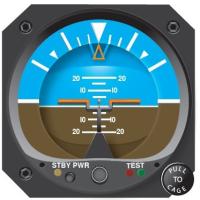
During flight, in addition to the many types of illusions possible, pilots can be susceptible to spatial disorientation. In some cases, they can recognize this occurrence and take action to overcome the sensation (use the artificial horizon as an example). In other cases, it is possible for the pilot to lose outside visual reference, to cause or allow the aircraft to diverge from straight and level flight, and to not sense this divergence. The movement can be so gradual that it is not sensed by the vestibular or proprioceptive systems. If movement is not sensed by the two systems and the visual sense is not able to detect movement (cannot see anything outside of the aircraft), the pilot could cause or allow the aircraft to move in a direction that is unintended and undesirable. In this accident, the pilot may have experienced an illusion called “the leans”, where the pilot’s vestibular system led him to incorrectly perceive the helicopter’s attitude as level when it was actually in a descending banked left turn.
During flight training, pilots receive education on the ground regarding the above-described physiological systems, their interactions, and the possible illusions/disorientations that can occur during flight. Both private and commercial pilots receive training in controlling the aircraft by flight instruments alone to familiarize themselves with the process. This training is more to provide an experience for the student to recognize the skill required to maneuver the aircraft by instruments alone and is not intended to provide a level of skill to fly the aircraft in actual IMC. For that skill, and to qualify for the authorization to fly in IMC, a pilot must receive what is commonly referred to as instrument training. This training, and the accompanying successful check ride, provides the skill and authorization to operate under IFR. The accident pilot had received this training earlier in his career and earned the authorization to operate under IFR flying in IMC.
The operator was a Title 14 CFR Part 135 Air Carrier. 14 CFR Part 135 air carrier certificate holders are provided authorizations from the FAA which govern how the operator can conduct business while carrying cargo or the public for revenue. This operator was issued authorization to conduct business under VFR only and was not authorized to conduct business under IFR. The regulations require Part 135 operators to provide annual training and checking of their pilots to ensure they can operate the aircraft to the standards governed by 14 CFR Part 135 to provide a level of safety to the public. For VFR helicopter operators, pilots are required by regulation to be tested on maneuvering the aircraft by reference to instruments from simulated IMC to VMC. During this check, pilots are required to demonstrate how to maneuver the aircraft with one of the flight instruments not functioning (simulated), recover from UIMC, perform a simulated instrument approach, and potentially utilize any automation (autopilot) installed that they are trained to use.
The United States Helicopter Safety Team (USHST) is a volunteer team of U.S. Government and industry stakeholders formed to improve the safety of civil helicopter operations. In addition to numerous other topics related to the safe operations of helicopters, they address Unintended Flight in Instrument Meteorological Conditions (UIMC). USHST has a safety initiative discussing this phenomenon. After analyzing 31 fatal UIMC accidents, USHST determined that there was a median time of 56 seconds from entry into IMC conditions until the crash. For more detailed information you can visit the USHST website.
Collision with terrain can occur in all weather conditions and typically is caused by loss of situational awareness. Situational Awareness could be described as a clear mental picture of the helicopter’s location relative to the terrain and objects around it as well as its attitude relative to the earth during flight (level, climbing, turning, descending, etc.). It is common when a pilot loses situational awareness for an extended period of time, collision with terrain is the result. Collision with terrain can involve a loss of control inflight (LOC-I), like in this accident, or a controlled flight into terrain (CFIT).
Loss of control inflight is defined by the CAST/ICAO Common Taxonomy Team as “an extreme manifestation of a deviation from intended flightpath.”
Controlled flight into terrain is defined as an “in-flight collision or near collision with terrain, water, or obstacle without indication of loss of control.”
The Vertical Aviation Safety Team (VAST), formerly International Helicopter Safety Team, is a worldwide organization leading a multi-year effort to reduce the civil helicopter accident rate. They describe Controlled Flight into Terrain (CFIT) as occurring when an airworthy aircraft under the control of a pilot is flown unintentionally and without prior awareness into terrain, water, or an obstacle. The VAST produced a Training Fact Sheet – Controlled Flight into Terrain which can be read here. In it they describe that the nature of helicopter operations exposes helicopter pilots to greater risk of CFIT. It is common for helicopters to fly at low altitudes or adjacent to terrain, increasing the likelihood of CFIT should a loss of situational awareness occur. The link below is for a video clip from an FAA video describing how to avoid collision with terrain, including controlled flight into terrain.
Conclusion
The charter flight’s client and passengers frequently utilized this company and this pilot for their charter needs. The departure and destination airports, as well as the route of flight were a typical request by the customer. The weather in the area at the time of the accident was poor but the pilot elected to continue with the flight as planned. As the flight progressed, the pilot was required to alter his initial flight profile in response to ever worsening weather conditions. This included requesting and receiving a clearance from ATC for Special VFR clearance through airspace and following a highway instead of flying straight to the destination. The helicopter entered a fog bank/low cloud region during the flight. The accident report stated that the pilot likely became spatially disoriented and subsequently the helicopter impacted terrain resulting in all people on board being fatally injured. The pilot’s relationship with the client as well as plan continuation bias likely contributed to the pilot’s decision to continue the flight in ever-deteriorating weather conditions. The investigation did not show that the pilot attempted to utilize the aircraft’s autopilot at any point nor was he successful at controlling the aircraft manually using the instruments for reference.
The following are findings resulting from the NTSB investigation that are relevant to this module:
Had the pilot completed an updated flight risk analysis form for the accident flight that considered the weather information available at the time the flight departed, the flight would have remained within the company’s low-risk category but would have required the pilot to seek input from the director of operations and to provide an alternate plan.
At the time that the pilot took action to initiate a climb, the helicopter had already begun penetrating clouds, and the pilot lost visual reference to the horizon and the ground. The loss of outside visual reference was possibly intermittent at first but likely complete by the time the flight began to enter the left turn that diverged from its route over US Route 101.
The pilot’s poor decision to fly at an excessive airspeed for the weather conditions was inconsistent with his adverse-weather-avoidance training and reduced time available for him to choose an alternative course of action to avoid entering instrument meteorological conditions.
The pilot experienced spatial disorientation while climbing the helicopter in instrument meteorological conditions, which led to his loss of helicopter control and the resulting collision with terrain.
The pilot’s decision to continue the flight into deteriorating weather conditions was likely influenced by his self-induced pressure to fulfill the client’s travel needs, his lack of an alternative plan, and his plan continuation bias, which strengthened as the flight neared the destination.
The operator’s lack of a documented safety policy and safety assurance evaluations to ensure that its pilots were consistently and correctly completing the flight risk analysis forms hindered the effectiveness of the form as a risk management tool.
NTSB findings: View in entirety.
The following are recommendations resulting from the NTSB investigation that are applicable to this module:
To the Federal Aviation Administration:
Require the use of appropriate simulation devices during initial and recurrent pilot training for Title 14 CFR Part 135 helicopter operations to provide scenario-based training that addresses the decision-making skills, and procedures needed to recognize and respond to changing weather conditions in flight, identify and apply mitigation strategies for avoiding adverse weather, practice the transition to the use of flight instruments to reduce the risk of spatial disorientation, and maintain awareness of a variety of influences that can adversely affect pilot decision-making. (A-21-5)
Convene a multidisciplinary panel of aircraft performance, human factors, and aircraft operations specialists to evaluate spatial disorientation simulation technologies to determine which applications are most effective for training pilots to recognize the onset of spatial disorientation and successfully mitigate it and make public a report on the committee’s findings. (A-21-6)
To the operator:
Participate in the Federal Aviation Administration’s Safety Management System Voluntary Program. (A-21-7)
Install flight data recording devices capable of supporting a flight data monitoring (FDM) program on each helicopter in your fleet and establish an FDM program that reviews all available data sources to identify deviations from established norms and procedures as well as other potential safety issues. (A-21-8)
NTSB recommendations: View in entirety.
Title 14 CFR §91.155 Basic VFR weather minimums
Amendment Number: 91-330, Effective Date: 04/22/2015
This regulation describes the minimum flight visibility and cloud clearance requirements for an aircraft to be operated under Visual Flight Rules.
Title 14 CFR §91.157 Special VFR weather minimums
Amendment Number: 91-262, Effective Date: 05/23/2000
This regulation describes the conditions when an aircraft may be flown in less than the visibility and cloud clearance requirements described in CFR §91.155 but not be required to conduct the operation under Instrument Flight Rules.
Title 14 CFR §135.205 VFR: Visibility requirements
Amendment Number: 135-41, Effective Date: 04/06/1992
This regulation describes the visibility requirements for Title 14 CFR Part 135 Air Carriers to conduct operations.
Title 14 CFR §135.207 VFR: Helicopter surface reference requirements
Amendment Number: Initial, Effective Date: 12/01/1978
This regulation states that pilots of flights conducted by Title 14 CFR Part 135 Air Carriers must always be able to maintain visual surface reference sufficient to safely control the helicopter while operating under Visual Flight Rules.
Advisory Circular 60-22 Aeronautical Decision Making
Advisory Circular 61-134 General Aviation Controlled Flight Into Terrain Awareness
Advisory Circular 90-48D Pilot’s Role in Collision Avoidance
FAA-H-8083-21B Helicopter Flying Handbook
Chapter 13 – Effective Aeronautical Decision Making
FAA-H-8083-21BHelicopter Flying Handbook
Chapter 11 – Helicopter Emergencies & Hazards pages 11.24-11.26
FAA-H-8083-15B Instrument Flying Handbook
Chapter 3 - Spatial Disorientation
Chapter 5 - Flight Instruments
Chapter 8 - Helicopter Attitude Instrument Flying
Notice 8900.437 Part 135 Helicopter Training and Qualification Program Review and Competency Check Requirements (Inactive as of 9/22/18)
USHST – 56 Seconds to Live – UIMC Safety Initiative
The investigation showed that the accident company developed its Safety Management System (SMS) in 2013, with the assistance of a third-party vendor. The company used some SMS risk management tools but did not implement the entire SMS as outlined in its SMS manual. At the time of the accident, the FAA had no regulatory requirement that the company use an FAA approved SMS, and so there was no FAA SMS oversight.
The investigation showed that the company pilots used the flight risk analysis form somewhat regularly. Although the DO said he expected pilots to complete a flight risk analysis form before a flight and any time there was a “significant change”, the company provided no documented policy or procedure regarding expectations.
Investigators spoke about the increased safety of flying these aircraft with two pilots. The investigation revealed that the previous owner always operated the accident aircraft with two pilots. Once the accident company purchased the helicopter, one client, an oil and gas company, insisted that it be operated with two pilots. Although the S-76 is certified to be flown with only one pilot, a second pilot could have helped with monitoring and correcting the flying pilot’s control inputs to prevent loss of control. The second pilot also might have provided an important check on the flying pilot’s decision to enter IMC in the first place.
Deteriorating weather conditions – The risk analysis was conducted two hours prior to the flight. The weather at the time of the flight had worsened since the risk analysis was completed. Had the pilot completed another risk analysis utilizing the updated weather information, he would have been required to seek input from the DO and provide an alternate plan.
No use of autopilot in UIMC – The aircraft was equipped with a four-axis autopilot which, if utilized, could maintain positive control of the aircraft regardless of the outside visibility. The investigation did not reveal any indication that the pilot attempted to utilize the autopilot at any point during the flight.
Excessive flight speed in marginal VMC – The pilot’s decision to continue the flight at an excessive speed while the visibility and ceiling were deteriorating did not allow the pilot the time required to react and make control inputs to avoid the fog bank, turn around, or land in the nearest field.
Plan continuation bias – The accident pilot was probably experiencing three factors that can influence plan continuation bias: cognitive load, task demands, and social influences. As the weather gradually became worse than was planned for, the pilot had to maintain control of the aircraft, communicate with multiple air traffic controllers, monitor the aircraft systems, decide if the original flight plan was possible, etc. The accident report showed that the accident pilot was preferred by the client and that the relationship between the client and the pilot had become friendly. The pilot likely did not want to disappoint the client by not completing the flight.
Pilots of VFR flights ensure they have accurate and updated weather information to conduct safe flight operations.
In this accident, there was a two-hour delay between the risk analysis and the flight. The pilot did not update his risk analysis even though the weather had gotten worse since he had completed it earlier. Had it been updated to reflect the conditions at the time of departure, it would have required him to seek counsel from the Director of Operations as well as prepare an alternate plan should the original flight be unachievable.
If weather conditions deteriorate, the pilot will safely react to them.
During the flight the weather deteriorated from VMC to Marginal VMC to IMC. The pilot did not choose to “Land and Live” once he became aware of degrading weather conditions. He did not declare an emergency with ATC.
Throughout the flight, the pilot maintained a rate of speed which could be considered high for the current weather conditions. Even when the visibility dropped rapidly to zero, the pilot continued to maintain the high rate of speed.
Pilots are always able to maintain situational awareness.
The accident pilot did not maintain situational awareness as demonstrated by his radio communication with SOCAL stating that he was climbing when in fact he was in a descending left turn.
Operational pressures will not influence a pilot’s decision.
The pilot possibly allowed plan continuation bias as well as his relationship with the client to affect his decision making regarding the weather along the flight path placing their lives at risk.
FAA actions
In response to the NTSB recommendation for the FAA to require 14 CFR Part 135 operators to perform scenario-based training for their pilots, A-21-5, the Deputy Administrator stated that they are reviewing the recommendation of the Air Carrier Training Aviation Rulemaking Committee (ACT ARC) related to Simulation Training Devices Suitable for Spatial Disorientation Training: ACT ARC Recommendation 23-1. Due to the complexity of this matter, the FAA continues to review these recommendations to evaluate how the use of emerging simulator technologies may be leveraged for Spatial Disorientation training. Additional time will be needed to determine an appropriate action plan.
The FAA and industry have been working to educate the flying public on the above initiative. See the video below.
In response to the NTSB recommendation for the FAA to convene a multi-disciplinary panel to evaluate spatial disorientation simulation technologies, (A-21-6), the ACT ARC formed the Spatial Disorientation Workgroup which was tasked with evaluating this recommendation. Once the Workgroup completed its research, it published a report of its findings to include Recommendation 23-1 (cited above) and 23-2 which is specific to 14 CFR Part 135 helicopter operations spatial disorientation training. Recommendation 23-2.
Company’s post-accident actions
On March 6, 2020, the company revised the S-76-series maneuvers section of its Training Manual to include items for brownout, whiteout, or flat light conditions, unusual attitude recovery, and UIMC avoidance and recovery.
On the same date, the company issued a S-76-series Maneuvers Guide which included items for UIMC and unusual attitude recovery following IIMC. The guide also emphasized that avoiding adverse weather was the preferred option.
Regarding Accident Board Recommendation A-21-7, the company declined to participate in the FAA Voluntary SMS Program. They stated that “they currently utilized an approved, third-party SMS since 2013 and that they had constantly worked with PRISM, an industry leading SMS vendor that uses FAA and international standards and guidance to develop, implement and refine its SMS.” You can read the entire Safety Recommendation, A-21-007, and the associated communication between the NTSB and the operator here.
NOTE: On May 28, 2024, 14 CFR Part 5 was amended to require 14 CFR Part 135 operators to develop and implement an SMS that meets the requirements of that part no later than May 28, 2027. It is the understanding of this author that for the company to continue operations as a 14 CFR Part 135 operator, they will be required to comply with this regulation.
Regarding Accident Board Recommendation A-21-8, the operator elected to install FDR devices on its S-76 helicopters and establish an FDM program to review the captured data. The board told the operator that its planned actions were positive but pointed out that the intent of this recommendation is to install FDR devices on all its helicopters – not just S-76 helicopters.
Rotorcraft Life Cycle
Operational
Accident Threats
Loss of Control- Inflight (LOC-I)
Unintended Flight in IMC (UIMC)
Operations
- Commercial
Accident Common Themes
- Human Factors
- Organizational Lapse
Human Error
The pilot did not slow the speed of the aircraft when the weather conditions deteriorated towards the last few minutes of the flight. A slower airspeed could have allowed more time to recognize and react to the rapid reduction in visibility.
No evidence exists that supports the pilot attempting to utilize the aircraft autopilot once the helicopter entered the area of zero outside visibility.
If the pilot attempted to utilize the aircraft instruments to maintain control of the helicopter, he was unsuccessful.
Organizational Lapse
Although the company had an SMS program for flight risk analysis, the company lacked specific guidance about how close before the aircraft’s departure time the analysis should be completed. Had the pilot completed his first analysis closer to departure time or completed a second analysis just prior to departure, the weather conditions would have required a discussion with the DO and an alternate flight plan.
The company’s lack of a documented policy and safety assurance evaluations to ensure that its pilots were consistently and correctly completing the flight risk analysis forms hindered the effectiveness of the form as a risk management tool.
Spatial Disorientation / LOC / CFIT / UIMC Accidents:
According to a United States Helicopter Safety Team (USHST) study published February 2021, Unintended Instrument Meteorological Conditions (UIMC) leading to pilot spatial disorientation continue to be a leading cause of fatal helicopter accidents. From 2000 to 2019 in the United States, there were 130 fatal accidents directly linked to the issue of spatial disorientation. The study can be found here. Some examples of these accidents are listed below.
Eurocopter AS350B2, Juneau Ice Field, near Juneau, Alaska, September 10, 1999
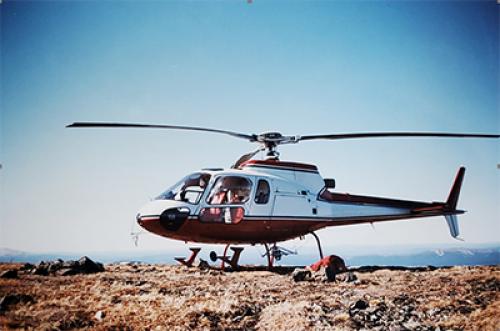
On September 10, 1999, three Eurocopter AS350B2 helicopters crashed within five hours and two miles of each other near Juneau, Alaska. There were no fatalities from any of these accidents. All three aircraft were operated by the same certificate holder. The three flights originated in Visual Meteorological Conditions (VMC) operating under Visual Flight Rules (VFR). The first aircraft was operating as a 14 CFR Part 135 air tour company. The second and third aircraft were operating under 14 CFR Part 91. The pilots of all three aircraft experienced spatial disorientation. The National Transportation Safety Board (NTSB) determined the probable cause of the first accident was the pilot’s continued flight into Unintended Instrument Meteorological Conditions (UIMC) and inadequate altitude and clearance. The probable cause for the second and third accidents was the pilots' failure to maintain altitude and clearance.
NTSB accident reports: ANC99FA139, ANC99LA140, and ANC99LA141
Module: Eurocopter AS350B2, Juneau, Alaska
Robinson R44, Blanco, Texas, October 11, 2012
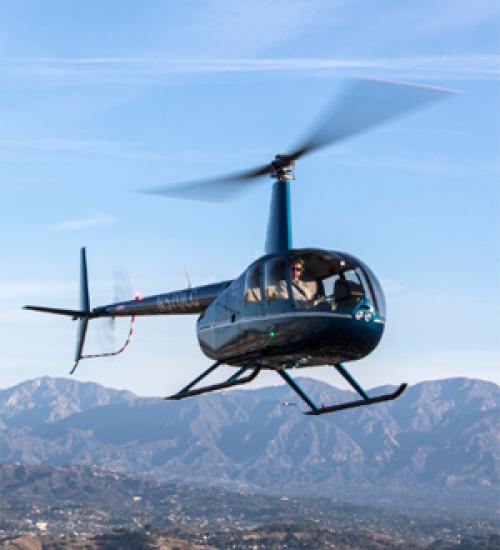
On October 11, 2012, a Robinson R44 crashed during a night flight near Blanco, Texas. The aircraft departed
for Gillespie County Airport in Fredericksburg, Texas headed for Huber Airpark in Seguin, Texas. Meteorological data showed marginal visual flight rules (MVFR) conditions near the accident site at the time of the accident. GPS data recovered from a handheld receiver found in the wreckage showed that the helicopter’s flight path during the last minute of GPS data was consistent with the pilot becoming spatially disoriented due to the lack of a discernable horizon that he could use to maintain control of the helicopter.
NTSB accident report: CEN13FA010
Module: Robinson R44, Blanco, Texas
Self-Induced Pressure:
Advisory Circular AC 60-22 Aeronautical Decision Making discusses a systematic approach to risk assessment and stress management in aviation and illustrates how personal attitudes can influence decision making and how they can be modified to enhance safety in the cockpit. It describes a behavioral trap into which pilots have been known to fall. Pilots, particularly those with considerable experience, generally try to complete a flight as planned, please passengers, meet schedules, and demonstrate that they have the “right stuff.” Below are some examples of accidents where self-induced pressure was a contributing factor.
Eurocopter AS350B2, Juneau Ice Field, near Juneau, Alaska, September 10, 1999
The second and third aircraft (ANC99LA140 and ANC99LA141) cited in the previously described accident sequence for Spatial Disorientation / CFIT Accidents had the causes of the accidents to be the pilot’s failure to maintain altitude/clearance. In addition to flat light conditions and snow-covered terrain as being factors associated with the accidents, they also listed self-induced pressure as being associated.
NTSB accident reports: ANC99LA140 and ANC99LA141
Module: Eurocopter AS350B2, Juneau, Alaska
Eurocopter AS350B2, Enterprise, Alabama, March 26, 2016
A Eurocopter AS350B2 departed under 14 CFR Part 135 on a helicopter air ambulance flight with the pilot, a flight nurse, a paramedic, and a patient from a motor vehicle accident (MVA) scene to transport the patient to a nearby hospital. Witness statements, videos, and photographs indicated that reduced visibility in fog and mist as well as very-light to light precipitation existed at the MVA scene. Radar data indicated that, after takeoff, the helicopter entered a left turn and climbed to 1,000 feet msl. The rate of turn then began to increase, and, after reaching a peak altitude of 1,100 ft msl, the helicopter began a rapid descent that continued to ground impact. The flight lasted about 1 minute. All four people on board received fatal injuries. The NTSB determined that the probable cause of the accident was the pilot’s decision to perform visual flight rules flight into night instrument meteorological conditions, which resulted in loss of control due to spatial disorientation. Contributing to the accident was the pilot’s self-induced pressure to complete the mission despite the weather conditions.
NTSB accident report: ERA16FA140
Technical Related Lessons
In VFR flight, helicopter pilots must maintain visual reference with the surface to maintain control of the helicopter and avoid the possibility of spatial disorientation which could result in collision with terrain. (Threat Category: Unintended Flight in IMC (UIMC), Loss of Control–Inflight (LOC-I))
Pilots require visual cues, reference with the surface, to determine the attitude of the helicopter’s fuselage during all phases of flight. Helicopters require continual input from the pilot, or the aircraft automation (autopilot), to maintain controlled flight. If a pilot makes control inputs while spatially disoriented, the likely result is an aircraft that diverges further and further from a steady state condition of straight and level, possibly resulting in an impact with the terrain. The perception of control (straight and level flight) would prevent a pilot from making the correct inputs to avoid collision with terrain.
The investigation showed that the accident pilot continued flight in ever-deteriorating weather conditions (lowering ceiling and reduced visibility) instead of aborting the flight by either turning around or landing at the nearest clearing.
The investigation indicated that, although the pilot believed he was climbing through the clouds, he was in fact in a climbing left turn followed by a descending left turn. The pilot likely experienced spatial disorientation due to loss of visual reference while climbing the helicopter in instrument meteorological conditions, which resulted in collision with the terrain.
The accident pilot was not successful in either transitioning from outside visual references to utilizing the flight instruments to maintain straight and level (or climbing) flight or activating and utilizing the autopilot to maintain straight and level (or climbing) flight. This increased the probability of collision with terrain.
Common Theme Related Lessons
Pilots should not allow self-induced pressure or plan continuation bias to affect their judgement in relation to the safety of flight. (Common Theme: Human Error)
Pilots have the responsibility of making good decisions regarding the safety of flight. They also must develop and respect personal minimums regarding the conditions of flight within which they will operate. When a pilot loses objectivity during the flight, decisions affecting safety can be made that are out of character and could have devastating impact on the outcome of the flight. Whichever minimums (personal, company, regulatory) promote the safest flight profile need to be adhered to regardless of any internal or external pressures. In the presence of an ever-degrading environment, pilots must recognize when an alternate location should be considered and, if all else fails, land in the nearest clearing.
The investigation stated that the accident operator met the specific needs of the client. The pilot was the client’s preferred pilot, and it was said by a company leader that their relationship had grown to more of a friendship. The report documented that the pilot likely took pride in these facts and did not want to disappoint the client, which might have caused a self-induced pressure to succeed.
The investigators stated that the accident pilot likely experienced plan continuation bias. The continued flight into IMC was inconsistent with his typical judgement observed by the DO, safety officer, and company pilots interviewed. Even though the weather was deteriorating as the flight was approaching the destination, it is likely that plan continuation bias influenced the pilot’s judgement, causing the acceptance of increasing risk.
When a helicopter pilot begins to encounter deteriorating weather, they should adjust their speed to match the conditions. (Common Theme: Human Error)
As an aircraft flies lower to the ground, while maintaining the same airspeed, the time to react to an obstacle is reduced. Combined with a reduced visual environment, such as low clouds or fog, the reaction time might be reduced so low as to prevent a pilot from successfully reacting to an obstacle.
Slowing down an aircraft when deteriorating weather is encountered allows more time to react to the conditions or make decisions about changing course or landing.
If a pilot makes a cyclic input to slow the helicopter without adjusting the collective pitch appropriately, the helicopter gains altitude rapidly as it slows due to the nose-up attitude resulting from the cyclic input.
The investigation revealed that the helicopter maintained approximately 140 KTS while flying towards and into deteriorating weather.
The pilot did not slow the helicopter to compensate for a reduced ceiling and visibility environment. Therefore, he did not have enough time to avoid the fog bank/low clouds by turning or descending.
Pilots must utilize the training that they receive and aircraft equipment to avoid a loss of control during flight when they encounter UIMC. (Common Theme: Human Error)
Title 14 CFR Part 135 pilots receive annual training and check rides to ensure that they are familiar with the avoidance of UIMC, the recognition when UIMC is encountered, and the possible recovery techniques to maintain control of the aircraft when UIMC is encountered.
Aircraft can be equipped with systems that can aid the pilot in control of the aircraft. The accident helicopter had a four-axis autopilot installed and the investigation revealed that the pilot was trained in its use.
While the accident pilot was current in the training required by 14 CFR Part 135, his actions were not consistent with his company training: 1. Avoid UIMC 2. If you encounter UIMC, transition to the flight instruments to maintain helicopter control and utilize any automation present on the helicopter (autopilot) to support a stabilized flight profile.
Despite the helicopter’s capabilities, the pilot was not successful in transitioning to the helicopter instruments to maintain control, nor was there evidence to show that the pilot attempted to utilize or was successful at utilizing the autopilot to maintain helicopter control. Had the autopilot been effectively utilized at the first indication of possible UIMC, the flight may have ended safely.