

Before Packing for a Flight, Read the Fine Print

Planning to fly soon? If so, keep in mind that packing safely should be part of your checklist. Here are some helpful tips.
In general, hazardous materials – also called hazmat or dangerous goods – are not allowed on passenger aircraft. The restrictions are there for the safety of the aircraft, passengers and aircrew, and most of these restrictions apply to both carry-on and checked bags. But the FAA allows some items, like lithium batteries and certain toiletries, in limited quantities and with restrictions on packaging and placement.
It’s critical for passengers to understand what you can and cannot bring aboard an airplane.
When you buy airline tickets or check in for a flight, you review a set of safety notifications and packing restrictions before checking a box to affirm your understanding of hazardous materials not allowed in baggage. Unfortunately, many passengers still pack things they shouldn’t. The FAA knows this based on airlines’ reports about items found in checked bags and incidents related to spills, smoke, or fires caused by hazardous materials.
Are you packing dangerous goods?
Hazmat is more common in everyday items than you might think. Let’s look at some examples of the hazard warnings you might see and what items you can and can’t bring on board. You can also compare common items against formal hazard classes on our website.
Please note: The items below are not an exhaustive list; they are only examples within the groups identified.
Lithium Batteries
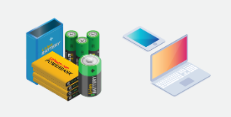
- Cell phones, laptops, spare rechargeable batteries, wireless headphones, portable gaming devices, tablets, etc. are safest in your carry-on bag.
- Spare lithium batteries, including power banks, must never be in checked bags.
- Lithium batteries100Wh to 160Wh require airline approval; anything exceeding 160Wh is prohibited from flying. (Check the power of your batteries with our Lithium Battery Watt Hours Calculator.)
- E-cigarettes and vapes should remain close by in your carry-on bag or on your person, but they must never be used or charged in the aircraft.
Explosives
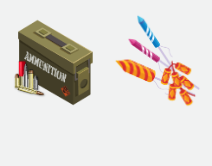
- Fireworks, sparklers, bottle rockets, etc., and all other fireworks, no matter how small, are forbidden on aircraft.
- Flares, flare guns, and gunpowder are forbidden.
- Ammunition is not allowed in carry-on bags and has limitations in checked bags. Check with TSA or our PackSafe page and your airline for more information.
Aerosols
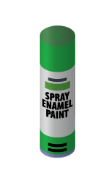
- Flammable: lubricants, spray paint, spray starch, and cooking spray are not allowed in carry-on or checked bags.
- Nonflammable, not toiletry: electronic cleaners and whipped cream are allowed in both carry-on and checked bags.
- Toiletry: hair spray, perfume, medical inhalers, deodorant, shaving cream, and sunscreen are allowed in both, but should have protective caps on and may have quantity and size limits.
Flammables
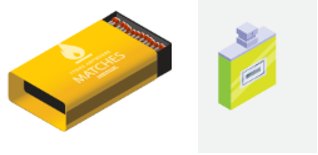
- Fuels and liquids: camp fuel canisters and tablets, gasoline left in equipment are not allowed. Alcoholic beverages over 140 proof or greater than 70% alcohol by volume, including grain alcohol and 151-proof rum, are not allowed.
- Aerosols: lubricants, spray paints, and spray starch are not allowed.
- Adhesives: rubber cement, pipe cement, etc., are not allowed.
- Paints and solvents: thinners, acetone, turpentine, lacquers, etc., are not allowed.
- Strike anywhere matches are not allowed.
Oxidizers and Compressed Gases
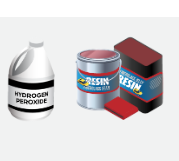
- Medical oxygen, canned oxygen or recreational oxygen are not allowed, but portable oxygen concentrators are if they meet FAA requirements.
- CO2 cartridges are not allowed except in limited functions.
- High-concentration hydrogen peroxide (not the medical version in your toiletries), curing products, and resin kits are not allowed.
Poisons
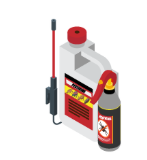
- Poisons, pesticides, regulated medical waste, infectious substances, bromobenzyl cyanide, methyl bromide, motor fuel anti-knock mixtures, and tear gas are prohibited.
- These are toxic to humans and present a health hazard, including serious injury or death if ingested, inhaled, or absorbed through skin.
Radioactive Materials
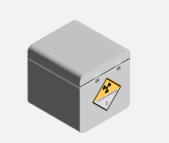
- Radioactive materials are not allowed on passenger aircraft with a few exceptions.
- Heart pacemakers that contain radioactive materials and radiopharmaceuticals that have been ingested, injected, or implanted as a result of medical treatment are allowed.
Corrosives
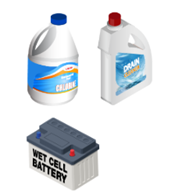
- Corrosives include common substances used in batteries, fertilizers, paint strippers and cleaning supplies such as sulfuric acid, nitric acid, and ammonia. Most of these items are not allowed in passenger aircraft.
- Chlorine and bleach are forbidden.
- Fuel cells containing corrosive materials have limitations.
Dry Ice

- While not always mentioned in passenger notifications, this item has limitations on amounts and requirements for how to package it.
- Your container must be able to vent to prevent an explosion.
Ready to fly?
Before you pack, check with your airline, TSA’s What Can I Bring site, and FAA’s PackSafe website to ensure items you plan to fly with are okay to pack.
If you don’t find the item on those sites and suspect it might include hazardous material, check with the manufacturer of your item for a Safety Data Sheet that will include whether the item is regulated in transportation. If it is regulated as hazmat but does not show allowances on the PackSafe chart, then it is not allowed on the airplane.