USA Banner

Official US Government Icon

Official websites use .gov
A .gov website belongs to an official government organization in the United States.

Secure Site Icon

Secure .gov websites use HTTPS
A lock ( ) or https:// means you’ve safely connected to the .gov website. Share sensitive information only on official, secure websites.

United States Department of Transportation United States Department of Transportation

General

Show Effective Date
Off
Significant Regulatory Guidance
No

Technical Discipline: Flight Meteorological Effects

Flight Meteorological Effects includes icing and volcanic ash effects. Aircraft icing is a serious threat to safety as it destroys the smooth flow of air across surfaces, increases drag, and decreases the ability of the airfoil to create lift. Ice accumulates on every exposed frontal surface of the airplane: wings, propeller, windshield, antennas, vents, intakes, and cowlings.

LED Approach Lighting System Installations

Monday, March 16, 2026

As the supply of incandescent lamps used in approach lighting systems dwindles, the FAA has begun using Light Emitting Diode (LED) lamps to keep the approach lighting up and running. Pilots using EFVS with IR-based sensors on approaches to runways with LED approach lights may have a decreased sensor performance.

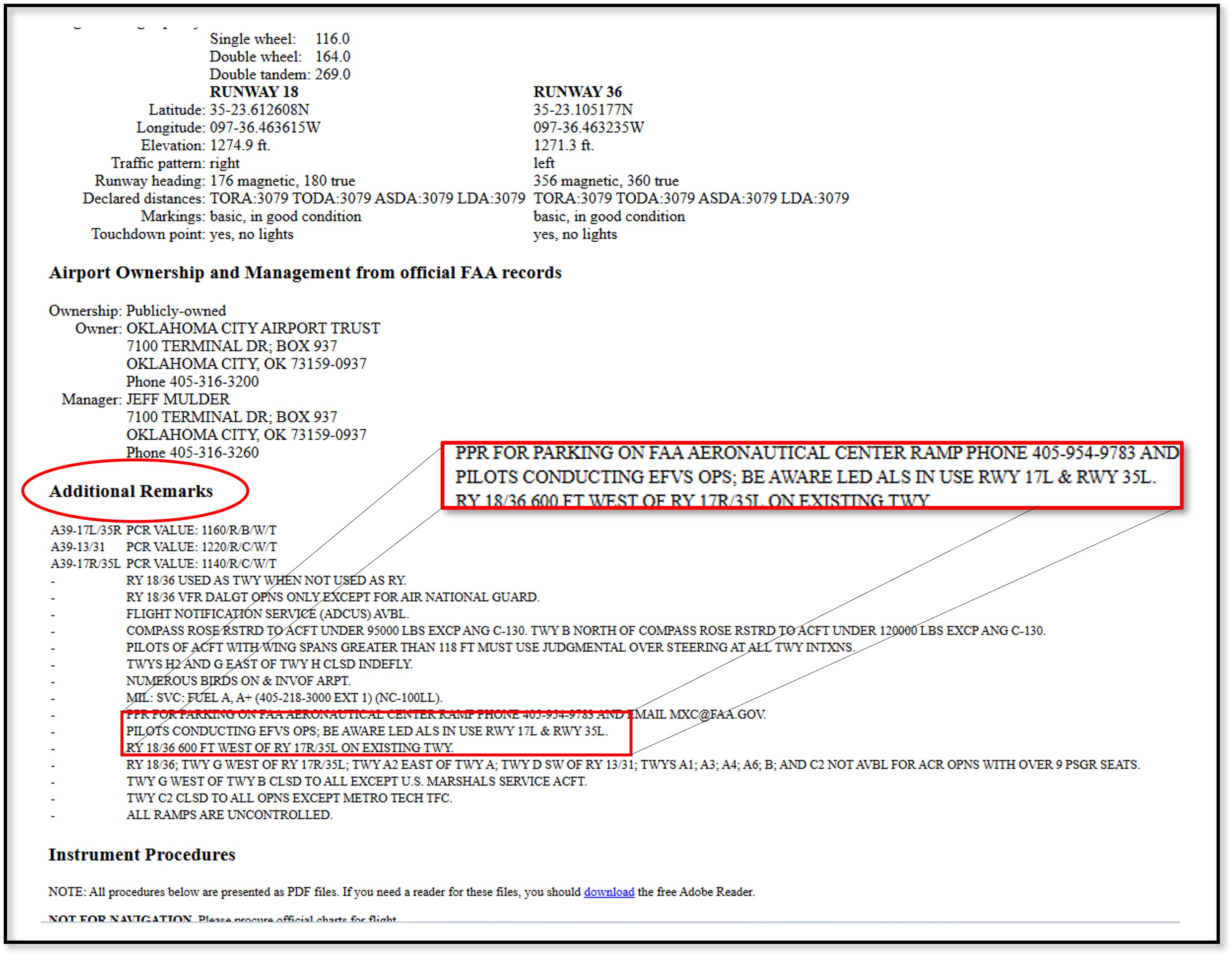
Numerous FAA offices collaborated on how best to track the airfields where LEDs have been installed. The most efficient method of disseminating the information is to include a standard remark in the “Additional Remarks” section of the chart supplement pages for airports where LEDs have been installed in the approach lighting system(s). The below image includes an example of the verbiage that pilots should expect to see in the chart supplement. 

When an approach lighting system is converted from incandescent bulbs to LED bulbs, the information will be included in the chart supplement for that airport. For a list of projected LED approach lighting system installations, click on the file in the table below. The documents will be updated as things change, and the information becomes available so check back regularly for the most current information.

DateNewsletter
3/12/2026Vision (edition 1) 

Contact the EFVS Point of Contact at 9-AVS-AFS-EFVS@faa.gov if you encounter LED bulbs in approach lighting systems that have not been annotated in the chart supplement.


LED_Information_Page_Image.png

Forms Frequently Asked Questions

What is the FAA Forms website?

FAA Forms is the officially designated electronic repository that maintains all authorized agency forms that are controlled within the FAA Forms Management Program. There are two websites that support both public-access and employee access. The website locations are:

MasterRNAVs - 04/17/2025 (GPS/WAAS Approaches)

The availability of Wide Area Augmentation System (WAAS)-capable approach procedures is a significant enabler of WAAS benefits in the United States. View the latest status of U.S. WAAS approach procedures.

Airbus SAS A320-214

US Airways Flight 1549, N106US

New York City, New York

January 15, 2009

USAirways1549_summary
Photo of Airbus A320.

Westfield-Barnes Regional Airport (BAF)

Westfield-Barnes Regional Airport (BAF) is one of Massachusetts' largest airports with a strong flight training, general aviation, and military presence. It is also known as Barnes Air National Guard Base. With a 9000’ runway, BAF is able to accommodate numerous aircraft types. BAF is located three miles north of the city of Westfield in Hampden County, MA. View a printable Pilot Handbook of the BAF information.

Operational Human Factors Considerations for Head-Worn Display (HWD) Usage in Civil Aviation

Monday, April 07, 2025

FAA Office of Aerospace Medicine 
Civil Aerospace Medical Institute

Report No: DOT/FAA/AM-25/07

Title and Subtitle: Operational Human Factors Considerations for Head-Worn Display (HWD) Usage in Civil Aviation

Report Date: January 2025

Authors: Susindar, S., Ferris, T., Valasek, J., Fojtik, E., Brown, M., Pugh, K., Marcario, C., and King, T. 

Abstract: Advanced visual display systems, such as Head-Up Displays (HUDs), Helmet-Mounted Displays (HMDs), and Head-Worn Displays (HWDs), have been used in military aviation since the 1960s and have been increasingly introduced in general and commercial aviation cockpits. The evolution of in-cockpit technology has ushered in fundamental changes in how pilots receive and process flight-relevant information. Flight operations proceed very differently in cockpits outfitted with traditional head-down display (HDD) configurations compared to those that support viewing/interacting with HUDs, HWDs, and other types of advanced visual displays. The physical and cognitive demands placed on pilots are also impacted by the use of these technologies. Therefore, it is important to understand the nature of these interactions, the demands imposed, and the implications of display system features for safe and effective aviation, communication, and navigation. This report details a hybrid narrative and systematic literature review of human factors issues related to aviation applications of HWDs and other advanced visual displays. It summarizes the scientific findings of studies on HWD usage and compiles evidence that can inform recommendations for the usage of HWDs in civil aviation.

Key Words: Head-Worn Display, Head-Up Display, Helmet-Mounted Display, Human Factors, Civil Aviation

No. of Pages: 101

Aerospace Medicine Technical Reports

2025 – Office of Aerospace Medicine Technical Reports, DOT/FAA/AM-
NumberReport Title
25/07Operational Human Factors Considerations for Head-Worn Display (HWD) Usage in Civil Aviation, ...