USA Banner

Official US Government Icon

Official websites use .gov
A .gov website belongs to an official government organization in the United States.

Secure Site Icon

Secure .gov websites use HTTPS
A lock ( ) or https:// means you’ve safely connected to the .gov website. Share sensitive information only on official, secure websites.

United States Department of Transportation United States Department of Transportation

avs

Left Nav - Aviation Safety

Aircraft Certification Service (AIR)

Monday, December 01, 2025

Enterprise Business Operations Division (AIR-900)

The Enterprise Business Operations Division provides core services that enable success throughout AIR, including human resources, financial management, workforce development, IT support, and information management

Contact AIR-900

Leadership

  • Micah Campbell, Acting Director

Melchor J. Antuñano, M.D., M.S.

Director, Civil Aerospace Medical Institute
Aviation Safety Office of Aerospace Medicine
Federal Aviation Administration

Dr. Antuñano was born in Mexico City, Mexico in 1960. He is a graduate of the National Autonomous University of Mexico School of Medicine and completed post-graduate training in Aviation Medicine at the Mexican Government's National Center of Aviation Medicine in Mexico City, Mexico. He is a graduate of the Residency Program in Aerospace Medicine at Wright State University School of Medicine in Dayton, Ohio. He was awarded a post-doctoral research associateship by the U.S. National Research Council of the National Academy of Sciences at the USAF School of Aerospace Medicine in San Antonio, Texas.

Dr. Antuñano has been the Director of the Federal Aviation Administration (FAA) Civil Aerospace Medical Institute (CAMI) since January 14, 2001. Dr. Antuñano provides executive direction and is responsible for the administrative oversight of FAA Office of Aerospace Medicine's programs in Medical Certification, Medical Education, Medical Research, Human Factors Research, and Occupational Health Services, that are critical and integral elements of the Office of Aviation Safety (AVS). He is the focal point in leading the activities of a professional, technical, and clerical team engaged in the policy development, planning, evaluating, and administering of:

  • a program to fulfill the medical certification needs of approximately 580,000 holders of U.S. pilot certificates
  • a program for the selection, designation, training, and management of about 2,700 Aviation Medical Examiners (AMEs) appointed to conduct physical examinations and issue FAA medical certificates to pilot certificate holders throughout the U.S. and in 90 countries worldwide
  • medical education programs in aviation physiology, global survival, and aviation human factors for FAA flight crews and civil aviation pilots
  • medical publications and other didactic materials used to disseminate medical information to promote aerospace safety
  • a highly specialized library system in support of a broad range of aerospace medical and safety reference/research programs
  • an integrated program of field and laboratory performance research in organizational and human factors aspects of aerospace work environments
  • an applied research program to identify human tolerances, capabilities and failure modes (physiological, psychological, and performance) both in uneventful flights, and during civilian inflight incidents and accidents
  • an occupational medicine program to improve the safety and provide health services to employees and students at the MMAC.

When he joined the FAA in 1992, Dr. Antuñano served as the Manager of CAMI's Aerospace Medical Education Division, including a special assignment as Acting Manager of the Aerospace Medical Certification Division.

Dr. Antuñano is credited with 873 professional presentations and invited lectures at national and international conferences in aerospace medicine in 41 countries, and with 63 scientific publications covering a variety of aerospace medicine topics.

Dr. Antuñano is Past-President of the International Academy of Aviation and Space Medicine, Fellow and Past-President of the U.S. Aerospace Medical Association, Past-President of the Space Medicine Branch, Past-President of the Iberoamerican Association of Aerospace Medicine, and member of the International Academy of Astronautics.

Dr. Antuñano is an Honorary Member of the Austrian, Brazilian, Colombian, Greek, Mexican, Peruvian, Slovenian and Turkish Societies of Aviation/Aerospace Medicine.

He is an Associate Professor at the University of Texas Medical Branch in Galveston and Adjunct Professor at the National University of Colombia School of Medicine. He is a former faculty member at Wright State University School of Medicine, the Medical Sciences Division of Oak Ridge Institute for Science and Education, the University of Oklahoma Health Sciences Center, and at the Santa Casa de Sao Paulo Medical School in Brazil.

Dr. Antuñano has received 85 awards and recognitions for his academic, administrative, and research achievements including:

  • "DOT Secretary's Award for Meritorious Achievement: Silver Medal" granted by the Secretary of the U.S. Department of Transportation for outstanding accomplishments in promoting aviation safety in the U.S. and abroad, through aeromedical education
  • "Jay Pardee AVS Champion of Safety Award" granted by the FAA Office of Aviation Safety
  • "Arthur S. Flemming Award" granted by the George Washington University for outstanding accomplishments in the promotion of aviation safety in the U.S. and abroad through the exercise of inspiring leadership and professionalism.

Aircraft Certification - International Office (AIR-40)

Tuesday, December 02, 2025

The International Office is the focal point for the Aircraft Certification Service's international activities. This office provides liaison support to other FAA organizations, international agencies of the U.S. Government, the International Civil Aviation Organization (ICAO), and other civil aviation authorities (CAAs).

Leadership

  • Stephen Burke, Manager

Contact AIR-40

Headquarters Office
Physical AddressMailing Address
Federal Aviation Administration
Aircraft Certification Service
International Office (AIR-40)
Wilbur Wright Bldg. Room 6W1000
600 Independence Avenue SW
Washington, DC 20591
Federal Aviation Administration
Aircraft Certification Service
International Office (AIR-40)
800 Independence Ave SW, Suite 800 East
Washington, DC 20591
Foreign Offices
Physical AddressMailing Address
Federal Aviation Administration
c/o American Embassy
Boulevard du Regentlaan 37-40
B-1000 Brussels
Belgium
American Embassy
Federal Aviation Administration
Unit 7600 Box 2000
DPO AE 09710
Federal Aviation Administration
c/o American Embassy
27 Napier Rd
Singapore, 258508
American Embassy
Federal Aviation Administration
Unit 4280 Box 2306
DPO AP 96507

Military Certification Branch

Mission

The Military Certification Branch is dedicated to supporting military commercial derivative aircraft (MCDA) on behalf of the U.S. Armed Services. This office collaborates with a variety of stakeholders to oversee all related safety, certification and business activities. Along with the Policy and Standards Division (AIR-600), the Branch maintains MCDA policies collaboratively developed with the Armed Services to certify mission equipment installations and properly integrate with military airworthiness systems. On behalf of the FAA, the Branch also collaborates on aircraft airworthiness issues across various government agencies as the FAA's representative on the National Airworthiness Council.

Contact the Military Certification Branch

Civil Aerospace Medical Institute Library

Wednesday, April 01, 2026

The Civil Aerospace Medical Institute (CAMI) Library is a special library primarily committed to serving the unique information needs of research staff. Although the primary focus of the collection is on aviation medicine, materials on human factors, engineering, management, and general reference are available.

Flight Research and Analysis Group

Friday, September 13, 2024

Flight Operations Simulation Laboratory

Leading Edge

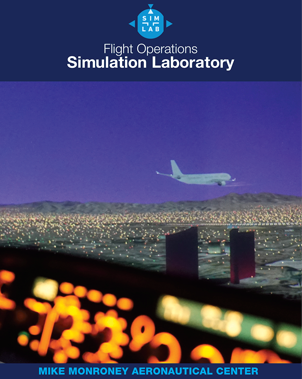
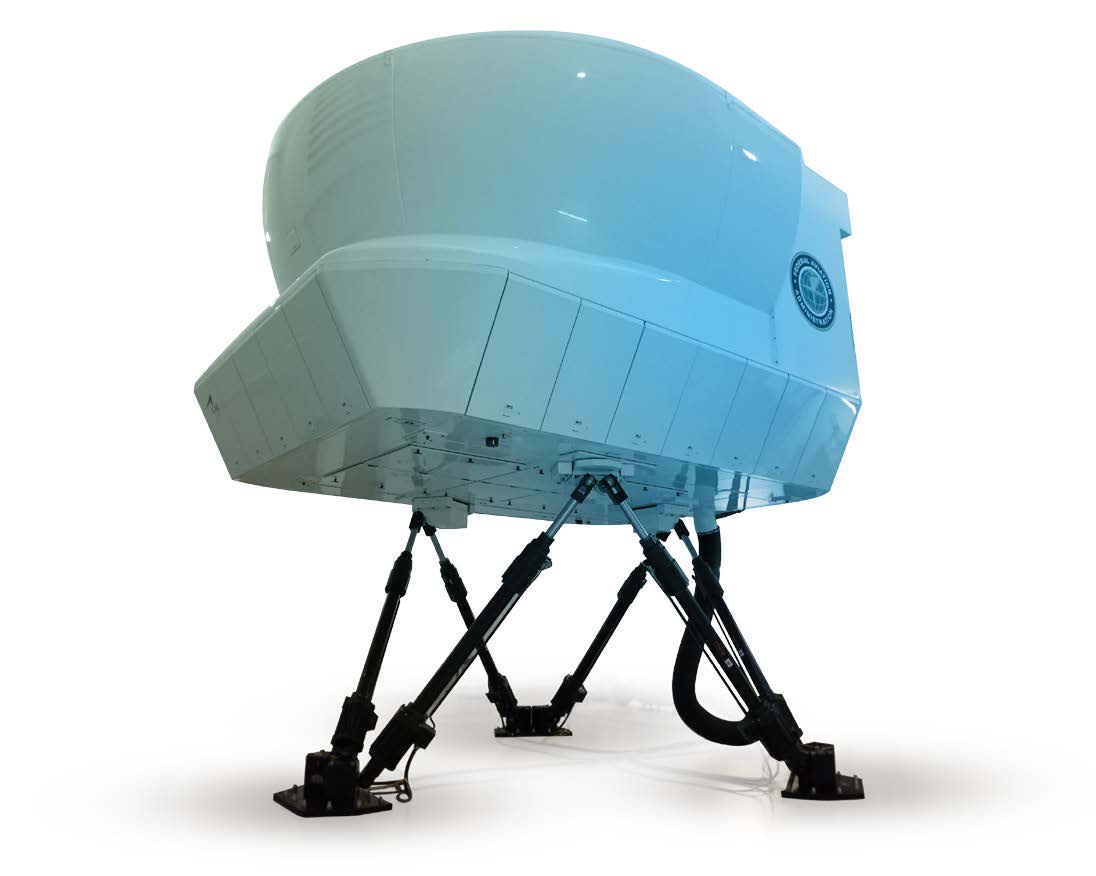
It's cutting-edge research in a state-of-the-art facility and it's all happening at the FAA's Flight Operations Simulation (SIM) Laboratory at the Mike Monroney Aeronautical Center in Oklahoma City, home of the only level D aircraft simulators in the country with a primary role of research.

Level D Certified

Level D certification means:

  • Six degrees of freedom motion
  • Minimum 150-degree visual field of view
  • Realistic sounds
  • Special weather, motion and visual effects
  • Replicates the actual aircraft cockpit

Our Simulators

With our Boeing 737 and Airbus 330 with additional 320 Flight Dynamics Package capability simulators and high-fidelity air traffic controller simulator stations, we can create realistic test scenarios for essentially any condition pilots, aircraft, or air traffic controllers might face.

From modeling airspace environments to evaluating aircraft, pilot, and air traffic controller performance, the FAASIM lab can meet almost any research need a federal government agency might have.

We can link our aircraft simulators to our air traffic control stations for real-time, virtual terminal operations, providing pilot-controller-aircraft interface with sophisticated human-in-the-loop simulations.

Our Capabilities

The FAASIM lab tests people, equipment, systems, technologies and procedures including:

  • ADS-B
  • Eye Tracking
  • RNP/RNAV
  • Wake turbulence
  • Closely-spaced parallel operations
  • Air traffic services
  • Low visibility operations
  • Upset recovery
  • Enhanced vision systems
  • Head up displays

What We Do

We design studies to fit your needs. Test design options include varying weather, wind, ambient lighting and runway lighting.

Users can choose from 30 airport environments coast to coast with others possible.

We provide invaluable human factors and safety data for a wide range of end-users. Results are recorded for study and analysis, including pilot debriefing with video recaps and computer data files. If needed, the Flight Systems Laboratory, can be looped in to analyze that data.

The FAASIM Lab can also connect via the NextGen prototyping network to facilities and simulators across the country, allowing simultaneous operations from different locations that can test new procedures and prototype equipment. FAASIM Lab services enhance flight operations, standards, capacity, and aviation safety and are available to all FAA Lines of Business and all branches of the federal government at no additional cost to the user.

Download our Brochure

FAA Flight Operations Simulation Laboratory brochure.

Watch the Flight Operations Simulation Laboratory in action

FAA Flight Operations Simulation Laboratory video.

Flight Procedures and Airspace Group

Heliport Evaluation Tools

The basic design elements of a heliport include an obstacle-free approach and departure path, area for hover maneuvers, final approach and takeoff area (FATO), touchdown and liftoff area (TLOF), and safety zone; as well as an FAA-approved wind cone. The heliport evaluation tool eases calculations and produces dimensions based on the parameters of the heliport use/type and design helicopter. Useful export features include a visual representation in Google Earth that will also display obstacle data input by the user.

Safety Management, Analytics & System Integration Division

Thursday, May 07, 2026

Safety Management Branch (SMB)

The Flight Standards Safety Management Branch (SMB) (AFS-940) is responsible for the continued development and integration of three core safety functions:

Safety Management Systems (SMS) 

  • FAA Compliance Program 
  • Voluntary Reporting Programs 

These areas work together under the FAA’s Integrated Oversight Philosophy (IOP) to improve safety performance through data-driven, collaborative, and proactive approaches.

Safety Management Systems (SMS)

A Safety Management System (SMS) is a formal, organization-wide approach to managing safety risk and ensuring effective safety controls. SMS provides a structured framework of policies, procedures, and practices that enable organizations to identify hazards, assess risk, and continuously improve safety performance. 

The Safety Management Branch supports SMS implementation and oversight by:

  • Setting Strategic Direction 
    • Defining how Flight Standards oversees and integrates SMS across the National Airspace System
  • Supporting Leadership and Policy Development 
    • Aligning with FAA leadership and FAA Flight Plan 2026, and contributing to SMS policy, rulemaking, and future concepts
  • Standardizing Oversight 
    • Promoting a data-driven, systems-based, risk-focused approach rather than task-based prescriptive compliance
    • Establishing consistent terminology, expectations, and evaluation methods 
  • Developing Tools and Training 
    • Creating and managing policy, guidance, training, and outreach materials for FAA personnel and those in the aviation industry 
  • Coordinating Across FAA Offices 
    • Ensuring oversight systems are consistent and information is effectively shared 
  • Supporting Implementation 
    • Assisting field offices and aviation organizations in adopting both voluntary and regulatory SMS programs
  • Driving Continuous Improvement 
    • Communicating lessons learned and recommending updates to policy, training, and guidance

FAA Compliance Program

The FAA Compliance Program objective is to identify safety issues, such as deviation from regulations and other safety standards, and to ensure effective and efficient correction. The Compliance Program focuses on improving safety by identifying and correcting issues through a collaborative, non-punitive approach.

Rather than relying solely on enforcement actions, the program emphasizes:

  • Understanding the root causes of noncompliance 
  • Encouraging voluntary correction 
  • Promoting long-term safety improvements 

This approach builds trust and transparency between the FAA and industry while strengthening overall safety performance. 

The Safety Management Branch supports the Compliance Program by:

  • Developing and maintaining policy and guidance 
  • Promoting a consistent, risk-informed approach to addressing noncompliance and preventing reoccurrence 
  • Standardizing how FAA personnel evaluate deviations (including intent, risk, and safety impact) 
  • Providing tools, training, and job aids for inspectors 
  • Coordinating across FAA offices to ensure consistent handling of regulatory violations and other safety deviations 
  • Monitoring program effectiveness and alignment with core principles 
  • Facilitating communication and information sharing, within the FAA and with the aviation industry 
  • Aligning compliance activities with broader SMS and voluntary reporting efforts

Voluntary Reporting Programs

The Voluntary Reporting Programs are nonpunitive, collaborative systems designed to improve aviation safety by encouraging the proactive identification, disclosure, and correction of safety deviations. They are key components of the FAA’s safety strategy. These voluntary programs encourage aviation organizations and individuals to identify, report, and correct safety issues proactively.

When issues are disclosed, corrected, and prevented from recurring, the FAA may choose not to pursue enforcement action. This approach:

  • Encourages openness and transparency 
  • Improves hazard identification 
  • Strengthens safety culture across the aviation industry 

Programs Managed by SMB

The Safety Management Branch manages and supports several voluntary programs, including:

  • Voluntary Disclosure Reporting Program (VDRP) 
  • Flight Operational Quality Assurance (FOQA) 
  • Aviation Safety Action Program (ASAP) 
  • Line Operations Safety Assessment (LOSA) 
  • Internal Evaluation Programs (IEP) 

The Safety Management Branch supports these programs by:

  • Developing policy and guidance for voluntary reporting programs 
  • Modernizing programs and supports testing of new approaches 
  • Promoting consistency across Flight Standards offices 
  • Providing inspectors with tools and training to evaluate disclosures 
  • Conducting and supporting outreach to industry and FAA personnel 
  • Encouraging certificate holder self-identification and reporting of safety issues 
  • Sharing lessons learned and best practices, within the FAA and with the aviation industry\
  • Coordinating across FAA offices to ensure consistent handling of disclosures 
  • Monitoring the performance of voluntary reporting programs
  • Ensuring alignment with SMS and Compliance Program principles 
  • Recommending voluntary reporting program updates to policy, guidance, and training

Integrated Approach to Safety

The Safety Management Branch ensures that SMS, the Compliance Program, and Voluntary Reporting Programs are fully aligned and mutually reinforcing.

Together, these initiative enable the FAA and industry to:

  • Identify risks earlier 
  • Address safety issues more effectively 
  • Reduce duplication and inefficiencies 
  • Continuously improve safety performance 

This integrated, data-driven approach represents the FAA’s commitment to a modern, proactive, and collaborative safety system.

Associated websites:
Aviation Safety Action Program | Federal Aviation Administration
Compliance Program | Federal Aviation Administration
Voluntary Programs, including FOQA, LOSA, IEP and VDRP: 
Implementation & Integration Group | Federal Aviation Administration
 

SMS: 
FAA Aviation Safety Outreach | Federal Aviation Administration
Safety Management System (SMS) | Federal Aviation Administration
VDRP - Voluntary Disclosure Reporting Program
Dynamic Regulatory System

For additional questions and support, contact the Federal Aviation Administration, Office of Safety Standards, Safety Management Branch: 9-FAA-SMB@faa.gov

Stakeholder Feedback Form