


Informal South Pacific Air Traffic Services Coordinating Group (ISPACG)

Purpose
- To facilitate the optimum provision of air traffic services (ATS) in the South Pacific region, through the development and near-term implementation of improvements to ATS operational procedures; and
- To implement technology developments available to ATS providers within the South Pacific region.
Participants
The ISPACG was established by multilateral agreement between Australia, Fiji, Tahiti, New Zealand, Papua New Guinea, Chile, and the United States. It is presently co-chaired by Ahmad Usmani (FAA) and Jeremy Elich (Airservices Australia).
ISPACG Letter of Agreement (LOA)
Principles
In the conduct of the activities of the ISPACG, the forum applies the following principles:
- Promote an ATS system that is responsive to and meets the needs of our customers.
- Ensure that the introduction of new technology and procedures maintains or enhances the present levels of safety.
- Harmonize ATS practices and procedures consistent with regional and global activity.
- Undertake activities and provide outputs that are cost effective and efficient for both customers and service providers.
- Promote advantages in new technology where benefits can be derived.
- Achieve a cooperative customer/service provider relationship.
Regional Monitoring Agencies for the Asia Pacific Region (RMAs)
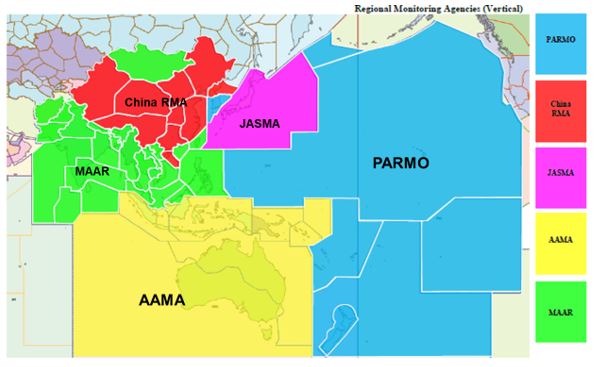
AUSTRALIAN AIRSPACE MONITORING AGENCY (AAMA)
The Australian Airspace Monitoring Agency (AAMA) is one of a number of organizations the International Civil Aviation Organization (ICAO) has approved as Regional Monitoring Agencies (RMAs) following global implementation of Reduced Vertical Separation Minimum (RVSM). These agencies ensure the safe use of specific airspace designated by regional agreement.
E-mail: aama@airservicesaustralia.com
After completing my PhD in Applied Mathematics, I began as a Risk Intelligence Specialist at Airservices Australia. I have been AAMA’s Technical Lead since 2019, being involved in all technical aspects of height-keeping performance and RVSM risk monitoring. Please do not hesitate to contact me for further information about the AAMA.
PACIFIC APPROVALS REGISTRY and MONITORING ORGANIZATION (PARMO)
The Pacific Approvals Registry and Monitoring Organization (PARMO), located at the FAA William J. Hughes Technical Center supports the safe use of Reduced Vertical Separation Minima (RVSM) in the Pacific airspace and is the designated regional monitoring agency (RMA) for New Zealand, Republic of Korea, Cook Islands, Fiji, Tonga, Palau, Samoa, Kiribati, Marshall Islands, and the Federated States of Micronesia.
E-mail: parmo@faa.gov
In 2000, the PARMO was designated to a monitoring agency for Pacific airspace. I have been the Asia and Pacific lead for the PARMO since 2008, involved in the monitoring for reduced vertical and horizontal separation standards. Please do not hesitate to contact me for further information about the PARMO.
South Pacific UPR Requirements
Flight Planning requirements for User Preferred Routes (UPR’s) in the South Pacific.
Airlines planning to operate on UPR’s within the Auckland, Brisbane, Melbourne, Nadi, Oakland, Tahiti, Oceanic FIRs should comply the following flight planning requirements.
Brisbane and Melbourne Airspace (Airservices Australia): User Preferred Routes
Santiago Airspace (DGAC): User Preferred Routes
Fukuoka Airspace (Japan Oceanic Airspace JCAB): User Preferred Routes
Nadi Airspace (Airports Fiji Limited): User Preferred Routes
New Zealand Oceanic Airspace (Airways New Zealand): User Preferred Routes
Oakland Oceanic Airspace (FAA PAC Chart Supplement): User Preferred Routes
Port Moresby Airspace (NiuSky Pacific): User Preferred Routes
Tahiti Airspace (Service D’Etat De L’Aviation Civile – Polynesie Francaise): User Preferred Routes
Co-Chairs
ISPACG is co-chaired by Airservices Australia and the FAA.
FANS1/A Interoperability Team (FIT)
Chairperson: Lisa Bee
The FANS1/A Interoperability Team (FIT) started in 1997 and was integrated into the ISPACG in 1999 to oversee the monitoring of FANS1/A data link and to ensure that performance and interoperability requirements are met.
Lisa Bee brings more than 30 years of experience in air traffic management to her present position as Director of Air Traffic Services at Inmarsat. Ms. Bee’s career includes over 20 years with the United States Federal Aviation Administration in air traffic control, air traffic management, system requirements development, air traffic procedures development, test and evaluation, and safety management.
Since 2016, when she joined Inmarsat, Ms. Bee has been responsible for developing concepts, strategies, and requirements to support air navigation services using satellite communications and data link capabilities. Her work involves direct engagement with air traffic service providers, regulatory bodies, regional air traffic coordination groups, and industry organizations.
In addition to serving as Chair of the ISPACG FIT, Ms. Bee supports a number of ICAO panels and working groups as an advisor to ICCAIA, including the Operational Data Link Working Group, the Remotely Piloted Aircraft Systems Panel, and the Separation and Airspace Safety Panel. She also serves as Chair of CNS Work Group.
Planning Team
A subgroup of ISPACG comprised primarily of Air Traffic Service providers that communicate on a regular basis throughout the year to progress actions out of the main ISPACG forum.
Email: ISPACG@faa.gov
Adaptation/Database Points of Contact
| ANSP | Points of Contact |
|---|---|
| Airservices Australia | Tony Smith: anthony.smith@airservicesaustralia.com Markus Johnston: markus.johnston@airservicesaustralia.com |
| Airways New Zealand | Lawrence Donald: Lawrence.Donald@airways.co.nz Ken Henderson: ken.henderson@airways.co.nz |
| DGAC Chile | Gustavo Caceres: gcaceres@dgac.gob.cl Office: +56-2-2439-2073 |
| FAA | John Roman Office: 510-745-3827 |
| Fiji Airports | Amit Singh: AmitS@fijiairports.com.fj Ilimeleki Navula: IlimelekiN@fijiairports.com.fj |
| NiuSky Pacific | William Migile: wmigile@niuskypacific.com.pg Freesia Wavine: fwavine@niusky.pacific.com.pg |
| SEAC-PF | Jean-Marc Gossot: jean-marc.gossot@aviation-civile.gouv.fr
|
Space Operations Points of Contact
| ANSP | Points of Contact |
|---|---|
| Airservices Australia | Primary: brisbane.opsmgrs@airservicesaustralia.com (Brisbane ATSC Operations Managers) Secondary: ml.opsmgr@airservicesaustralia.com (Melbourne ATSC Operations Managers) |
| Airways New Zealand | Primary: Todd Kendall: todd.kendall@airways.co.nz (Oceanic Operations Team Leader) Secondary: James Evans: james.evans@airways.co.nz (Head of Surveillance) |
| DGAC Chile | Primary: Gustavo Caceres: gcaceres@dgac.gob.cl (Head of Oceanic Area Control Centre) Secondary: Ivan Fernandez: fernandez@dgac.gob.cl (Oceanic Area Control Centre Operations) |
| FAA | Primary: DCCNOTAMS@faa.gov (Command Center NOTAM Office) Secondary: 9-AJO-AJR-SpaceOps-Intl@faa.gov (FAA ATO Space Operations) |
| Fiji Airports | Primary: Ivan Wong: IvanW@fijiairports.com.fj (Head of Operations – ATM) Secondary: Amit Singh: AmitS@fijiairports.com.fj (Asst. GM ATM & Operations) |
| NiuSky Pacific | Primary: William Migile: wmigile@niuskypacific.com.pg (Approach Radar Controller) Secondary: Freesia Wavine: fwavine@niuskypacific.com.pg (Senior ATM Data Specialist) |
| SEAC-PF | Primary: Jean-Marc Gossot: jean-marc.gossot@aviation-cicile.gouv.fr Office: +689-4086-1147 Secondary: Yvetot: didier.yvetot@aviation-civile.gouv.fr Office: +689-4086-1032 | Mob: +689-8929-8474 |
Next Meeting
The 41st Meeting of the Informal South Pacific ATS Coordinating Group (ISPACG/41) will be hosted by the United States Federal Aviation Administration (FAA). Dates and location are TBD.
Schedule - TBD
Venue: TBD
Address: TBD
POC: ISPACG@faa.gov
ISPACG/40
Meeting Venue: Pullman King George Square Brisbane
Address: Corner Ann & Roma Streets, Brisbane QLD 4000
FIT Papers
- ISPACG FIT/33 Final Meeting Notes
- ISPACG 40 Viasat ISPACG Update
- ISPACG 40 Iridium Update
- ISPACG 40 SatVoice Trial Results
- ISPACG 40 Boeing Updates
- ISPACG 40 Skykraft Presentation
- ISPACG 40 Annual Reporting Arrangements for PBCS Performance Monitoring in the APAC Region
- ISPACG 40 Guidance Material for End-to-End Safety and Performance Monitoring of ATS Data Link Systems
- ISPACG 40 PBCS Action List for ANSPs
- ISPACG 40 Data Link Performance Report ANSP to FIT
- ISPACG 40 Proposed Occurence Reporting Feedback Loop
- ISPACG 40 South Pacific RMA Update
- ISPACG 40 CRA PR Briefing
- ISPACG 40 Airbus Amber EC NOT TECHNICAL
- ISPACG 40 Airbus WER - Wake Energy Retrieval
- ISPACG 40 Airbus ATS B2
Plenary Papers
- ISPACG/40 Plenary Final Meeting Notes
- FAA Oakland Update
- Fiji Airports Update
- NSPL Update
- Airservices Australia Update
- Airways NZ Update
- OACC-Chile Update
- SEAC-PF Update
- KZAK Hazard Area Tabletop
- NSPL Power Outage Tabletop
- Launch Window Airways
- Operator Update Qantas
- Operator Update American
- Operator Update Delta
- OneSky Australia - Airservices
- IATA Update
- Space and Rocket Activity: Qantas
- Military Aerodromes: United
- GNSS RFI: IATA
- GNSS Interference: Airservices
- Data Link Network: FAA
- Data Link Network Appendix A: FAA
- Data Link Network Appendix B: FAA
- Data Link Network Appendix C: FAA
- Data Link Network Appendix D: FAA
- ATOP Overview: FAA
- Spectrum Resilience: IATA
- Improved Turbulence Predictions: FAA
- Turbulence Aware: IATA
- Pacific Resource Guide: FAA
- Brand-New ATC System (BNATCS): FAA
- AIDC Performance: Airservices
- Future Communications in the APAC Region: Airservices
- Contingency: Airservices and Airways
ISPACG/39
FIT/32 Papers
- ISPACG FIT 32 Final Agenda
- Agenda Item 1 CRA FANS PR Briefing
- Agenda Item 2 PARMO Update
- Agenda Item 2 Consolidated FANS1A Performance Report 2024 Final
- Agenda Item 4 Airways NZ PBCS Updates
- Agenda Item 4 AsA PBCS Report
- Agenda Item 4 NSPL Presentation Final
- Agenda Item 5-Collins SatVoice Updates
- Agenda Item 5 Viasat Update
- Agenda Item 6 OPDLWG JPT08 Brief ISPACG39-FIT32
Plenary Papers
- ISPACG 39 Plenary Final Agenda
- Item 2.1 FAA ZOA Update
- Item 2.5 DGAC ACCO Update
- Item 2.6 Airways NZ Update
- Item 4.1 AsA UPR Expansion
- Item 4.2 Oceanic Datalink Network Stability
- Item 4.2.1 Appendix B NORIA Draft
- Item 4.2.2 Appendix C Iridium
- Item 4.2.3 Appendix C SITA
- Item 4.3 GNSS
ISPACG/38
The 38th Informal South Pacific Air Traffic Services Coordinating Group (ISPACG/38) and FANS Interoperability Team (FIT) Meetings was held on June 4-6, 2024, in Santiago, Chile.
Meeting Venue: National Aeronautical and Space Museum of Chile
Address: Avenue Pedro Aguirre Cerda 5000, 9200000 Cerrillos, Metropolitan Region
FIT/31 Papers
- ISPACG FIT 31 Agenda
- Item 1.1 ISPACG FIT-31 CRA
- Item 1.2 Airbus Status FIT31.V2
- Item 2.1 Consolidated Regional
- Item 2.2 ISPACG38 PARMO June2024
- Item2.3 AA MA Update for ISPACG
- Item 5.1 SatVoice Implementation 2024
- Item 5.2 Iridium ISPACG Update
- Item 6 OPDLWG ISPACG FIT
- Item 7.1 ISPACG-38 WP01 Iridium
- Item 8.1 ISPACG FIT-31 1P01
- Item 8.2 ISPACG-38 IP02 Airbus
- Item 8.3 ISPACG-38 FIT31 1P03 Airways
- Item 8.4 ISPACG 38 FIT31 IP04 Airways
- Item 8.4a ISPACG-38 FIT 31 1P04 ACARS
- ISPACG FIT 31 Meeting Report Final
Plenary Papers:
- ISPACG 38 Plenary Meeting Notes Final
- ISPACG 38 Plenary Final Agenda
- ISPACG 38 Airways Presentation
- Airservices ISPACG Presentation
- Chile Updates
- IP001 UPR Airservice
- WP001 FAA ISPACG 38 WP Outages
- IP002 Weather Deviation
- FAA No FIR Update
- NOPAC Redesign Slides
- FAA Space Bases ADS-B Update
ISPACG/37
Papers for meeting dates Tuesday 25th to Thursday 27 April 2023.
Additional Information:
Plenary:
- Agenda
- Plenary Meeting Notes
- Item 2.1 DGAC Chile update
- Item 2.2 NZZO Updates
- Item 2.3 NiuSky Pacific Ltd. Updates
- Item 2.4 FAA/ZOA Updates
- Item 2.4.1 SENEAM updates
- Item 2.6 SEAC Sitrep v final
- Item 2.7 Fiji Airports Update Final
- Item 3.2.1 AAL Updates
- Item 4.1 FAA Space based ADS-B update
- Item 4.2 IP01 FAA HFSBA
- Item 4.2 SurvHF Minima
- Item 4.3 IP02 NOPAC Redesign
- Item 4.3 NOPAC Redesign updates
- Item 4.4 IP03 attachment US CFR Part 91
- Item 4.4 IP03 FAA Supersonic2
- Item 4.5 IP04 20NM Longitudinal PBLS
- Item 4.6 IP05 Tahiti ICAO AAC
- Item 6.2 No FIR status updates
FIT/30:
- IP01 Iridium Certus Evaluation
- IP02 Iridium ATS A2G CLI Change
- IP03 Collins Aerospace ARINC
- FIT-30 WP01 CRA FANS PR Briefing
- IP03 Attachment Collins Sat Voice Implementation update
- Airbus FIT 30 Status
- ISPACG 37 PARMO April 2023
- FIT 30 Agenda
- FIT Inmarsat Update
- Regional FANS1A Performance Report 2022
- FIT 30 FAA PBCS Monitoring
- FIT30-Fiji Airports Update
- OPDLWG Update
- ISPACGFIT30-Iridium Update 04 26 23
ISPACG/36
Planning Team:
- Agenda
- Fiji Airports update
- FAA Oakland Facility Update
- NiuSky Pacific Update
- Airways NZ Update
- DGAC Chile Update
- FAA SBS-ASEPS Update
- WP-01 PfA Doc 7030
- FAA Space Ops NOTAM Coordination
- WP-002 WTC J Processing
Plenary:
- Agenda
- IATA Update
- Air Canada Update
- American Airlines Update
- Air New Zealand Update
- Hunga Tonga-Hunga Ha’apai Summary Report
- CADENCE
- FAA Surveillance HF
- NZZO IP HF Voice ACP
- ICAO Amendment to ANNEX 10 Vol.3 2nd Ed. Re SELCAL32
FIT/29:
Item 1:
Item 2 – Regional Monitoring and PBCS Performance:
- ISPACG Regional PBCS Report with attachment 1
- PARMO Update
- Data Link End-to-End Performance Monitoring
Item 3 – Feedback from Operators
Item 4 – Feedback from ATSUs:
Item 5 – Feedback from Communication Service Providers:
Item 6:
Item 7 – Working Papers
Item 8 – Information Papers:
ISPACG/35
- Release August 2021
- Release 2 July 2021
FIT/28:
Dates are now confirmed for the upcoming ISPACG/35 virtual meetings, as follows:
Planning Team: Tuesday 27th July 2021 > Agenda
Plenary Meeting: Wednesday 28th – Thursday 29th July 2021
FIT/28 Meeting: Wednesday 4th – Thursday 5th August 2021
Meeting papers
Plenary meeting:
Updates from ANSP’s:
- 2.1 DGAC Chile
- 2.2 Airways New Zealand
- 2.3 NiuSky Pacific
- 2.4 FAA/ZOA
- 2.5 Airservices Australia
- 2.6 SEAC-PF
- 2.7 Fiji Airports
Updates from Participants:
Other Business:
Presentations:
- Future of the Ocean 2035 (FOTO35)
- Joint Workshop with ICAO APAC MET/S WG on Conflicting Volcanic Ash Information (PPT)
- Space-Based ADS-B Implementation – FAA (PPT)
- SBAHF Minima
- OPDLWG presentation
ISPACG/34
Release 29 July 2020
FIT/27: Papers
Virtual online meeting held: 29-30 July 2020
Release 16 March 2020
FIT/27: Postponed
On behalf of Tahiti, it is with regret to advise you all that the ISPACG Conference 2020 is postponed, due to the COVID-19 pandemic. An inordinate amount of travel restrictions are imposed in various forms around the world, therefore this is the best approach at this point in time.
I’m sure you all agree that, although this is a disappointment, it is also vital we all take precautionary measures to limit the impact of COVID-19 and to safeguard the health and wellbeing of our colleagues and the general public.
Thanks goes out to Nico Hinchliffe, and his Tahiti colleagues, for all their planning efforts completed to date. Tahiti are happy to review this decision, when appropriate.
For now, stay safe and look out for each other.
ISPACG/34 – FIT/27: July 2020:
- FIT26-IP-NZ1 PBCS Monitoring
- FIT26-IP-NZ2 Latency Monitor
- IP NZ1 Attachment 1 NZZO June 2020 Performance
- IP NZ1 Attachment 2 NZZO Combined Report Tail 202006
- IP NZ1 Attachment 3 NZZO Combined Report Operator 202004 202006
- IP NZ1 Attachment 4 PCBS Manual 4.5.2 Local PBCS Monitoring
- IP NZ2 Attachment 1 Reject Summary 2019-2020
- ISPACG 27 Agenda Item 2 NZZO Brief
- ISPACG FIT 27 Agenda Item 6 Latency Monitor
- ISPACG FIT 27 Agenda Item 6 PBCS Monitoring
- ISPACG FIT27 FAA PBCS Monitoring Report
- ISPACG FIT27 PBCS Non-Compliance Reporting Updates
- Airbus FIT27 Status
- FIT27 CRA-FANS PR Briefing
- ISPACG FIT27 Inmarsat Update
- FIT27 IP FN CAD
- FIT27 IP Network Interconnection
- FIT27 REDDIG II & CRV Network Interconnection
- FN-CAD Presentation
- ISPACG FIT27 Outage KZAK
- ISPACG FIT27 PNGASL NuiSky
- ISPACG FIT27 Adaptation POCs V4
- ISPACG 34 Planning Team Actions – Final Draft
- ISPACG 34 Planning Team Notes
- ISPACG LOA – Draft
ISPACG/33
The thirty-third meeting of the Informal South Pacific Air Services Coordinating Group (ISPACG) was hosted by Airways Corporation of New Zealand at the Rydges Lakeland Resort in Queenstown, New Zealand, from Monday 18th to Thursday 21st March 2019.
Meeting Papers
Planning Team:
Working Papers:
- WP-001 – NZI Doc 7030 Amendments Proposed, includes attachments – Airways NZ
Information Papers:
IP-001 – SATVOICE Trial in the Pacific – FAA
Presentations:
- AIDC Oakland Centre – FAA
- ASPIRE Update – FAA
- Oakland Update – FAA
- OCP Update – FAA
- SATVOICE Trials – FAA
- SBS ASEPS Status Update – FAA
- Seamless Airspace Chart – FAA
- VOLKAM South Pacific Overview – FAA
FIT/26:
Working Papers:
- WP-001 – Problem Report Briefing, CRA – Airbus
- WP-002 – NZZO PBCS Report 2018 – Airways NZ NZZO PBCS Report – Attachment A
- WP-003 – Standardization to confirm CDA – Airways NZ
- WP-004 – NFFF FANS1/A Performance Report 2018 – Fiji Airports NFFF FANS1/A – Attachment A
- WP-005 – FANS Problem Report Briefing – Central Reporting Agency
- WP-006 – Safety Services-over-Certus Evaluation – Boeing
- WP-007 – PBCS Briefing – Airservices Australia
- WP-008 – FIT Report – CRA
Discussion Paper – Paul Radford:
Information Papers:
- IP-001 – Departure Clearances – Airbus
- IP-002 – DGAC AIDC Update – DGAC Chile
Presentations:
- Airservices Update – Airservices
- FANS Problem Reports Debrief – Airbus
- Fiji Airports Ltd Update – Fiji Airports
- NiuSky – PNG Services
- NZZO Feedback – Airways NZ
- Data Link Oakland Center – FAA
- PBCS Monitoring – FAA
Plenary:
Working Papers:
- WP-001 – Update from PARMO – FAA
- WP-002 – Early Introduction of RNP2 Based Separation Standards – Air New Zealand
Information Papers:
- IP-001 – Common Aeronautical VPN (CRV) – Airservices Australia
- IP-002 – Long Range Air Traffic Flow Management – Airservices Australia
- IP-003 – Asia Pacific International Civil Aviation (ICAO) Update – FAA
- IP-004 – ADS-B Implementation – FAA
Presentations:
- Airways NZ Update – Airways NZ
- CDP & ITP Status Update – FAA
- Inmarsat Update – Inmarsat
- Long Range Air Traffic Flow Management (LR-ATFM) – Airservices Australia
- Monitoring Activities in the South Pacific Airspace – PARMO FAA
- Oakland Centre Update – FAA
- Planning Team Overview – Co-chairs Update
- SATVOICE Trial – FAA
- Unannounced Speed Changes – FAA
- VOLCEX 19/01 – CAA NZ
- VOLKAM South Pacific Overview – FAA
ISPACG/32
The thirty-second meeting of the informal South Pacific Air Traffic Services Coordinating Group (ISPACG/32) was hosted by Airports Fiji Limited at the Tanoa Hotel, Nadi, Fiji, from Monday 9th to Thursday 12th April 2018.
Special thanks to Airports Fiji Limited, Tanoa Hotel and Sheraton Fiji Resort.
Check-in Meeting 24, Oct 2018
ISPACG Planning Team and Providers Meeting
24 October 2018.
For the Minutes of teleconference meeting held 24 October 2018. Please click here.
Final Documents:
Working Papers:
- WP-01 – ISPACG 32 Agenda
- WP-02 – Extend Conference Duration
- WP-03 – Oceanic Contingency Plan (FAA)
- WP-04 – Monitoring Agency Activities in South Pacific Airspace (PARMO)
- WP-05 – Weather Deviation Requests (Airways NZ)
- WP-05 – Appendix 1 Weather Deviations (Airways NZ)
- WP-06 – Data Link Working Group (Airways NZ)
- WP-06 – Data Link Working Group – Attachment A
Information Papers:
- IP-01 – SatVoice Trial (Airservices Australia)
- IP-02 – Agreed Reroute Procedure (DGAC Chile)
- IP-03 – Version Procedure (DGAC Chile)
- IP-04 – AIC 5 Update (DGAC Chile)
- IP-05 – US Domestic Communication Update (FAA)
- IP-06 – Accommodation of SatVoice by San Francisco Radio (FAA)
- IP-07 – SatVoice; attachment (FAA)
- IP-08 – Air Traffic Control Services Above FL600 (FAA)
- IP-09 – Acceptable Level of Risk (FAA)
- IP-10 – NZZO UPR Changes (Airways NZ)
- IP-11 – ICAO Asia Pacific Update (FAA)
- IP-12 – CRV Status (FAA)
- IP-13 – US Data Comm En Route Waterfall Schedule (FAA)
Presentations:
- AIP NZ UPRs
- Airservices Update April 2018
- ADS-C CDP & ADS-B ITP Status Update
- Airways NZ NZZO Brief (Agenda Item 2)
- Airways NZ PBCS/FIT Asia 7 Briefing (Agenda Item 4)
- Airways UPR’s
- Airways Weather Deviation NZ Oceanic
- Airways Weather Deviations and Requests
- FAA ZOA Update (Agenda Item 4)
- FAA PARMO (Agenda Item 4)
- FAA RNP4 Update (Agenda Item 5)
- FAA Acceptable Level of Risk (Agenda item 7)
- FAA 23 NM Concept of Operations
- FAA CRV Status
- FAA CANSO PBCS Article – Making Safe Operations Safer
- FAA US Domestic Comm Update Attachment. A
- FAA Un-Announced Speed Changes
- Fiji Airports April 2018 Update
- Inmarsat Update
- PNG Update
- Santiago Oceanic Area Control Centre Update
- Tahiti Update SEAC PF (Agenda Item 2)
FIT/25
Working Papers:
- WP-01 – Agenda
- WP-02 – Aircraft Latency Monitor (Airways NZ)
- WP-03 – CRA-FANS PR Briefing (Central Reporting Agency)
- WP-04 – Regional PBCS Monitoring (Airways NZ)
Information Papers:
- IP-01 – PBCS Status (Boeing)
- IP-02 – FMS Management of Duplicate Fixes & Non-Directional Beacons when Loading Route Clearances (Airbus)
- IP-03 – PBCS Monitoring in Fukuoka FIR (Civil Aviation Bureau of Japan)
- IP-04 – Performance Airservices (Airservices Australia)
Presentations:
ISPACG/31
- ISPACG/31 – Final Minutes
- ISPACG/31 – Action Items Register
- ISPACG/31 – Planning Team Open Action Items
- ISPACG/31 – PBCS Plan Chart
- ISPACG/31 – Delegates List
Working Papers:
- WP 01 ISPACG31 Final Agenda for 8-9 March 2017
- WP 04 Monitoring Agency Activities in South Pacific Airspace
- WP 05 Un-Announced Speed Changes in the KZAK FIR
- WP 05A – Attachment to Un-Announced Speed Changes in the KZAK FIR
- WP 05B – Presentation to Un-Announced Speed Changes in the KZAK FIR
- WP 07 Weather Deviation – Discussions
- WP 07A – Attachment to Weather Deviation – Discussions
- WP 12 Weather Deviations (Airways NZ)
- WP 14 Principles of Boundary Coordination
Information Papers:
- IP 03 ISPACG-31 News from SEAC-PF
- IP 04-US Domestic NAS Processing of Foreign Aircraft Identifications with a Numeric as the First Character
- IP 04A – Attachment to US Domestic NAS Processing of Foreign Aircraft Identifications with a Numeric as the First Character
- IP 05 PILOT REPORTS – PIREP
- IP 06 Draft Update to US AIP SATCOM Information
- IP 06A – Attachment A to Draft Update to US AIP SATCOM Information
- IP 06B – Attachment B to Draft Update to US AIP SATCOM Information
- IP 07 FANS Problem Solution Tracker
- IP 07A – Attachment to FANS Problem Solution Tracker
- IP 08 Volcanic Ash Exercise – VOLKAM Update
- IP 08A – Attachment to Volcanic Ash Exercise VOLKAM Update
- IP 09 Asia Pacific CRV Private Network and PASNet
- IP 09A – Attachment to Asia Pacific CRV Private Network and PASNet
- IP 10 South Pacific AFS Network Replacement Proposal
- IP 17 Aireon Space Based ADS-B Collaboration Agreement
- IP 18 Rocket Launches
- IP 19 Leidos Innovations Corporation awarded contract to supply a new ATM system for New Zealand
- IP 20 Asia Pacific International Civil Aviation Organization (ICAO) Update
- IP 21 AIDC performance between YBBB and WAAF
Presentations:
- NZZO Briefing (Agenda item 2)
- Presentation – Commercial Space MDA – Oakland Center (Agenda item 6)
- PT19 Seamless Airspace Chart March 2016
- IPACG42 Seamless Airspace Chart
- PBCS Workshop – Report to ISPACG 31 – Plenary Agreed
- Attachment A to PBCS Workshop Report
- Attachment B to PBCS Workshop Report
- Attachment C to PBCS Workshop Report
- FIT Meeting – Report to ISPACG 31
FIT/24
Working Papers:
- WP 02 FIT 24 Agenda
- WP 03 FIT PR Review – Airbus
- WP 06 FIT HF Data Link Use – Discussions
- WP 08 FIT PBCS Implementation Status – Civil Aviation Authority of New Zealand
- WP 08A FIT Attachment to PBCS Implementation Status – Civil Aviation Authority of New Zealand
- WP 09 FIT PBCS amendments for PAC and MID-ASIA Regional Supplementary Procedures (Doc 7030)
- WP 09A FIT Attachment A to PBCS amendments for PAC and MID-ASIA Regional Supplementary Procedures (Doc 7030)
- WP 09B FIT Attachment B to PBCS amendments for PAC and MID-ASIA Regional Supplementary Procedures (Doc 7030)
- WP 10 FIT HF Data Link Performance
- WP 11 FIT PBCS Approval Framework Review
- Flimsy 01 – Related to WP 11 – PBCS Approval Framework Review
- WP 13 The Leap Second Day
Information Papers:
- IP 01 FIT Airbus Leap Second Issue
- IP 02 FIT FANS-1 ATCP DATALINK News from SEAC PF
- IP 11 FIT Modifying the NZZO FIR Oceanic Control System (OCS) for PBCS
- IP 12 FIT PBCS On-line Analysis Tool
- IP 12A FIT – Attachment A to PBCS On-line Analysis Tool
- IP 13 FIT CRA Website Upgrade
- IP 13A FIT – Attachment to CRA Website Upgrade
- IP 14 FIT Observed SATVOICE Filing and Performance
- IP 14A FIT – Attachment to Observed SATVOICE Filing and Performance
- IP 15 FIT FANS 1-A Over SwiftBroadband Performance Analysis
- IP 15A FIT – Attachment to FANS 1-A Over SwiftBroadband Performance Analysis
- IP 16 FIT PBCS Monitoring in FAA Oceanic Airspace
- IP 16A FIT – Attachment to PBCS Monitoring in FAA Oceanic Airspace
Presentations:
- Presentation – Status of PBCS Implementation (FAA) (Agenda item 1)
- Presentation – PBCS Implementation Status (Airways NZ) (Agenda item 1)
- Presentation – Communicating Observed PBCS Performance (Agenda item 3)
- Presentation – NZZO Feedback (Agenda item 6)
- Presentation – Data Link – Oakland Center (Agenda item 6)
- Presentation – Iridium Update for ISPAGC FIT (Agenda item 7)
- Presentation – FIT CRA Problem Report Briefing (Agenda item 8)
- Presentation – CRA Activities in Fukuoka FIR (Agenda item 8)
- Presentation – NZZO FANS1/A Performance 2016 (Agenda item 8)
- Presentation – Space Weather Affecting Airlines During Solar Minimum (Agenda item 9)
ISPACG/30
The thirtieth meeting of the Informal South Pacific Air Traffic Services Co-ordinating Group (ISPACG/30) was hosted by Airservices Australia the Mantra Legends Hotel, Surfers Paradise, Queensland, Australia from 14 to 17 March 2016.
Final Documentation:
- ISPACG 30 – Minutes
- ISPACG30 – Action Items Register
- WP-01-ISPACG-30-Agenda-V1.0-15-March-2016
- ISPACG 2016 Airservices
- Presentation – News from SEAC PF
- Presentation – PBCS Monitoring in US Oceanic Airspace
- Presentation – CRA Problem Report Briefing
- Presentation – SWIM 1
- Presentation – SWIM 2
- Presentation – SWIM 3
- Presentation – PNGASL update
- Presentation – NZZO Brief
Working Papers:
- ISPACG 30 – Minutes
- ISPACG30 – Action Items Register
- WP-01-ISPACG-30-Agenda-V1.0-15-March-2016
- WP-02-Variations In Airspeed in Controlled Airspace
- WP-02A- Attachment to Variations In Airspeed in Controlled Airspace
- WP-09- Reporting Speed Variations
- WP-09A- Attachment to Reporting Speed Variations
Information Papers:
- IP-01-ICAO WORKSHOP in ANS for Pacific Islands
- IP-02-Implementation of ADS-B In-Trail Procedure (ITP)
- IP-03-Implementation ADS-C Climb Descent Procedure (CDP)
- IP-03A- Attachment to Implementation ADS-C Climb Descent Procedure (CDP)
- IP-04-Lost fuel Savings Due to Lack of RNP4 FANS 1A Equipage
- IP-05-SASP Considerations re ConProc
- IP-05A- Attachment to SASP Considerations re ConProc
- IP-06-Unmanned Free Balloon Other Ops in US
- IP-06A- Attachment to Unmanned Free Balloon Other Ops in US
- IP-07-ADS-C-CDP Procedure in the South Pacific
- IP-08- ATS Interfacility Data Communications (AIDC) Performance
- IP-09- DGAC Chile Information
- IP-13- AIDC Performance for Brisbane
FIT/23
Final Documentation:
WP-03-FIT 23 Agenda
WP-05- Use Of UM42 By Australian ATC
WP-11- Pilot initiated CPDLC Disconnections
WP-11A- Attachment Presentation -Transferring CPDLC connections
WP-12- Reporting Back on Route Following a Weather Deviation
WP-12A- Attachment Presentation- Reporting Back on Route Following a Weather Deviation
IP-10- YBBB Data Link Performance
IP-11- CRA Website Upgrade
IP-12- FANS1A PBCS Analysis Tool
IP-12A- Presentation FANS1A PBCS Analysis Tool
Presentation – FANS 1 ATCP DATALINK News from SEAC PF – Tahiti
Presentation – PBCS Monitoring in US Oceanic Airspace
Presentation – PBCS Monitoring in NZZO
Presentation – CRA Problem Report Briefing
Presentation – Airbus Problem Reports
ISPACG PT/19
Documentation:
- PT19-Agenda
- PT18 Open Action Items
- PT18 Minutes
- PT18 Seamless Airspace Chart Nov 15
- WP-04- RNP2 RNP4 Lateral Separation
- WP-06- Gold Performance Analysis (PT18 Action32a)
- WP-10- Establishment of Pacific Oceanic transition strategy for PBCS implementation
- WP-10A- Attachment to PBCS plan chart Draft ver 0217(FAA JCAB)
- Presentation – Tahiti FIR – News from SEAC PF
- Presentation – FANS-1 ATCP DATALINK News from SEAC PF
- Presentation – ZOA update
ISPACG/29
The twenty-nineth meeting of the Informal South Pacific Air Traffic Services Co-ordinating Group (ISPACG/29) was held from Monday 2 March to Friday 06 March 2015 in Santiago, Chile.
- ISPACG29 – Final Minutes
- ISPACG29 – Attachment A – Open Action Items
- ISPACG29 – Attachment B – Participation List
- ISPACG29 – Attachment C – Planning Team/17 Minutes
- ISPACG29 – Attachment D – Planning Team/17 Open Action Items
- ISPACG29 – Attachment E – FANS Interoperability Team/21 Minutes
Working Papers:
- WP-01 v.5 Agenda
- WP-02 ATS Contingency Plan
- WP-03 Implement Partial/Half Degree Waypoints in UPR Airspace
- WP-04 RNP2/GNSS Lateral Separation
- WP-04a RNP2-GNSS Separation Presentation
- WP-05 Speed Variation Concern
- WP-05a Speed Variation Concern Presentation
- WP-06 AIDC monitoring
- WP-06a AIDC monitoring presentation
- WP-07 Performance Based Communications and Surveillance
- WP-07 PBCS Presentation
- WP-07a PBCS Amendments
- WP-07b PBCS Checklist
- WP-07c NAT PBCS Plan
- WP-07d ISPACG PBCS Plan
- WP-07e Doc9869 PBCS V2.1
Information Papers:
- ISPACG/29 Information Papers
- IP-01 ICAO Circular ADS-C CDP
- IP-02 Draft Contingency Plan Template
- IP-03 SATCOM Voice Capability v.2
- IP-03 SATCOM Voice Capability v.2 Presentation
- IP-04 DARP
- IP-05 Boeing 787 Icing Avoidance
- IP-06 Ice Crystal Icing Update
- IP-07 Dynamic Airborne Reroute Procedure Automation v.2
- IP-08 Space Weather and Its Impacts to Aviation
- IP-09 ASPIRE Update v.2
- IP-10 Seamless Airspace Chart
- IP-11 ADS-C CDP
- IP-11a ADS-C CDP Update
- IP-12 Contingency Planning Task Force Update
- IP-13 ICAO Safety Conference
- IP-14 AIDC
- IP-15 RNP-4 Equipage
- IP-15a – Lost fuel savings due to lack of RNP4 and Fans-1A
- IP-16 Global Tracking Trial
- IP-17 Google Balloon Management in NZZO FIR
- IP-17a Google Balloon Management Presentation
Presentations:
- I-I29 AFL Update
- I-I29 Airways Update
- I-I29 ASA Update
- I-I29 DGAC CHILE update
- I-I29 PNG ASA Update
- I-I29 SEAC PF Update
- I-I29 FAA Update
- I-I29 CAAS Update
PT/17 Working and Information Papers
Final Documentation:
- ISPACG/PT17 Agenda
- ISPACG/PT16 Open Action Items
- ISPACG/PT16 Minutes – Final
- Seamless Airspace Chart Nov 2014 6.1
Presentation Index:
- I-PT17 Loon Presentation
- I-PT17 AIDC Performance
- I-PT17 SEAC Performance Monitoring
- I-PT17 3.3 Datalink Working Group Update
- I-PT17 4.1 Nadi Oceanic Control LRM
- I-PT17 5.1 ADS-B Update
- I-PT17 5.2 Speed Change
- I-PT17 5.5 Presentation Drones
- I-PT17 5.6 RNP2-GNSS Separation
FIT/22 – Working and Information Papers
Working Paper (WP) Index:
- WP-01 Agenda
- WP-02 Free Text v.2
- WP-03 Fine SLOP
- WP-04 Problem Reporting
- WP-04a Problem Reporting – Presentation v.2
- WP-04b De-identified Problem Reports 2014-2015
- WP-04c De-identified Problem Reports 2012-2013
- WP-05 YBBB FANS1A
- WP-06 FIT22-Transfer Failures
Information Papers (IP) Index:
FIT/22 Presentations:
ISPACG/28
The twenty eighth meeting of the Informal South Pacific Air Traffic Services Co-ordinating Group (ISPACG/28) was hosted by SEAC-PF at the Inter-Continental Resort Faa’a, Tahiti, French Polynesia.
Final Documentation:
- ISPACG/28 Minutes
- Appendix A, Open Action Items
- Appendix B, Seamless Airspace Chart
- Appendix C, Participant List
- ISPACG/28 Documentation Index
Working Papers:
- ISPACG 28 WP INDEX V3
- WP-01 v.4 Agenda
- WP-02 CRA
- WP-03 ATT.1 NZZO Satellite Voice – Rev1
- WP-03 NZZO Satellite Voice
- WP-04 Benefits of sharing ADS-B Info Across FIR Boundaries
- WP-05 AIDC Performance and Activity Update for Brisbane
- WP-06 WTC J Airbus A380
- WP-07 ADS-B Flight Planning Inconsistencies
Information Papers:
- ISPACG28 IP INDEX V3
- IP-01 Lost Fuel Savings due to Lack of RP4 & FANS1/A Equipage
- IP-01 ATT.1 RNP FANS Fuel Savings
- IP-02 ICAO Inter-Regional AIDC Task Force
- IP-03 Status of CFCG
- IP-04 ASPIRE Update
- IP-05 ADS-C Climb/Descend Procedure Project Overview
- IP-05 ATT.1 MCR: ADS-C CDP
- IP-06 ADS-B ITP Operational Flight Trial Project Status
- IP-07 SATVOICE for ATS Communication
- IP-07 ATT.B Draft FAA MMEL Policy
- IP-08 Seamless Airspace in Chile
- IP-09 JCAB Update
- IP-10 HF Working Group Update
- IP-11 ADS-B Implementation in French Polynesia
- IP-11 ATT.1 ADS-B Implementation VHF Extension in Tahiti FIR
- IP-12 PBN in French Polynesia
- IP-13 ADS-B ITP
- IP-14 Australian ADS-B Update
- IP-15 FMC WPR in YBBB
Presentations:
The following presentations were submitted in conjunction with tabled working papers (WPs) and information papers (IPs) during the course of ISPACG/28.
- I/28 Presentation Index
- 2.3 Airservices Australia Update
- 2.5 PNGASL Update
- 2.7 FAA Update
- 2.8 JCAB Update
- 2.9 DGCA Indonesia Update
- 3.5 ICAO CFCG Update
- 4. AI 17-11 IP-02 – IRAIDCTF Update
- 4. AI 25-1 IP-01 – Lost Fuel Savings Due to Lack of RNP4 & FANS1/A Equipage
- 4. AI 27-1 IP-07 – SATVOICE: Another Means of Communication
- 5.1.1 IP-14 – ADS-B Update
- 5.1.1 IP-05 – ADS-C CDP Implementation Project Update
- 5.1.1 IP-05 – ADS-C CDP
- 5.1.2 IP-06 – ADS-B In-Trail Procedures
- 6.5 oneSKY Australia
FIT/21
Final Documentation
- FIT21 Final Report
- FIT21 Index V4
- WP-01 Agenda
- WP-02 HFDL Usage and Performance in NZZO
- WP-03 ISPACG CRA Website
- WP-04 Iridium FANS1/A Performance as Observed in NZZO
- WP-05 Performance Based Communications and Surveillance (PBCS)
- WP-06 Problem Report Briefing
- WP-06 ATT.A De-Identified Problem Reports 20, Feb 14
- WP-07 Suggested VHF Region Definition Changes to Improve ACARS Performance
- WP-08 NZZO FANS1/A Performance
- P-01 Problem Report Briefing
- P-02 Data Link Performance Analysis
- P-03 YBBB Data Link Performance
ISPACG/PT15
Final Documentation:
- 1. ISPACG/PT15 Minutes
- 2. Agenda V4
- 3. Data Link Working Group Update
- 4. Open Action Items
- 5. Seamless ATM
- 6. Other Business
- FIR Boundary Crossing Issues
- Introduction of RNP2
- Aireon Global ADS-B
ISPACG/27
Twenty-seventh meeting of the Informal South Pacific Air Traffic Services Co-ordinating Group (ISPACG/27) is being hosted by Airways New Zealand at the Heritage Auckland. Close off for ISPACG Meeting Registrations is Friday 25 January 2013.
- ISPACG27 Minutes
- ISPACG27 App A Open Action Items
- ISPACG27 App B Capacity Enhancement Table
- ISPACG27 App C Participant List
Working Papers:
- ISPACG 30 – Minutes
- ISPACG30 – Action Items Register
- WP-01-ISPACG-30-Agenda-V1.0-15-March-2016
- WP-02-Variations In Airspeed in Controlled Airspace
- WP-02A- Attachment to Variations In Airspeed in Controlled Airspace
- WP-09- Reporting Speed Variations
- WP-09A- Attachment to Reporting Speed Variations
Information Papers:
- IP-01 APANPIRG/17 Update
- IP-01 Att APANPIRG/17 Update
- IP-02 Amendment 44 to Annex 11
- IP-02 Att Amendment 44 to Annex 11
- IP-03 Flight Plan Study Group
- IP-04 Regional Approach to Contingency Plan
- IP-04 Att Regional Approach to Contingency Plan
- IP-05 Guidance On A380-800 Wake Vortex Aspects
- IP-05 Att Guidance On A380-800 Wake Vortex Aspects
- IP-06 Amendment Proposals To Incorporate RCP
- IP-07 AIDC Review Task Force Meeting
- IP-07 Att AIDC Review Task Force Meeting
- IP-08 Implementation of 30/30
- IP-09 Oakland FIR 30/30 Trial Anomalies
- IP-10 Oakland FIR 30/30 Trial Characteristics
- IP-10 Att Oakland FIR 30/30 Trial Characteristics
- IP-11 ISPACG Inputs to ICAO Flight Plan Study Group
- IP-12 ATS Datalink Gateways
- IP-13 “Rule of 11” Implementation in Auckland Oceanic
- IP-14 Reduction of HF Congestion
- IP-15 Funding of Safety Monitoring
- IP-16 Manual On Performance Based Navigation
- IP-16 Att Manual On Performance Based Navigation
- IP-17 A Guide for Implementing DARP
- IP-17 Att A Guide for Implementing DARP
- IP-18 Implementation of AIDC with Oakland
- IP-19 ADS-C Oceanic ITP
- IP-19 Att ADS-C Oceanic ITP
- IP-20 ZOA 30/30 Expansion
FIT/20:
Working Papers:
- FIT20 WP-01 Agenda
- FIT20 WP-02 Airbus ADS-C Status
- FIT20 WP-03 Problem Reporting
- FIT20 WP-03 Att1 De-identified PRs 14Feb13
- FIT20 WP-03 Att2 Problem Report Briefing
- FIT20 WP-04 Invalid ADS-C Data
- FIT20 WP-05 YBBB Data Link Performance
- FIT20 WP-06 US Data Link Performance
- FIT20 WP-06 Att. A US Data Link Performance
- FIT20 WP-07 FANS Performance NZZO
Information Papers:
- FIT20 IP-01 Airbus A380 FANS Ops
- FIT20 IP-02 NZZO HFDL Performance
- FIT20 IP-03 Inmarsat Monitoring
- FIT20 IP-04 GOLD Appendix D Changes
Presentations:
- FIT20 P-1 GOLD
- FIT20 P-2 PARC-CWG
- FIT20 P-3 FANS-1A-over-Iridium
- FIT20 P-4 FANS Performance NZZO
- FIT20 P-5 PBCS
- FIT20 P-6 Inmarsat Aviation Safety Services Update
ISPACG/26
The twenty sixth meeting of the Informal South Pacific Air Traffic Services Co-ordinating Group (ISPACG/26) was hosted by Airports Fiji Limited and held at the Novotel Nadi, Fiji from 27 February to 2 March 2012.
- ISPACG26 Minutes
- ISPACG26 Appendix A, Open Action Items
- ISPACG26 Appendix B, Capacity Enhancement Table
- ISPACG26 Appendix C, Participant List
Working Papers:
- ISPACG/26 WP INDEX
- WP-01 Rev1 DRAFT Agenda
- WP-02 Draft GOLD Amendment Program
- WP-03 RCP and RSP Planning
- WP-04 ADS-B ITP Trial Overview
- WP-05 ICAO 2012 FPL
- WP-06 Weather Deviation Requests
- WP-07 Responding to Weather Deviation Requests
Information Papers:
- ISPACG/26 IP INDEX
- IP-01 UPR Update
- IP-02 Tailored Arrivals Update
- IP-03 Flight Plan Issues
- IP-04 ADS-C CDP Update
- IP-05 Oceanic Trajectory Based Operations
- IP-06 ASPIRE
- IP-07 Speed Variation
- IP-08 Global AIDC
- IP-08 ATT A Global AIDC
- IP-08 ATT B Global AIDC
- IP-09 SBS Overview
- IP-10 FPL 2012 Implementation
- IP-11 Weather Deviation Processing
FIT/19:
- FIT/19 Meeting Report
- FIT/19 Meeting Documentation
- FIT/19 WP01 Draft Agenda
- FIT/19 WP02 US Data Link Performance
- FIT/19 WP02 ATT A GOLD Data Link Analysis
- FIT/19 WP03 GOLD Performance Analysis Tool Status
- FIT/19 WP04 FANS-1A Over Iridium Status
- FIT/19 WP05 CPDLC
- FIT/19 WP06 Uplink Routing
- FIT/19 WP07 Problem Reporting
- FIT/19 WP08 FANS Performance
- FIT/19 WP09 Rev1 SATVOICE Guidance Material
- FIT/19 WP09 ATT A Rev1 SATVOICE Guidance Material
- FIT/19 WP09 ATT B Rev1 SATVOICE Guidance Material
- FIT/19 WP10 Airbus PR Status
- FIT/19 WP10 ATT A Airbus PR Review
- FIT/19 WP11 DARP Issues
- FIT/19 WP12 CPDLC and ADS-C DL Performance YBBB
- FIT/19 WP13 ADS-B ITP Freetext
- FIT/19 IP01 FANS-1A Over HFDL
ISPACG/25
The twenty fifth meeting of the Informal South Pacific Air Traffic Services Co-ordinating Group (ISPACG/25) was hosted by the FAA and held at The Waikiki EDITION, Honolulu, Hawaii 21-25 March 2011.
- ISPACG/25 Minutes
- ISPACG/25 Appendix A, Open Action Items
- ISPACG/25 Appendix B, Capacity Enhancement Table
- ISPACG/25 Appendix C, Participant List
Working Papers:
- ISPACG/25 WP Index
- WP-01 v.1 Agenda
- WP-02 Australian ADS-B Update
- WP-03 Proposed DARPS Trial
- WP-04 ADS-B ITP Operational Flight Trial Overview
- WP-05 Implementation of UPRs Between ML-AA
- WP-06 ASPIRE Update
Information Papers:
- ISPACG/25 IP Index
- IP-01 Outline of Projects at Haneda and Narita Airport
- IP-02 30-30 Status
- IP-03 Pacific Island Delay Mitigation
- IP-04 Surveillance Broadcast Services Update
- IP-05 UPR Update
- IP-06 Tailored Arrivals Update
- IP-07 Status Update for ADS-C CDP
- IP-07 ATT02 ADS-C CDP Trial Collision Risk Model
- IP-08 Status of FAA Implementation of Amend1 to DOC4444
- IP-09 Implementation of FP Conflict Probe in TAAATS
- IP-10 AIDC Update
- IP-11 Communications at High Southerly Latitudes
- IP-12 Oceanic Trajectory Based Operations Trial
FIT/18:
- FIT/18 Meeting Report
- FIT/18 Meeting Documentation
- FIT/18 WP01 Draft Agenda
- FIT/18 WP02 A380 Performance
- FIT/18 WP02 ATT01 A388 FANS1A Performance Review
- FIT/18 WP03 Proposed DARP Trial Between Australia and United States
- FIT/18 WP04 CPDLC & ADS-C D/L Performance Monitoring for Oakland FIR
- FIT/18 WP05 GOLD Implementation and Amendments
- FIT/18 WP06 Inter-Regional SATCOM Voice Guidance Material
- FIT/18 WP06 ATT01 SATCOM Voice Guidance Material
- FIT/18 WP06 ATT02 SATCOM Voice Guidance Material Foreword
- FIT/18 WP06 ATT03 SATCOM Voice Guidance Material Master Comments
- FIT/18 WP07 FANS 1/A Performance
- FIT/18 WP08 Performance Based Approach for Communications & Surveillance
- FIT/18 WP09 ISPACG CRA Website
- FIT/18 WP10 A388 Performance Update
- FIT/18 WP11 Ground System Improvements and On-going Issues
- FIT/18 IP01 Iridium Performance for Voice, AOC and FANS Data Link
- FIT/18 IP02 Enhancements To Australian CPDLC Functionality
- FIT/18 IP03 FMC WPR in YBBB
- FIT/18 IP04 CPDLC & ADS-C D/L Performance Monitoring for FANS1/A Over HF (FOH)
- FIT/18 IP05 CPDLC & ADS-C Data Link Performance Monitoring for FANS1/A Over Iridium (FOI)
- FIT/18 IP06 FANS 1/A Over High Frequency Data Link (HFDL)
- FIT/18 IP06 ATT01 FANS1/A Over HFDL Recommendations
- FIT/18 IP07 Performance Based Operations Aviation Rulemaking Committee (PARC) FANS1/A Over Iridium (FOI) and Performance Based Concept Recommendations
- FIT/18 IP07 ATT01 FANS1/A Over Iridium Recommendations
ISPACG/24
The twenty fourth meeting of the Informal South Pacific Air Traffic Services Co-ordinating Group (ISPACG/24) was hosted by Airservices Australia (ASA) and held at the Stamford Plaza, Brisbane from Thursday 11 to Friday 12 March 2010.
- ISPACG/24 Minutes
- ISPACG/24 Appendix A, Open Action Items
- ISPACG/24 Appendix B, Capacity Enhancement Table
- ISPACG/24 Appendix C, Participant List
Working Papers:
- ISPACG/24 WP Index
- WP-01 Agenda
- WP-02 New ALOFT Procedures to be Implemented by Air Services Australia
- WP-03 Flight Planning Constraints Associated with User Preferred Routes
- WP-04 Using CPDLC to Exchange Turbulence Information
- WP-05 Planning of Establishment and Operation of RNAV5 Route Between OK/ONC and APITO
- WP-06 FMC Waypoint Position Reporting in YBBB Airspace
- WP-07 Australian ADS-B Update
Information Papers:
- ISPACG/24 IP Index
- IP-01 UPR Update
- IP-02 ADS-C CDP
- IP-02 ATT ADS-C CDP
- IP-03 Aircraft ASE from ADS-B Data
- IP-04 ASPIRE Baseline Metrics
- IP-05 DARP Expansion
- IP-06 ITP Overview
- IP-07 Oceanic Tailored Arrivals
- IP-08 SBS Program
- IP-09 CDA
- IP-09 ATT CDA
- IP-10 Pacific Project
- IP-10 ATT A Pacific Project TRASAS3 WP
- IP-10 ATT B Pacific Project CPWG8 WP06
- IP-10 ATT C Pacific Project CPWG8 WP06 Appendix
FIT/17:
- FIT/17 Final Report
- FIT/17 CRA PR Report
- FIT/17 WP – IP INDEX
- FIT/17 WP-01 Draft Agenda
- FIT/17 WP-02 Satcom Data Issues
- FIT/17 WP-03 FOI
- FIT/17 WP-04 Proposed Adoption of GOLD Procedures
- FIT/17 WP-05 GOLD
- FIT/17 WP-06 FANS 1A Over Iridium
- FIT/17 WP-07 Post Imp Monitoring of RCP and ADS
- FIT/17 IP-01 Aircraft Notification of Data Link Outage
- FIT/17 IP-02 HF Datalink
- FIT/17 IP-03 Time at Next Position Errors
- FIT/17 IP-04 US Transitions
- FIT/17 IP-05 US RCP Monitoring
- FIT/17 IP-06 NZ HFDL
ISPACG/23
The twenty third meeting of the Informal South Pacific Air Traffic Services Co-ordinating Group (ISPACG/23) was hosted by Dirección General de Aeronáutica Civil de Chile (DGAC) and held at the Sheraton Santiago from Thursday 26 to Friday 27 March 2009.
- ISPACG/23 Minutes
- ISPACG/23 Appendix A, Open Action Items
- ISPACG/23 Appendix B, Capacity Enhancement Table
- ISPACG/23 Appendix C, Participant List
Working Papers:
- ISPACG/23 WP Index
- WP-01 Agenda Rev1
- WP-02 Using ADS B to Monitor Aircraft ASE
- WP-03 AIDC Route Truncation Difficulties
- WP-04 ASPIRE
- WP-05 DARP Expansion
- WP-06 Shared Performance Metrics
- WP-07 UPR Implementation Updates
- WP-08 DARP Trial in Tahiti FIR
- WP-09 HF Management Guidance
- WP-09 ATT HF Management Guidance V0.3 Mar 09
- WP-10 Effect of Changes to FPL on AIDC Rev1
- WP-11 RVSM Monitoring Rev1
- WP-12 UPR Update
- WP-13 AIDC Truncation Issues Rev1
- WP-14 Tailored Arrivals Update
- WP-15 A380 Flight Planning Issues
- WP-16 FMC WPR Trial
- WP-18 ADS-B Update
- WP-19 Changes to ICAO Flight Plan Rev1
- WP-20 DARP Procedures
- WP-21 SATCOM
Information Papers:
- ISPACG/23 IP Index
- IP01 Optimum Flight Level Profile Flight Plans
- IP02 30-30 Trial Status
- IP03 ADS-B ITP Status
- IP04 ADS-C ITP status
- IP05 ATOP Tech Refresh Program
- IP06 CEP Flex Track Trials
- IP07 SLOP Effect on 30 30NM Separation Standards
- IP08 South Pacific ATS Route Realignment
- IP09 Speed Variation
- IP10 Tailored Arrivals
- IP11 US ADS-B Program Status
- IP11ATT US ADS-B Program Briefing
- IP12 HF Working Group Update - Page not found.
- IP13 SATCOM For Long Range Comms
- IP14 AIS Update
- IP15 ATFM Seminar
- IP16 Outcomes APANPIRG19
- IP16ATT-A Outcomes APANPIRG19 ConcDec
- IP16ATT-B Outcomes APANPIRG19 Report Extracts
- IP17 RASMAG10
- IP17ATT-A RASMAG10 LHD Categories
- IP17ATT-B RASMAG10 PBN Plan
- IP18 SATCOM Meeting
- IP18ATT-A SATCOM Meeting
- IP19 Establishment of FPL and AM TF
- IP19ATT-A FPL and AM TF PFF
- IP19ATT-B FPL and AM TF HQ Guidance
- IP19ATT-C FPL and AM TF TOR
- IP20 IATA Support for ISPACG Rev1
- IP21 Vision 2015
- IP22 FPL and AM Task Force
- IP22ATT-1 FPL and AM Task Force TOR
- IP22ATT-2 FPL and AM Task Force PFF
- IP22ATT-3 FPL and AM Task Force Strategy
- IP22ATT-4 FPL and AM Task Force Report
FIT/16:
- FIT/16 Final Report
- FIT/16 Index
- FIT/16 WP-01 Agenda
- FIT/16 WP-02 Global Operational Data Link GOLD Update
- FIT/16 WP-02 ATT GOLD v.4 6-Feb-09
- FIT/16 WP-03 FMS Issues
- FIT/16 WP-04 Post Implementation Monitoring
- FIT/16 WP-05 Online Tracking of Problem Rpts
- FIT/16 WP-06 Measuring CPDLC Performance
- FIT/16 WP-07 Co-ord of New Regos Between SITA and ARINC
- FIT/16 WP-08 Poor ADS-C Performance
- FIT/16 IP-01 Satvoice
- FIT/16 IP-02 ITP
- FIT/16 IP-03 DO-306 ED 122 Compliance Assessment
- FIT/16 IP-03 ATT Compliance SR ED122 V4
- FIT/16 IP-04 FAA Perspectives on FSIT
- FIT/16 IP-05 FANS1A HFDL in NZZO
- FIT/16 IP-06 HF Data Link
- FIT/16 Abbrev FSIT Summary Presentation NAT FIG 5 March 2009 A
- FIT/16 Inmarsat Classic I4 Repositioning I3 Network and Classic I4 I T 09 03 05 NAT FIG 19 Webex V1
ISPACG/22
The twenty second meeting of the Informal South Pacific Air Traffic Services Co-ordinating Group (ISPACG/22) was hosted by Service d’Etat de l’Aviation Civile en Polynesie Francaise (SEAC) and held at the Sheraton Tahiti from Wednesday 12 to Friday 14 March 2008.
- ISPACG/22 Final Minutes
- ISPACG/22 Appendix A, Open Action Items
- ISPACG/22 Appendix B, Capacity Enhancement Table
- ISPACG/22 Appendix C, Participant List
Working Papers:
- ISPACG/22 WP Index
- WP-01 Rev.1 Agenda
- WP-02 Rev.1 ACNZ – Implementing Reroute Procedures
- WP-03 Rev.1 FAA – Wind Modelling in Oceanic Regions
- WP-04 FAA – Shared Performance Metrics
- WP-05 Rev.1 FAA – ADS-C ITP
- WP-06 FAA – CRA Funding Position from RASMAG7
- WP-07 FAA – ATS Route Realignment WP
- WP-07 Att FAA – ATS Route Realignment Hawaii
- WP-08 FAA – SLOP Update WP
- WP-09 Rev.1 FAA – Operational Data Sharing
- WP-10 Rev.1 User Preferred Routes
- WP-10 Att FAA – User Preferred Routes
- WP-11 FAA – ASPIRE WP
- WP-12 FAA – ERAM Transiton WP
- WP-13 ASA Australian ADS-B Update
- WP-14 Rev.1 ACNZ SATCOM Voice Procedures
- WP-15 ASA Incorrect filing of RVSM status
- WP-16 ACNZ FMC WPR V1
- WP-17 FAA 30-30 Oakland Trials Update
- WP-18 ACNZ Methods to Reduce HF Congestion
- WP-19 Rev.1 ASA Update to Capacity Enhancement Table
- WP-20 ASA Implementation of RNP Separation Standards in Moresby FIR
- WP-21 ASA Update on the Implementation of UPRs
- WP-22 ACNZ FANS Environment
- WP-22 Att ACNZ FANS 1 A Datalink Comm V1.0
- WP-23 CAANZ Space Activity
- WP-24 CAANZ Flight Levels Above FL410
- WP-25 SEAC TIARE Validation Phase and Operational Impacts
Information Papers:
- ISPACG/22 IP Index
- IP-01 Adoption of Amendment 45 to Annex 11
- IP-01 Att Adoption of Amendment 45 to Annex 11
- IP-02 Outcomes of APANPIRG18
- IP-02 Att Outcomes of APANPIRG18 Attach A
- IP-02 Att Outcomes of APANPIRG18 Attach B
- IP-03 Data Link Procurement
- IP-03 Att Data Link Procurement
- IP-04 GASP
- IP-04 Att GASP
- IP-05 Rev.1 Finalization of Model Contingency Plan
- IP-06 Long Term Height Monitoring for RVSM Ops
- IP-06 Att Long Term Height Monitoring for RVSM Ops
- IP-07 ATS Safety Related Activities
- IP-07 Att ATS Safety Related Activities
- IP-08 Wake Vortex
- IP-08 Att Wake Vortex Attach 1
- IP-08 Att Wake Vortex Attach 2
- IP-09 Rev.2 Japan to NZ UPR Results
- IP-10 Rev.1 Update from SP6 HF Working Group
- IP-11 FAA 10 min No Mach Update
- IP-12 ASA AIDC Update
- IP-13 ACNZ OAT NZAA
- IP-14 ASA FMC WPR
- IP-15 CAANZ Speed Allowance
- IP-16 Air NZ DARP
- IP-17 SEAC Tahiti Modernization Program
- IP-18 ASA Use of 3030
FIT/15:
- FIT/15 Minutes
- FIT/15 WP & IP Index
- FIT/15 WP-01 Agenda
- FIT/15 WP-02 New Oceanic SPR Compliance
- FIT/15 WP-03 ASA Incorrect ETIs in ADS-C Reports
- FIT/15 WP-04 ACNZ Monitoring FANS 1A Performance
- FIT/15 WP-05 ACNZ CRA Database V3
- FIT/15 WP-06 ACNZ ATSP Logon Correlation
- FIT/15 WP-07 FAA DataLink Service Requirements Rev1
- FIT/15 WP-07 ATT FAA DataLink Requirements V1
- FIT/15 WP-08 ASA Establishing CPDLC Data Authority
- FIT/15 WP-09 ASA Contact Details for New FANS Operators
- FIT/15 WP-10 ASA Effect of Multiple Downlinks on DataLink Performance
- FIT/15 WP-11 ASA Proposal for Additional Airlines to be Involved in Iridium Validation Project
- FIT/15 WP-12 Preliminary Review of FOM
- FIT/15 IP-01 Embedded Network Acknowledgements in CPDLC Uplinks
- FIT/15 IP-02 Airways NZZO SPR Compliance
- FIT/15 IP-03 ASA Removal of CPDLC Message Elements
- FIT/15 IP-04 Iridium FANS Approval Plan – Draft
- FOM RFC ASA08 02
- FOM RFC ASA08 03
- FOM RFC Standard Free Text Messages
- FOM RFC Amended Logon Procedure
- Inmarsat Classic on I4 FIT 15 March 2008 V1
- Inmarsat FANS SIT FIT 15 March 2008 V1
- SatVoiceTrial V11 End Oct 07 RD GC
ISPACG/21
The twenty first meeting of the Informal South Pacific Air Traffic Services Co-ordinating Group (ISPACG/21) was hosted by Airways New Zealand and held at the Heritage Auckland, New Zealand from Tuesday 6 to Thursday 8 March 2007.
- ISPACG/21 Minutes
- ISPACG/21 Appendix A, Open Action Items
- ISPACG/21 Appendix B, Capacity Enhancement Table
- ISPACG/21 Appendix C, Participant List
Working Papers:
- WP-01 Agenda
- WP-02 Datalink Guidance Material
- WP-02 Att Datalink Guidance Material
- WP-03 UAL870 16 Jan 07
- WP-03 Att UAL870 16 Jan 07
- WP-04 Truncation of Flight Plans by ATSUs
- WP-05 Australian ADS-B Update
- WP-06 ZOA Weather Deviation
- WP-06 Att ZOA Weather Deviation
- WP-07 10 Min Longitudinal Separation without Mandatory MNT
- WP-07 Att 10 Min Longitudinal Separation without Mandatory MNT
- WP-08 ATS Route Realignment
- WP-08 Att ATS Route Realignment
- WP-09 South Pacific DARP Procedures
- WP-10 Implementation of UPRs in the South Pacific
- WP-10 Att Implementation of UPRs in the South Pacific
- WP-11 ISPACG Planning Team Report
- WP-11 Att ISPACG Planning Team Report
- WP-12 Status on Funding for Continuation of CRA Activities
- WP-13 Outcome of IOAC Performance Measurement Workshop
- WP-14 Review of ISPACG/20 Open Action Items
- WP-15 Sydney Flow Management
- WP-16 SPR Standards for Datalink
- WP-17 Application of Strategic Lateral Offset Procedures (SLOP)
- WP-18 Strategic Laterally Offset Tracks
- WP-19 RNP
- WP-20 Optimum Arrival Trial AA April 2007
- WP-21 Transfer of 50NM Separation Between Multiple ATSUs
- WP-22 AIDC Performance Monitoring
- WP-23 Use of J for A380-800 in ICAO Flight Plan Field 9
- WP-24 DARP Feedback Reporting Process
- WP-25 Variation in True Airspeed
- WP-26 Update to Capacity Enhancement Table
- WP-27 Use of ADS-C Met Data by Bureau of Meteorology
Information Papers:
- IP-01APANPIRG/17 Update
- IP-01 Att APANPIRG/17 Update
- IP-02 Amendment 44 to Annex 11
- IP-02 Att Amendment 44 to Annex 11
- IP-03 Flight Plan Study Group
- IP-04 Regional Approach to Contingency Plan
- IP-04 Att Regional Approach to Contingency Plan
- IP-05 Guidance on A380-800 Wake Vortex Aspects
- IP-05 Att Guidance on A380-800 Wake Vortex Aspects
- IP-06 Amendment Proposals to Incorporate RCP
- IP-07 AIDC Review Task Force Meeting
- IP-07 Att AIDC Review Task Force Meeting
- IP-08 Implementation of 30/30
- IP-09 Oakland FIR 30/30 Trial Anomalies
- IP-10 Oakland FIR 30/30 Trial Characteristics
- IP-10 Att Oakland FIR 30/30 Trial Characteristics
- IP-11 ISPACG Inputs to ICAO Flight Plan Study Group
- IP-12 ATS Datalink Gateways
- IP-13 “Rule of 11” Implementation in Auckland Oceanic
- IP-14 Reduction of HF Congestion
- IP-15 Funding of Safety Monitoring
- IP-16 Manual on Performance Based Navigation
- IP-16 Att Manual on Performance Based Navigation
- IP-17 A Guide for Implementing DARP
- IP-17 Att A Guide for Implementing DARP
- IP-18 Implementation of AIDC with Oakland
- IP-19 ADS-C Oceanic ITP
- IP-19 Att ADS-C Oceanic ITP
- IP-20 ZOA 30/30 Expansion
FIT/14:
- IP-01 A380 Polar Flights
- IP-02 Number of Data Link Aircraft
- IP-03 New Oceanic SPR Standard
- IP-04 SATCOM Voice Trial Proposal
- WP-1 Agenda
- WP-02 True/Magnetic Reference
- WP-03 Message Delivery Timer
- WP-04 System Performance Criteria
- WP-04 Att New Oceanic SPR Standard
- WP-05 Capacity Planning
- WP-05 Att ATS Traffic Forecasting Form
ISPACG/20
The Twentieth Meeting of the Informal South Pacific Air Traffic Services Co-ordinating Group (ISPACG/20) was hosted by the Federal Aviation Administration (FAA) and held at the Renaissance Ilikai Waikiki Hotel, Honolulu, Hawaii, USA from 30 January – 1 February 2006.
- ISPACG/20 Minutes
- ISPACG/20 Appendix A, Open Action Items
- ISPACG/20 Appendix B, Capacity Enhancement Table
- ISPACG/20 Appendix C, Participant List
- FIT/13 Final Report
ISPACG/19
The Nineteenth Meeting of the Informal South Pacific Air Traffic Services Co-ordinating Group (ISPACG/19) was hosted by Airservices Australia and held at the Marriott Hotel Brisbane, Australia from 1-3 March 2005.
- ISPACG/19 Minutes
- ISPACG/19 Appendix A, Open Action Items
- ISPACG/19 Appendix B, Capacity Enhancement Table
- ISPACG/19 Appendix C, FIT/12 Final Report
ISPACG/18
The eighteenth meeting of the Informal South Pacific Air Traffic Services Co-ordinating Group (ISPACG/18) was hosted by Airports Fiji Limited and held at the Tanoa International Hotel, Nadi, Fiji from 23-26 February 2004.
- ISPACG/18 Minutes
- ISPACG/18 Appendix A, Open Action Items
- ISPACG/18 Appendix B, Capacity Enhancement Table
- ISPACG/18 Appendix C, NAT Timekeeping Procedures
- ISPACG/18 Appendix D, Traffic Movement Sample
- FIT/11 Final Report
ISPACG/17
- ISPACG/17 Minutes
- ISPACG/17 Appendix A, Open Action Items
- ISPACG/17 Appendix B, Capacity Enhancement Table
- ISPACG/17 Appendix C, Lost Communication Procedures
- ISPACG/17 Appendix D, APARMO Traffic Sample
- FIT/10 Final Report
ISPACG/16
The sixteenth meeting of the Informal South Pacific ATS Coordinating Group (ISPACG/16) was hosted by Le Service d’État de l’aviation Civile en Polynesie Française (SEAC) and held at the Beachcomber Intercontinental Hotel, Papeete, French Polynesia, from 11-15 February 2002.
- ISPACG/16 Minutes
- ISPACG/16 Appendix A, Open Action Items
- ISPACG/16 Appendix B, Capacity Enhancement Table
- ISPACG/16 Appendix C, Participant List
- FIT/9